

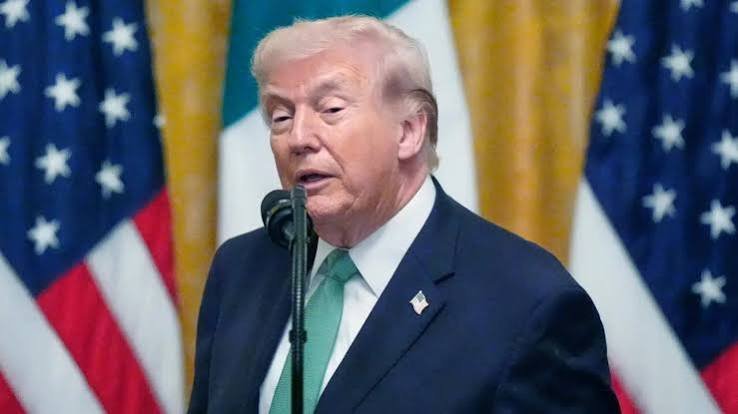
United States: President Donald Trump acknowledged that his administration has failed to effectively communicate its economic record as the war with Iran pushes US fuel prices higher and increases pressure on household budgets ahead of the November congressional elections.
Why Is the Iran War Putting Pressure on the US Economy?
The conflict has disrupted energy supplies and contributed to a sharp increase in gasoline and diesel prices. Diesel prices recently reached a record $6.53 per gallon, according to AAA data cited by Reuters, while oil prices also climbed as US-Iran talks stalled and global fuel markets tightened.
Brent crude settled at $103.50 a barrel, while US West Texas Intermediate closed at $90.42 on Wednesday.
How Are Americans Responding to Rising Living Costs?
US consumer confidence fell in September to its lowest level in nearly 12½ years, adding to concerns over inflation and household expenses.
A Reuters/Ipsos poll conducted earlier in September found Trump’s overall approval rating at 32%, while only 17% approved of his handling of the cost of living. The polling also indicated that concerns over inflation had spread among Republican voters.
What Does Trump Say About the US Economy?
Trump said the underlying US economy remains strong but acknowledged that his administration had failed to communicate its economic record effectively.
Government data cited by Reuters showed the US economy grew at a revised annualised rate of 2.2% in the second quarter, while consumer spending increased 3.8%. Investment associated with artificial intelligence infrastructure has also supported economic activity.
Why Is the Economic Record Important Ahead of the Midterms?
Trump is preparing for an intensive campaign period ahead of the November 3 congressional elections, with control of Congress at stake.
The administration is facing pressure to contain the domestic impact of higher energy prices as Republican candidates confront voter concerns over fuel costs, inflation and the duration of the Iran conflict.
Meanwhile, Washington and Tehran remain engaged in diplomatic efforts through intermediaries, with negotiations focused partly on measures concerning the Strait of Hormuz, although significant differences remain.