

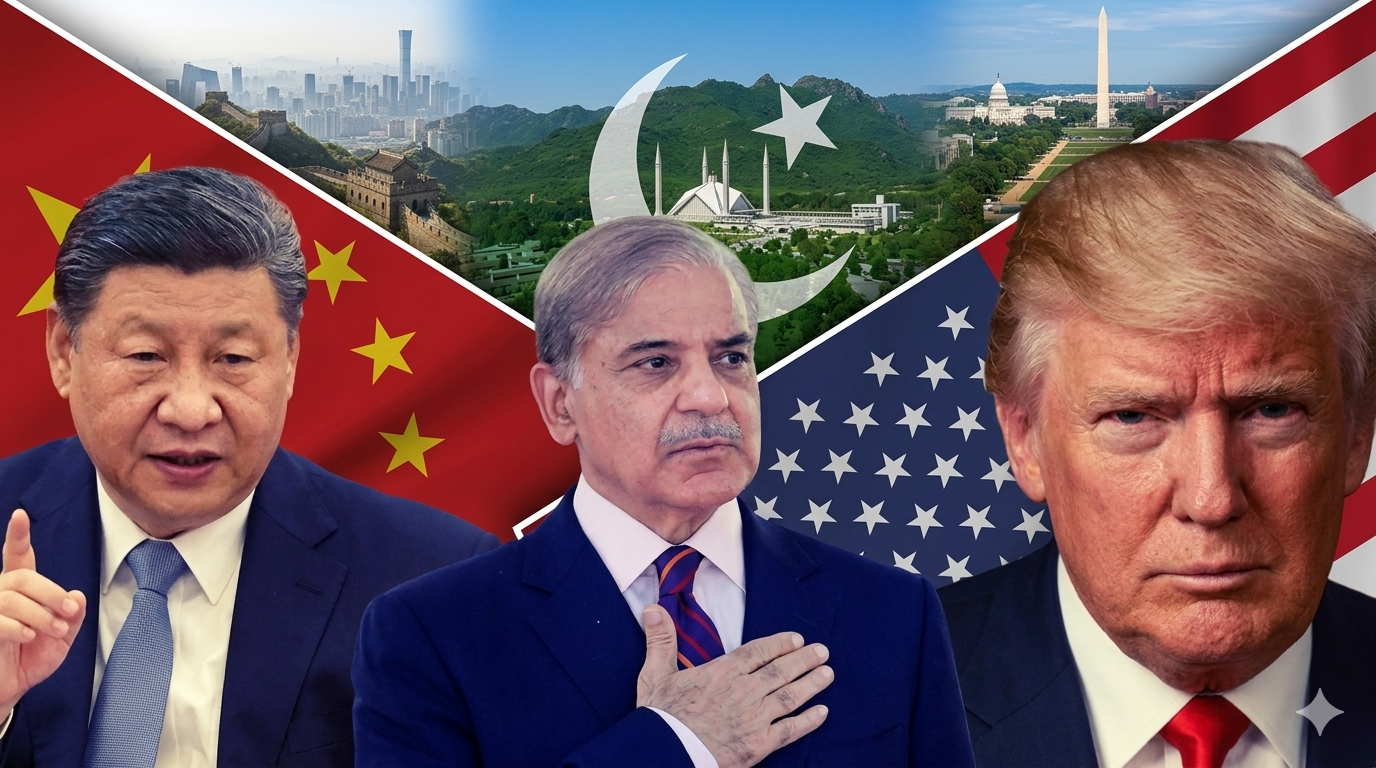
The recent statement by Ishaq Dar regarding Pakistan’s continuous coordination with Xi Jinping’s government during the US-Iran-Israel conflict reflects far more than routine diplomatic engagement. It signals the emergence of a deeper strategic convergence between Pakistan and China in shaping regional stability through diplomacy rather than coercion.
At a time when the Middle East was drifting toward a wider regional war, both Islamabad and Beijing demonstrated a shared preference for de-escalation, multilateralism, and political dialogue. Their jointly proposed five-point peace initiative, emphasizing ceasefire, protection of civilian and nuclear infrastructure, freedom of navigation through the Strait of Hormuz, and adherence to the UN Charter, was not merely symbolic diplomacy. It represented an alternative strategic vision for regional order, one rooted in cooperative security instead of military adventurism.
For decades, Pakistan and China have maintained a relationship often described as “higher than the Himalayas and deeper than the oceans.” Yet the significance of this partnership today extends beyond bilateral interests. Both states increasingly perceive regional instability as a direct threat to their economic and strategic futures. The evolving geopolitical landscape of West Asia has therefore pushed Islamabad and Beijing toward greater diplomatic synchronization.
China’s stakes in the Gulf are enormous. As the world’s largest energy importer, Beijing depends heavily on stable energy flows from the Middle East. The Gulf region forms a critical artery of China’s global economic ambitions under the Belt and Road Initiative, while the Strait of Hormuz remains indispensable for international trade and energy security. Any prolonged conflict involving Iran, Israel, or the United States threatens not only regional stability but also China’s broader geo-economic interests.
This explains why China has increasingly embraced the language of mediation and soft power diplomacy. Unlike traditional great-power interventions driven primarily by military leverage, Beijing has attempted to project itself as a stabilizing actor capable of engaging all sides simultaneously. Its role in facilitating the Saudi-Iran rapprochement in 2023 already demonstrated China’s growing diplomatic confidence in the Middle East.
Pakistan’s role complements this Chinese approach in a unique manner.
Islamabad occupies a rare strategic space in international politics. It maintains deep security ties with Gulf monarchies, longstanding strategic cooperation with China, channels of engagement with Iran, and a working relationship with the United States despite periodic tensions. Very few countries possess the diplomatic access and strategic trust required to communicate credibly with all competing actors in a polarized region.
Pakistan’s relevance, therefore, is not merely geographical. While its location at the crossroads of South Asia, Central Asia, and the Middle East certainly enhances its significance, geography alone cannot produce diplomatic trust. Pakistan’s value emerges from decades of strategic balancing, military cooperation with Gulf partners, participation in regional security frameworks, and its consistent preference for negotiated settlements in regional crises.
This is precisely why Islamabad remained actively engaged with Beijing throughout the US-Iran-Israel confrontation. Pakistan understood that any escalation could destabilize the broader Muslim world, disrupt regional trade corridors, intensify sectarian polarization, and threaten emerging connectivity projects such as China-Pakistan Economic Corridor. In strategic terms, conflict containment became a shared necessity for both Pakistan and China.
From a theoretical perspective, this evolving partnership reflects the logic of “complex interdependence” in international relations. Modern geopolitical influence is no longer exercised solely through military alliances or coercive power. Economic connectivity, diplomatic credibility, and crisis mediation have become equally important instruments of statecraft. Pakistan and China appear increasingly aligned within this framework.
China contributes economic leverage, diplomatic reach, and global institutional influence. Pakistan contributes regional access, political legitimacy within the Muslim world, and strategic communication channels across rival blocs. Together, they present a model of coordinated diplomacy aimed at stabilizing volatile regions without direct military intervention.
Importantly, Pakistan’s conduct during the recent crisis also reinforces its longstanding diplomatic narrative: dialogue over confrontation. Islamabad has repeatedly advocated restraint during regional conflicts, whether in the Gulf, Afghanistan, or South Asia. Its support for protecting civilian and nuclear infrastructure during the US-Iran-Israel tensions reflected broader international legal principles embedded within the United Nations Charter and international humanitarian norms.
The emphasis on safeguarding nuclear infrastructure was particularly significant. Attacks or threats against civilian nuclear facilities risk catastrophic humanitarian and environmental consequences and undermine established international norms governing strategic restraint. By jointly highlighting this issue, Pakistan and China positioned themselves as defenders of responsible state behavior during wartime escalation.
Prime Minister Shehbaz Sharif’s upcoming visit to Beijing further demonstrates that this partnership is entering a more comprehensive phase. The transition toward CPEC 2.0, focusing on industrialization, agriculture, information technology, and socio-economic development, indicates that strategic cooperation between both countries is expanding from infrastructure connectivity toward long-term economic transformation.
In an increasingly fragmented international system, Pakistan and China are attempting to build a diplomacy centered on stability, economic interdependence, and political mediation. Whether this approach can effectively shape the future regional order remains uncertain. However, the recent US-Iran-Israel conflict demonstrated one important reality clearly: in moments of geopolitical crisis, both Islamabad and Beijing increasingly view themselves not as passive observers, but as active stakeholders in preserving regional equilibrium.
Their coordinated diplomacy during the conflict was therefore not an isolated episode. It was a reflection of a broader strategic understanding that in an era of interconnected conflicts, sustainable influence belongs not only to those who can wage wars, but also to those capable of preventing them.
Disclaimer: The views and opinions expressed in this article are solely those of the author and do not necessarily reflect the views, policies, or position of this website. The website does not endorse or oppose any opinion presented herein.

