

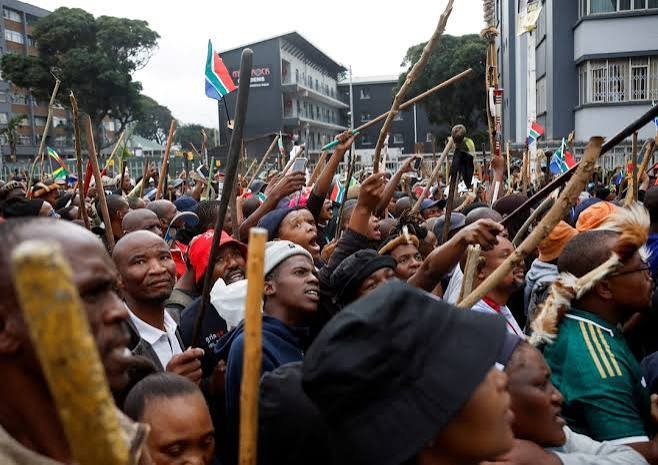
JOHANNESBURG: South African police arrested more than 900 people during nationwide anti-migrant protests that took place across the country on Tuesday, with authorities reporting that while most demonstrations remained peaceful, several turned violent, resulting in looting, public disorder and at least one fatality.
According to Deputy National Police Commissioner Tebello Mosikili, authorities monitored 120 demonstrations nationwide, of which 108 proceeded peacefully while police intervened in 12 following incidents of violence and criminal activity.
The arrests were made on charges including public violence, robbery and immigration-related offences.
What triggered the nationwide protests?
The demonstrations were organised by a coalition of more than 20 civil society organisations, including the March and March movement, to mark what organisers described as an unofficial deadline for undocumented migrants to leave South Africa.
Protesters called on the government to strengthen border controls and take action against illegal immigration, arguing that undocumented migration has increased pressure on public services, employment and national resources.
Where did violence occur?
Despite appeals for calm, isolated incidents of violence were reported in several areas.
In Johannesburg’s Alexandra township, one person was shot dead during the looting of foreign-owned informal convenience stores, commonly known as spaza shops.
In the Hillbrow area of Johannesburg, soldiers were deployed after a separate shooting left two people injured, including a 17-year-old.
The Western Cape recorded the highest number of arrests with 215, followed by the Eastern Cape with 208.
How did the government respond?
Ahead of the demonstrations, President Cyril Ramaphosa held an emergency meeting with protest organisers and urged demonstrators to remain peaceful.
In a statement issued by the Presidency, Ramaphosa acknowledged public concerns regarding illegal immigration, border management and pressure on public services, describing them as legitimate issues requiring government attention.
However, he warned that taking the law into one’s own hands amounted to vigilantism and was incompatible with South Africa’s constitutional order.
Will the protests continue?
Thousands of demonstrators also marched in Durban, where protesters demanded stricter immigration enforcement.
March and March movement leader Jacinta Ngobese-Zuma said weekly demonstrations would continue until the government adopts tougher border control measures and immigration policies.
How have rights groups reacted?
Human rights organisations, including Amnesty International South Africa, condemned attacks targeting migrants, warning that foreign nationals are increasingly being blamed for broader socioeconomic challenges, including unemployment, poverty and delays in the country’s asylum system.
Rights groups urged authorities to uphold the rule of law while addressing underlying economic and governance challenges driving public discontent.