
Close Menu

    Subscribe to Updates

    Get the latest creative news from FooBar about art, design and business.

    What's Hot

    CPEC, Gwadar and Balochistan: Why Indian-Sponsored Terrorism Must Fail

    October 26, 2026

    STRATAVERSE

    October 26, 2026

    Serbia’s Vučić Concedes Election Defeat as Student-Led Opposition Celebrates

    October 26, 2026
    Facebook X (Twitter) Instagram
    Trending
    • CPEC, Gwadar and Balochistan: Why Indian-Sponsored Terrorism Must Fail
    • STRATAVERSE
    • Serbia’s Vučić Concedes Election Defeat as Student-Led Opposition Celebrates
    • Shadab Khan’s Maiden ODI Century Leads Pakistan to Thrilling Win Over England
    • Trump Compares Muslim Senate Candidate Abdul El-Sayed to 9/11 Hijackers
    • Beyond the Threat of Force: Can the Makkah Accord Make Deterrence Work?
    • Pakistan: A Nation Whose Strength the World Recognises
    • Satellite Images Show Luxury Yacht With 50-Metre Pool Near Kim Jong Un’s North Korea Retreat
    Facebook X (Twitter) Instagram
    echoasianews.com
    • Home
      • Fact Check
      • War Updates
    • World News
    • Local News
    • Opinion
    • Business
    • Entertainment
    • Sports
    • Politics
    • Technology
    echoasianews.com
    Home»Opinion»PROBLEMS AND TREND OF WHEAT CULTIVATION
    Opinion

    PROBLEMS AND TREND OF WHEAT CULTIVATION

    Dr. Rana Muhammad AmirDr. Tahir MehmoodBy Dr. Rana Muhammad Amir and Dr. Tahir MehmoodSeptember 30, 2026No Comments4 Mins Read
    Facebook Twitter Pinterest LinkedIn WhatsApp Reddit Tumblr Email
    PROBLEMS AND TREND OF WHEAT CULTIVATION
    Share
    Facebook Twitter LinkedIn Pinterest Email

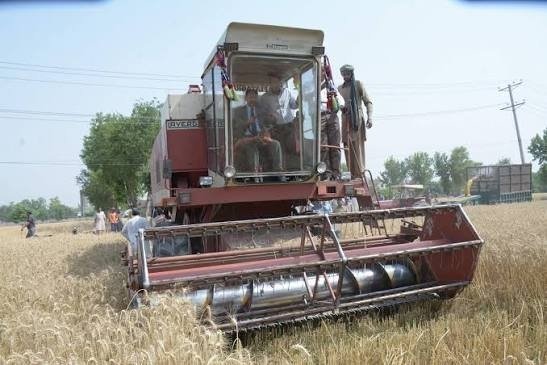
    Wheat is considered as backbone of food security especially in developing countries like Pakistan because most of its population consumes wheat in daily meals directly or indirectly. A positive side of the picture is that the country has so far been majorly fulfilling the population demand by itself, mostly attributed to the wheat support price. However, in the recent years the withdrawal of wheat support price, the farmers in general and in particular the large wheat growers are vulnerable to discontinue growing wheat. Besides, above mentioned preference and importance, the cultivation and production of wheat is no more sustainable and on decline in the Punjab province. Lack of sustainability is not only threatening food security but also negatively influencing the rural and economic development of the country. The wheat growers are major stakeholders, who are directly affected by the wheat price policy and other related factors. The same reasons motivated the researchers to investigate problems and trend of wheat cultivation among growers in District Vehari (Punjab) through a focus group discussion in September, 2026. The dominant problems and trend they revealed during that discussion are as under;

    The farmers unanimously agreed that they don’t have awareness about wheat cultivation rather they used their experience and previous information which is based on their inherited knowledge during different stages of wheat cultivation. They were of the view that no person from agriculture department approached them for transfer of related information. Resultantly, they faced problems during all stages of wheat production. For example, firstly, they are unable to identify good quality seed before sowing. In addition, availability of good quality seed is one of the major problems that the selected farmers are facing over there. Secondly, they are encountering the problems like shortage of irrigation water at critical timings of the crop, critical timings are those stages when the crop/ plant can’t stand without water, and growth suddenly stops. 

    They don’t know about the appropriate input requirements for their crop and these inputs are generally applied on recommendations of first approaching companies. At the same time prices of these inputs are also very high especially Urea (the price ranging from Rs.4400-4800 per bag) and DAP (Rs.13000-17000) both containing sufficient amount of macronutrients. The shortage of macronutrients compromises the optimum growth of wheat crop. The increased prices of fuel (Diesel) also contribute significantly into the increasing difficulties in mechanization and land preparation activities by the farmers. They also communicated that daily wage labor is not easily available in their village especially at the time of harvesting and if the labor is available, it demands high wages in this regard. As per their statement, the growing non-farm sector compel rural young labor to switch from agriculture to other sectors. They don’t get packing bags (Bardana) easily after harvesting of their crop. Therefore, they are failed to protect and supply their wheat grains to market after harvesting.

    They also pointed some of the marketing issues like they don’t get good price for their produce whenever they take their crop to local market. Middlemen mainly bargain wheat price on their own terms and conditions depending upon urgency of the farmer. Once crop is sold by the farmers the price of wheat starts increasing. The price of wheat is also not pre-determined/decided by the government which is generating uncertainties among farmers.

    The farmers are of the view that recent trend of wheat cultivation is not encouraging for them. They get income loss during farming as expenditures are found to be higher than income. The problems are more than the scope of cultivation. In this scenario, they revealed that they would grow wheat just for the sake of their domestic food requirements and avoid any economic return expectations from this crop. In conclusion, due to withdrawal of the support price, increased input prices, projected water shortage, marketing issues, labor shortage and unavailability of packing bags, farmers in Punjab are unable to keep ongoing trend of wheat production at a profitable level. There are growing concerns that in the coming growing season wheat cultivation area in Punjab may considerably drop in comparison to the previously cultivable area which can be easily replaced by other profitable crops like maize.

    Disclaimer: The views and opinions expressed in this article are solely those of the author and do not necessarily reflect the views, policies, or position of this website. The website does not endorse or oppose any opinion presented herein.

    Authors

    • Dr. Rana Muhammad Amir
      Dr. Rana Muhammad Amir

      Dr. Rana Muhammad Amir is a writer and Associate Professor at the Institute of Agricultural Extension, Education and Rural Development, University of Agriculture Faisalabad. His writing explores agriculture, rural development, education, food security, and the social and economic challenges shaping rural communities.

    • Dr. Tahir Mehmood
      Dr. Tahir Mehmood

      Dr. Tahir Mahmood is an Associate Professor in the Department of Development Studies at the University of Agriculture, Faisalabad. His research and academic interests focus on development policy, governance, socio-economic transformation, and issues related to sustainable development. Through his teaching, research, and publications, he contributes to understanding contemporary development challenges and policy solutions in Pakistan and beyond. You can reach him at tahir.mahmood74@uaf.edu.pk

    Share this:

    • Share on Facebook (Opens in new window) Facebook
    • Share on X (Opens in new window) X

    Like this:

    Like Loading…
    Farmers food security Pakistan Agriculture Punjab Agriculture Wheat Production
    Share. Facebook Twitter Pinterest LinkedIn Tumblr Telegram Email
    Dr. Rana Muhammad Amir, Dr. Tahir Mehmood

    Dr. Rana Muhammad Amir is a writer and Associate Professor at the Institute of Agricultural Extension, Education and Rural Development, University of Agriculture Faisalabad. His writing explores agriculture, rural development, education, food security, and the social and economic challenges shaping rural communities.

    Related Posts

    CPEC, Gwadar and Balochistan: Why Indian-Sponsored Terrorism Must Fail

    October 26, 2026

    STRATAVERSE

    October 26, 2026

    Beyond the Threat of Force: Can the Makkah Accord Make Deterrence Work?

    October 24, 2026
    Leave A Reply Cancel Reply

    Don't Miss
    Opinion
    Opinion

    CPEC, Gwadar and Balochistan: Why Indian-Sponsored Terrorism Must Fail

    By Ayesha RafiqOctober 26, 202604 Mins Read

    Balochistan occupies a pivotal position in Pakistan’s economic future. Its coastline, mineral resources, and access…

    Share this:

    • Share on Facebook (Opens in new window) Facebook
    • Share on X (Opens in new window) X

    Like this:

    Like Loading…

    STRATAVERSE

    October 26, 2026

    Serbia’s Vučić Concedes Election Defeat as Student-Led Opposition Celebrates

    October 26, 2026

    Shadab Khan’s Maiden ODI Century Leads Pakistan to Thrilling Win Over England

    October 26, 2026

    Subscribe to Updates

    Get the latest news from echoasianews.

    Stay In Touch
    • Facebook
    • Twitter
    • Instagram
    • WhatsApp
    Recent Posts
    • CPEC, Gwadar and Balochistan: Why Indian-Sponsored Terrorism Must Fail
    • STRATAVERSE
    • Serbia’s Vučić Concedes Election Defeat as Student-Led Opposition Celebrates
    • Shadab Khan’s Maiden ODI Century Leads Pakistan to Thrilling Win Over England
    • Trump Compares Muslim Senate Candidate Abdul El-Sayed to 9/11 Hijackers

    Archives

    • October 2026
    • September 2026
    • August 2026
    • July 2026
    • June 2026
    • May 2026
    • April 2026
    • March 2026
    • February 2026
    • January 2026
    • March 2021
    • January 2021
    • January 2020

    Categories

    • Blog
    • Business & Economy
    • Entertainment
    • Fact Check
    • Local News
    • Opinion
    • Politics
    • Sports
    • Technology
    • War Updates
    • World News
    About Us
    About Us

    We cover a wide range of topics including World News, Business & Economy, Crypto, Entertainment, Politics, Sports, and Technology, ensuring our audience stays informed about both regional and international developments.
    We're accepting new partnerships right now.

    Email Us: social@echoasianews.com

    Facebook X (Twitter) Pinterest YouTube WhatsApp
    Our Picks

    CPEC, Gwadar and Balochistan: Why Indian-Sponsored Terrorism Must Fail

    October 26, 2026

    STRATAVERSE

    October 26, 2026

    Serbia’s Vučić Concedes Election Defeat as Student-Led Opposition Celebrates

    October 26, 2026
    Categories
    • Blog
    • Business & Economy
    • Entertainment
    • Fact Check
    • Local News
    • Opinion
    • Politics
    • Sports
    • Technology
    • War Updates
    • World News
    Meet Our Team
    • Editorial Board
    © 2026 . All Rights Reserved EchoAsiaNews.

    Type above and press Enter to search. Press Esc to cancel.

    %d