

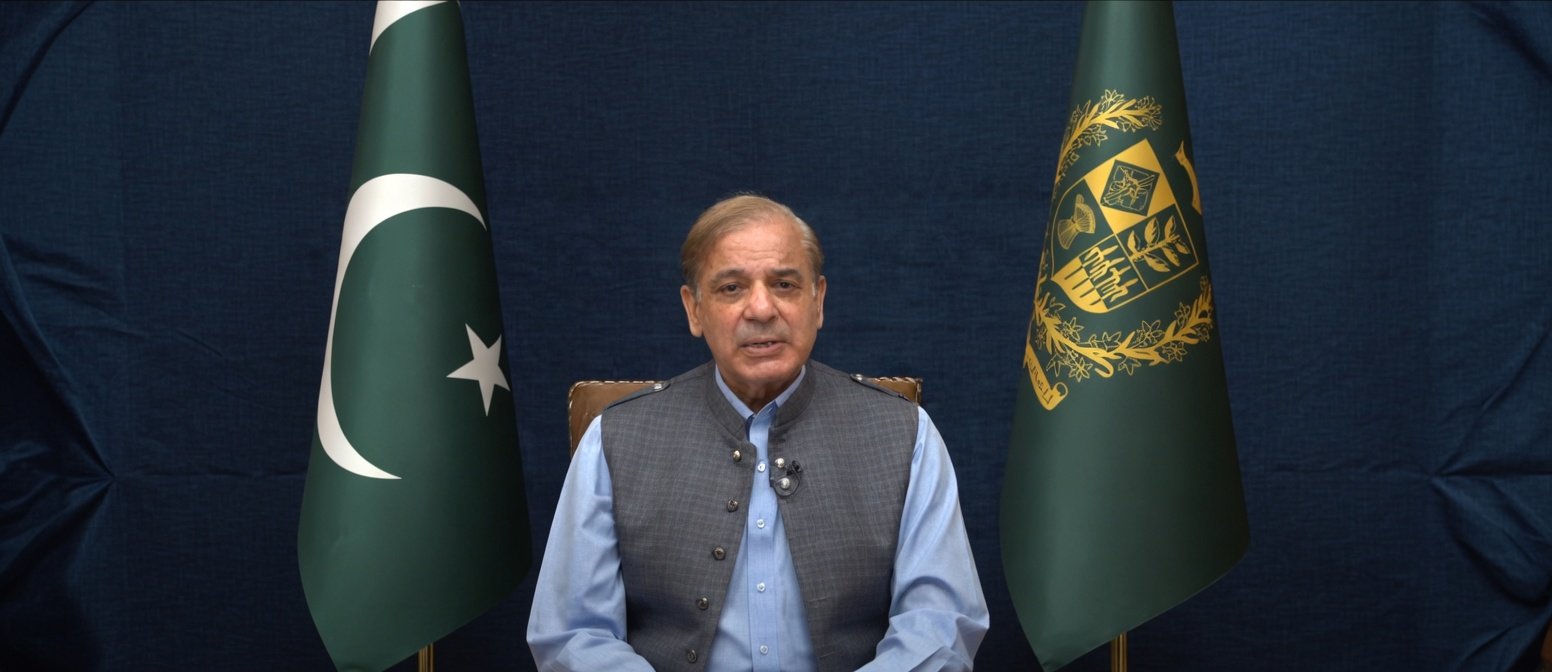
Prime Minister Shehbaz Sharif on Friday announced a reduction in petrol prices, lowering the rate to Rs378 per litre for one month as part of relief measures amid the ongoing Middle East crisis.
The prime minister also announced an Rs80 per litre cut in the petroleum levy. The revised petrol price will come into effect from 12am on Saturday.
The decision follows a recent increase in fuel prices, where petrol was raised by Rs137.23 per litre and high-speed diesel (HSD) by Rs184.49, prompting widespread public concern.
Addressing the nation, Prime Minister Shehbaz said rising global oil prices and regional instability had created significant challenges for citizens, adding that inflation was affecting economies worldwide.
He expressed hope that the conflict in the Middle East would end soon and that peace would be restored.
The prime minister said that extensive consultations were held at the Presidency prior to announcing the relief package, which included participation from provincial chief ministers, the Prime Minister of Azad Jammu and Kashmir, and Field Marshal Asim Munir.
As part of the broader relief measures, the government announced targeted subsidies for different sectors. Motorcycle owners will receive a Rs100 per litre subsidy on petrol, while small trucks will be provided Rs70,000 per month. Large trucks will receive Rs80,000, and public transport operators will be granted Rs100,000 monthly support.
Freight vehicles will also benefit from a Rs100 per litre fuel subsidy, the prime minister said.
In addition, small farmers will receive Rs1,500 per acre in financial assistance to help offset rising costs. The government also confirmed that fares for economy class on Pakistan Railways will remain unchanged.
Prime Minister Shehbaz thanked provincial governments for their cooperation, noting their commitment to allocating resources for national relief efforts.
He also said that federal cabinet members, who had earlier agreed to forgo salaries for two months under austerity measures, will now extend the period to six months as part of cost-saving efforts.