


Pakistan’s water problem is less about how much rain falls than about how little of it the country stores, protects and uses wisely.
Water is not one resource among many; it is the condition on which every other resource depends. Yet the planet’s supply of usable water is surprisingly small. Only about 3 percent of the earth’s water is fresh, and most of that is locked in glaciers and ice caps, leaving well under 1 percent in rivers, lakes and accessible aquifers for drinking, farming and industry.
Growing populations, expanding cities, soaring industries and the rising demand for food all draw on the available water resources. Climate change is making rainfall less predictable and disasters more severe. Across the world, fresh water per person is falling, and Pakistan is one of the countries that feel it first and most severely.
At independence, each Pakistani had more than 5,000 cubic metres of water a year. Today the figure is well below 1,000 cubic metres, the line hydrologists use to mark water scarcity. Pakistan is presently water-stressed and stands at the edge of outright scarcity.
The population has grown from about 33 million to over 240 million. The same flow is now divided among seven times as many people, and among far more factories, cities and farms.
Almost all of that water passes through one system. The Indus and its tributaries feed the Indus Basin Irrigation System, one of the largest contiguous irrigation networks in the world. Agriculture takes over 90 percent of the water Pakistan withdraws, and it in turn employs over a third of the workforce and feeds the whole nation.
On 7 October 2026, the Indus River System Authority (IRSA) approved a 22 percent water shortage for Punjab and Sindh for the Rabi season running to March 2027, after early estimates in late September had put it at 25 percent. Reservoirs held 9.34 million acre-feet (MAF) on 30 September, against 13.21 MAF a year earlier. Monsoon inflows were 7 percent below the ten-year average.
Rabi is the wheat season. A cut of a fifth in canal water at sowing and during the critical growth stages means lower yields, higher costs for farmers who turn to tube wells, and more pressure on flour prices. For a country where wheat is the staple, water shortage is food insecurity by another name.
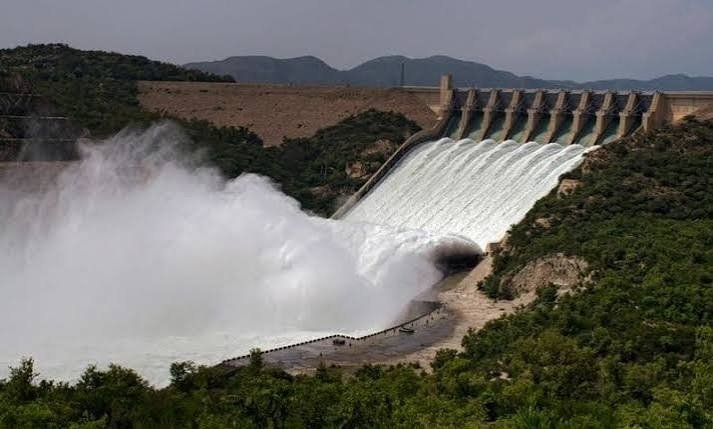
It is tempting to blame nature or a neighbour for this crisis, but much of it is made at home. Pakistan can store only about 30 days of its river flow. Tarbela and Mangla have lost a large part of their capacity to silt, while new dams such as Diamer-Bhasha and Mohmand have moved slowly for years. The country therefore swings between surplus and shortage: in the monsoon, water runs off unused, and in winter the canals run dry.
The canal network built in the British era was a marvel of its time, but much of it is now unlined, silted and poorly maintained. A large share of the water released at the canal head is lost to seepage before it reaches the crop, and flood irrigation remains the norm in the fields. Farmers pay only a nominal water charge (abiana), so there is little reason to save, and the country continues to grow thirsty crops such as sugarcane and rice, in effect exporting scarce water.
When canals fall short, farmers turn to over a million mostly unregulated tube wells. Water tables are falling across Punjab and Balochistan, and in places the remaining water is turning saline. At the same time, untreated industrial and municipal waste, along with fertiliser and pesticide run-off, is polluting rivers and aquifers, so that even the available water is often unsafe to use.
The 2022 floods, which caused losses estimated at over 30 billion dollars, showed the other face of the crisis: too much water and nowhere to hold it. Yet water reaching the sea is not simply “wasted”; the Indus delta needs a minimum flow below Kotri to hold back seawater and sustain mangroves and fisheries.
Outside pressures add to the strain. Since April 2025, India has held the Indus Waters Treaty “in abeyance”, threatening the sharing of flood data and the timing of flows. Disputes between provinces under the 1991 Water Apportionment Accord persist for want of trusted, real-time flow data. Melting glaciers and erratic monsoons make the future less certain still. None of this, however, should become an excuse for failures within our own borders.
The way forward lies in many ordinary measures pursued consistently. Pakistan must complete the dams under way, desilt existing reservoirs, build small dams and recharge ponds, and line canals and watercourses where losses are highest. Drip, sprinkler and laser land levelling should be expanded through credit and subsidies, and support shifted away from water-intensive crops in water-short areas. Abiana should be raised gradually, with relief for small farmers, and spent on canal maintenance. Large tube wells should be licensed and metered, industrial effluent treated before discharge, and telemetry installed at every barrage so that provinces argue over facts rather than suspicions. Pakistan must also defend its rights under the Indus Waters Treaty in every legal forum, and teach citizens that water is a trust, not a free good.
Pakistan’s water crisis is real, but it is not fate. The rivers that built the Indus civilisation still flow; what has failed is the way the country stores, shares, prices and protects them. If nothing changes, the result will be falling harvests, rising food prices, emptier aquifers and sharper conflict between provinces. If the country acts now, the same Indus that sustained Harappa can sustain a nation of 240 million. The choice, unlike the rain, is in our hands.
Disclaimer: The views and opinions expressed in this article are solely those of the author and do not necessarily reflect the views, policies, or position of this website. The website does not endorse or oppose any opinion presented herein.


