
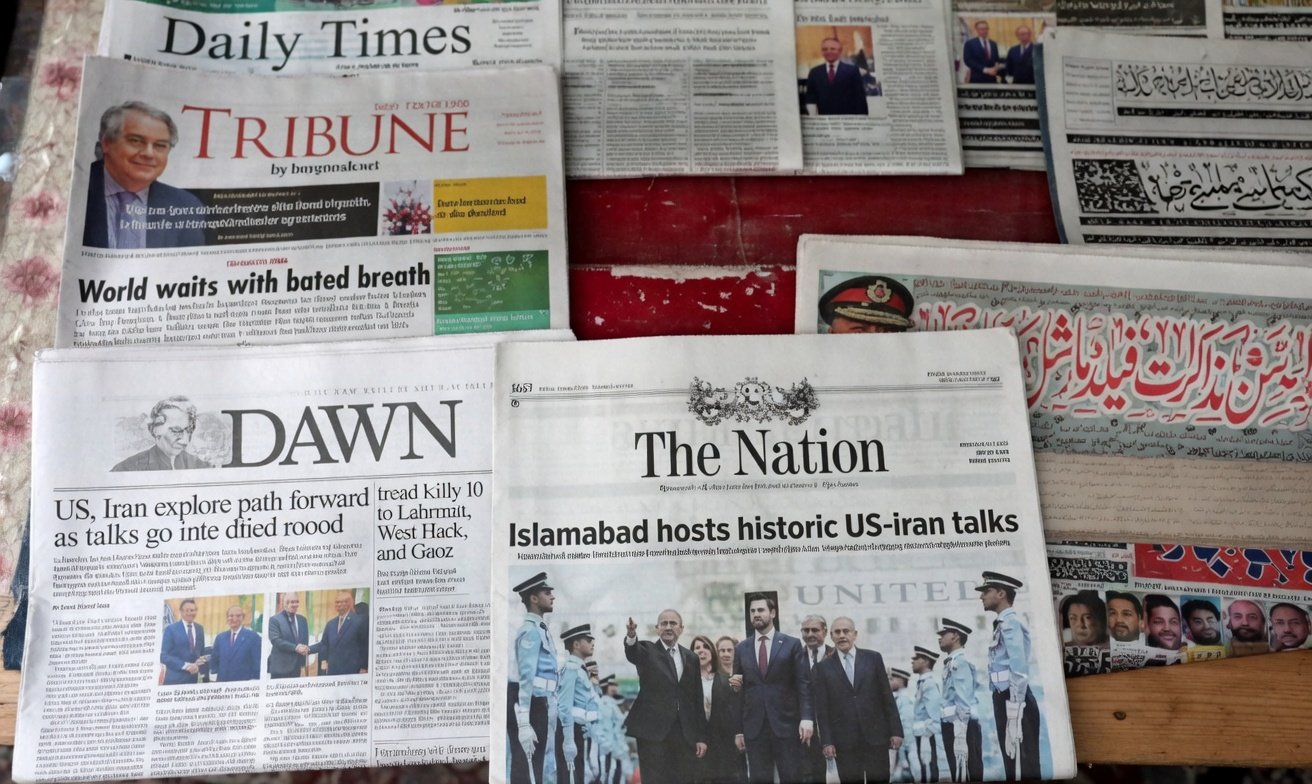
The government in Islamabad is struggling to navigate a delicate time in the region through a two-fold approach in foreign diplomacy: active diplomacy with Saudi Arabia and reaching out at the highest levels to the Iranians on the other hand. COAS Field Marshal Asim Munir’s visit to Iran and the reported travel of the prime minister to Saudi Arabia indicates that Pakistan is striving hard to ensure it keeps talking to both nations without compromising on its interests.
It’s not about taking sides here. It’s about keeping balance. The Pakistani foreign policy machinery seems to be operating on the principle that when the Middle Eastern region becomes unstable, Pakistan should strive to become relevant, indispensable, and useful to everyone.
A Carefully Managed Balancing Act
The importance of COAS Field Marshal Asim Munir’s trip to Tehran is more than just his meeting there; it is about conveying the message from Pakistan. The state shows that it can continue playing the role of mediator in a tense region, surrounded by countries which are not its friends. Meanwhile, the importance of the Saudi offer in the context of relations of Pakistan should be emphasized, since it keeps cooperating with its ally.
It should be emphasized that the foreign policy pursued by Pakistan at present should be discussed, since there are two possible directions of the country’s activities. In one direction, Pakistan continues working with Saudi Arabia, its close ally and partner in economic and political relations. As for the other direction, Pakistan works with Iran, with which it shares borders and security issues.
Given this picture, it is easier to understand the nature of the situation. At the moment, Pakistan’s foreign policy looks like a case of parallel diplomacy rather than contradictory alliances. Islamabad tries to keep some flexibility in its international position and retain the ability to act freely in an area where states find themselves forced to choose sides.
Why Tehran Matters Now
In this context, COAS Field Marshal Asim Munir’s upcoming visit to Tehran is a timely step, considering the current status of Iran and its importance for the region. In this case, there is a clear requirement of decreasing tension between nations, in view of the unstable situation in the neighboring countries. An escalatory situation in any of the nations in the area may affect security issues related to borders, trade, transit, and domestic politics.
There are several factors that have necessitated Islamabad’s approach towards considering its involvement in developing friendly ties with Iran as being vital. First, Pakistan shares a border with Iran, which is vulnerable to any sort of illegal actions like smuggling and terrorist threats. Second, handling the consequences of a souring relationship with Iran will not be an easy task. It is rather a practical attempt to ensure that Pakistan will be not excluded from regional negotiations.
Why Saudi Arabia Remains Central
Saudi Arabia continues to play an equal role in this scenario. Saudi Arabia’s cooperation with Pakistan has been one of the key elements of the country’s foreign policy, not only due to geopolitical reasons but also because of the strong economic and social relations between the two nations. The former has provided significant assistance during the times of economic hardships, and the latter has many citizens working in the Gulf region.
This means that the Saudi component of the country’s policy cannot be considered separately from the general one. Pakistan wants to maintain friendly relations with both Saudi Arabia and Iran as a way to signal to the rest of the world that Islamabad is not trapped in any regional alliance. Rather, Islamabad attempts to become a valuable mediator in the Middle East.
It seems that the current time when multiple problems hit the region, makes the Pakistani leadership willing to position their country as one of the balancing forces in the area.
The Political Logic Behind the Strategy
From a political perspective, this is quite simple. By being regarded as a reliable state that can sustain ties with capitals of competing nations, Pakistan gains in terms of credibility and significance on the diplomatic scene, which is quite useful for dealing with any crisis situations.
Another political implication here is related to the domestic political agenda. Successful implementation of such a foreign policy strategy would be an indicator of Pakistan’s ability to pursue the national interests of the state in a nonaggressive manner. Being under constant pressure from the outside world in such conditions means quite a lot for Pakistan.
Finally, we should not forget about the importance of the military in such diplomacy. Participation of COAS Field Marshal Asim Munir in the talks with Iran suggests that the country’s army is an integral part of its foreign policy and that, far from weakening the efforts of diplomats, tries to support them.
The Economic Stakes
There are considerable economic interests at stake. Any instability in the region may lead to an impact on the cost of oil, transport facilities, the confidence of investors, and remittances. The economy of Pakistan is particularly prone to shocks originating abroad, making the instability of the Middle East immediately a national issue.
Saudi Arabia is significant in terms of investment opportunities, energy collaboration, and connections through the labor market. Iran is significant in light of cross-border trade, proximity, and potential connectivity in the region if there is stability. More generally, it is beneficial for Pakistan that this region does not fragment further.
It is for this reason that diplomacy in this case also means economic strategy. Every successful diplomatic initiative leads to decreased risk of importing problems from other countries.
The Social Dimension
There is a social dimension which is frequently ignored as well. The situation may fuel sectarian passions, heighten fear levels within communities, and lead to more uncertainty for the domestic audience. Indeed, Pakistan has been handling such problems due to Middle Eastern division for some time now, and it has every reason to try and stay out of such matters.
A more peaceful region will provide an opportunity to strengthen the trust of its population and promote more positive feelings towards other communities. It will lower the risk of rivalry spreading from the international level onto the local one as well.
What Solutions Make Sense
However, the most realistic solution in this situation is definitely not a miraculous development for the region and it certainly cannot be counted as a successful diplomatic effort on the part of Pakistan. On the contrary, it is a gradual diplomatic effort involving talks.
In other words, there could be an option which would help Pakistan make progress in solving its problems. This option includes building confidence between Islamabad and Riyadh as well as Tehran. It certainly does not mean that Islamabad has to choose one side out of the two sides.
Lastly, the third step of being realistic entails aiming at achieving limited objectives only. These objectives include coordinated borders, intelligence exchange, trade improvements, and dialogue promotion.
Why This Moment Matters
The true worth of modern day Pakistani foreign policy lies in the realization of what goes around them. They don’t ignore the problems; neither are they looking to cover their heads. Rather, they are dealing with them. Though it might appear to be less glamorous, but it’s highly strategic in nature.
COAS Field Marshal Asim Munir’s visit to Iran along with his previous visit to Saudi Arabia makes for the ideal case of diplomacy where the country seeks to make itself relevant through shrewd diplomacy. In a world of uncertainties, what makes Pakistani diplomacy powerful is that they extend their hand to both ends while keeping themselves diplomatically alive.
It is dual front diplomacy at its best and not because they’re scared, but because of wisdom. They want to be a relevant and balanced power in today’s world.
Disclaimer: The views and opinions expressed in this article are solely those of the author and do not necessarily reflect the views, policies, or position of this website. The website does not endorse or oppose any opinion presented herein.