

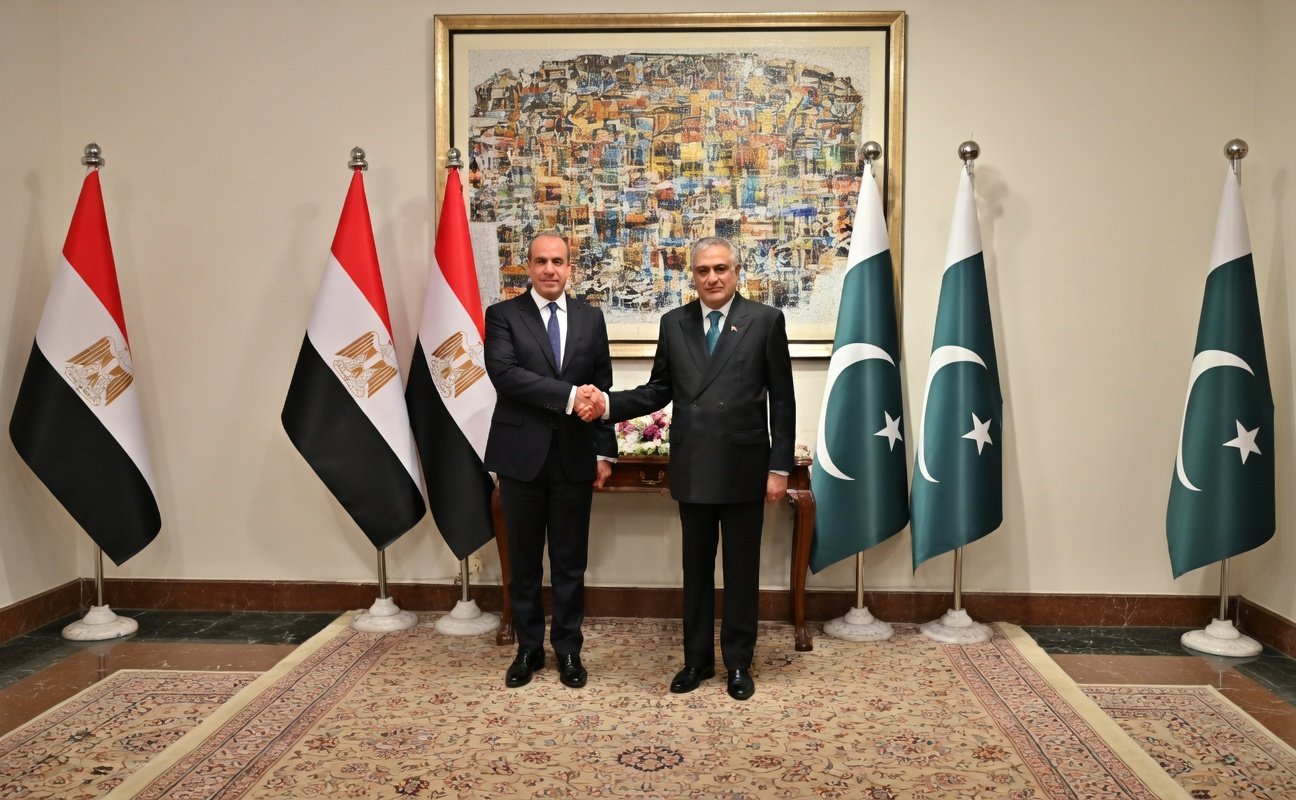
In the midst of growing tensions between the two global powers and the conflicts in different parts of the world, which pose a serious threat to the stability of the world, Pakistan has proved to be a principled and proactive player in the field of diplomacy. It is evident from the recent meeting of the foreign ministers of Pakistan, Saudi Arabia, Türkiye, and Egypt in Islamabad on March 29, 2026. During the meeting, the ministers pledged their full support to Pakistan’s initiative to arrange direct peace talks between the US and Iran in Islamabad. They said, “dialogue and diplomacy remain the only viable path to achieving lasting peace and underscored the pressing need to ensure the prevention of further military escalation.”
Pakistan’s Deputy Prime Minister and Foreign Minister, Mohammad Ishaq Dar, addressed the meeting on the possibilities for US-Iran relations, indicating that both countries were confident in the role of Pakistan as a facilitator. The meeting also formed a committee comprising senior officials from the four countries to facilitate greater coordination and cooperation between the countries, while also expressing concern about the humanitarian and economic consequences of the conflict. This meeting is part of Pakistan’s broader shuttle diplomacy efforts under Prime Minister Shehbaz Sharif, where the country is acting as a neutral host in the conflict between the US, Israel, and Iran.
This move becomes even more important when viewed in the context of Iranian President Masoud Pezeshkian’s recent appreciation for Pakistan’s mediation efforts. In a long phone conversation with Prime Minister Sharif, Pezeshkian thanked Pakistan for its positive intervention in attempts to stop the war, emphasizing the importance of mutual trust to pave the way for dialogue. Pezeshkian also praised Pakistani diplomacy, saying that Islamabad has sincerely attempted to resolve the conflict through diplomatic means, such as acting as a messenger between Washington and Tehran, as well as involving Gulf nations.
What sets Pakistan’s efforts apart is its status as a responsible middle power. With cultural, religious, and historical links to Iran on one hand and the Arab world on the other, through the shared bonds of Islamic brotherhood, Pakistan has also managed to maintain positive relations with the West, particularly the United States. Unlike other countries, which merely issue declarations from afar, Pakistan has been actively engaging in holding meetings, practicing shuttle diplomacy, and creating space for talks. The fact that the four countries are major players in the region, such as Saudi Arabia, Egypt, and Türkiye, adds weight to the initiative.
The result of this trust is evident in Iran agreeing to allow safe passage for 20 more Pakistani flagged vessels through the Strait of Hormuz, with two vessels passing through on a daily basis. This, according to foreign minister Dar, is a “welcome and constructive step towards peace.” The Strait of Hormuz accounts for 25% of the world’s oil trade, and this has already taken a toll on energy supplies worldwide. By keeping these channels open for Pakistan, Iran has taken a step in a positive direction in its mediation efforts, which will help ease current economic pressures.
The rationale behind Pakistan’s actions can be understood in terms of pragmatism. Pakistan has its own issues to contend with. Yet, in spite of these tensions, Pakistan remains committed to regional stability. This, in turn, ensures security for global energy supplies, which are vital to many economies beyond Pakistan.
While this is not the first time Pakistan is involved in mediation diplomacy, the scope of its involvement indicates its transformation into an essential stakeholder. Through mediation diplomacy, Pakistan is showing the world that a commitment to principled diplomacy based on trust, brotherhood, and self-interest can produce positive outcomes when the great powers fail. The creation of the coordination committee and the strong support for it from regional heavyweights have institutionalized these positive outcomes.
The world is witnessing Islamabad’s leadership by example and its demonstration of the capacity of middle powers to bridge divides and prevent chaos. So long as Islamabad sustains its balanced and proactive diplomacy, it will remain an essential stakeholder in global peace diplomacy.
Disclaimer: The views and opinions expressed in this article are solely those of the author and do not necessarily reflect the views, policies, or position of this website. The website does not endorse or oppose any opinion presented herein.