

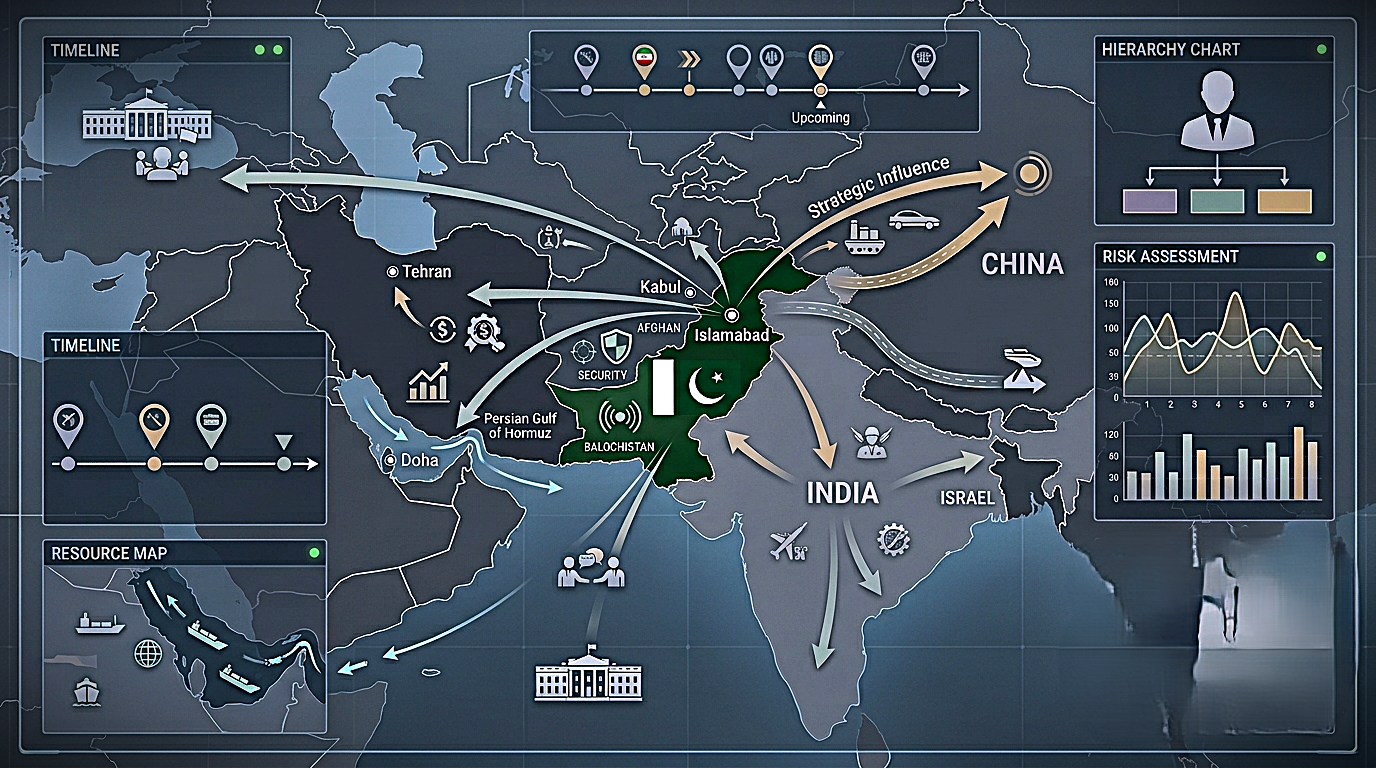
Pakistan is currently facing significant political and regional tensions due to its involvement in international diplomacy, particularly in relation to conflicts in the Middle East. As a strategically located country with strong ties to multiple global and regional powers, Pakistan often finds itself in a delicate position where it must balance its relationships carefully.
Pakistan maintains close relations with countries such as Saudi Arabia, Iran, China, and the United States. However, tensions between these countries especially between Saudi Arabia and Iran or between the United States and Iran create challenges for Pakistan’s foreign policy. Pakistan aims to remain neutral and often attempts to act as a mediator to promote peace and stability in the region. This diplomatic role enhances Pakistan’s global importance but also increases pressure on its leadership to make careful and balanced decisions.
In recent times, conflicts and instability in the Middle East have had direct and indirect effects on Pakistan. For example, rising tensions in oil-producing regions can lead to increased fuel prices, which directly impact Pakistan’s already struggling economy. Since Pakistan relies heavily on imported oil and energy resources, any disruption in supply chains or increase in global prices can worsen inflation and create economic hardship for the population.
Moreover, political and regional tensions also have security implications. Instability in neighboring regions can influence internal security, including the risk of extremist activities or cross-border challenges. Pakistan must remain vigilant to protect its national security while engaging in diplomatic efforts abroad.
Another important aspect is the pressure to take sides in international conflicts. While Pakistan strives to maintain neutrality, it is often expected by its allies to support certain positions. This creates a complex situation where maintaining strong diplomatic relations with all parties becomes difficult. Any misstep in foreign policy could lead to strained relations, reduced economic cooperation, or loss of international support.
Despite these challenges, Pakistan continues to advocate for peaceful resolutions and dialogue. Its role as a mediator reflects its commitment to regional stability and cooperation. However, managing these political and regional tensions requires careful planning, strong leadership, and a balanced foreign policy approach.
When Pakistan tries to act as a mediator in regional or international conflicts especially in the Middle East it takes on the role of a neutral party that encourages dialogue between countries that are in disagreement. This means Pakistan may facilitate discussions, support peace talks, or use its diplomatic relationships to reduce tensions between conflicting nations.
This role increases Pakistan’s importance on the global stage. Being a mediator shows that the country is trusted by multiple sides and is capable of contributing to peace and stability. It enhances Pakistan’s international image as a responsible and influential state. Additionally, it can strengthen diplomatic ties, open doors for economic cooperation, and increase its relevance in global decision-making processes. Countries that successfully mediate conflicts are often seen as leaders in diplomacy, which can bring long-term political and strategic benefits.
However, this role also brings significant pressure and challenges. Pakistan must maintain strict neutrality, which is difficult when it has close relationships with multiple countries that may be in conflict with each other. For example, balancing ties with Saudi Arabia and Iran can be particularly sensitive, as both countries have competing interests in the region. If Pakistan is perceived as favoring one side, it could harm its relationship with the other, leading to diplomatic tensions or reduced economic support.
Moreover, mediation requires careful decision-making, strong leadership, and effective communication. Any mistake or miscalculation can reduce Pakistan’s credibility as a neutral actor. There is also pressure from the international community to produce positive outcomes, which is not always possible given the complexity of global conflicts. Failure to successfully mediate can affect Pakistan’s reputation and influence.
In addition, regional conflicts can have direct consequences for Pakistan’s economy and security. For instance, instability in the Middle East can disrupt oil supplies, increase fuel prices, and worsen inflation in Pakistan. Security concerns may also rise due to shifting alliances or regional instability.
In conclusion, Pakistan’s involvement in regional and international diplomacy brings both opportunities and challenges. While it enhances the country’s global standing, it also exposes it to economic, political, and security pressures that must be handled with great caution and strategic thinking. While acting as a mediator enhances Pakistan’s global importance and diplomatic standing, it also places the country under considerable pressure to remain neutral, make balanced decisions, and manage the risks associated with complex international relationships.
Disclaimer: The views and opinions expressed in this article are solely those of the author and do not necessarily reflect the views, policies, or position of this website. The website does not endorse or oppose any opinion presented herein.