

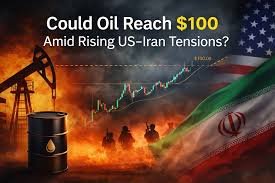
The South African rand came under renewed pressure on Monday after oil prices surged above $100 per barrel, driven by escalating tensions between the United States and Iran following the collapse of diplomatic talks and the announcement of maritime restrictions targeting Iranian shipping routes.
According to market reports, Brent crude rose more than 7% as investors reacted to fears of supply disruptions through the Strait of Hormuz, a key global oil transit chokepoint. Brent crude oil briefly crossed the $100 mark, intensifying inflation concerns and triggering risk-off sentiment across emerging markets.
The currency impact was immediate, with the rand slipping against the dollar as investors moved toward safer assets amid geopolitical uncertainty. South Africa, a net oil-importing economy, is particularly vulnerable to spikes in global energy prices, which increase import costs and widen its trade deficit.
The market reaction followed reports that US–Iran negotiations failed to produce a breakthrough, prompting Washington to move ahead with a blockade of Iranian maritime traffic. The decision has heightened fears of further escalation in the Middle East and potential disruptions to global energy flows.
Analysts say the combination of higher oil prices, stronger US dollar demand, and geopolitical instability has created a challenging environment for emerging market currencies. The rand, which had recently benefited from easing tensions, reversed gains as investors reassessed risk exposure.
Broader financial markets also reflected the shock, with equities under pressure and commodities reacting sharply to the possibility of prolonged supply constraints in global oil markets.