

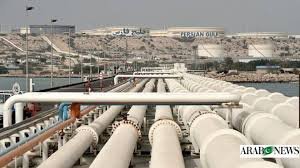
Global oil prices surged on Monday while US stock futures edged lower, as stalled negotiations between the United States and Iran continued to disrupt Middle East energy exports and heighten uncertainty across financial markets.
Benchmark Brent crude climbed more than 2% to reach $107.97 per barrel in early Asian trading, marking a three-week high and intensifying concerns over inflation. The sustained rise in energy prices has led traders to scale back expectations of interest rate cuts this year.
Futures linked to the S&P 500 slipped 0.3%, following a record close in the cash market on Friday driven by strong demand for artificial intelligence-linked stocks.
Currency markets showed limited movement, with the euro easing 0.15% to $1.1706 and the Japanese yen weakening slightly to 159.53 per dollar, as the US dollar held firm.
Despite a ceasefire halting most active fighting following US-Israeli strikes on Iran two months ago, investor focus remains on the disruption of shipping through the Strait of Hormuz—a critical artery for global oil and gas supplies. Continued restrictions have driven energy costs sharply higher.
Liquefied natural gas (LNG) prices for June delivery into northeast Asia rose to $16.70 per million British thermal units last week, representing a nearly 61% increase compared to pre-conflict levels.
Analysts at Goldman Sachs have revised their year-end Brent oil forecast upward from $80 to $90 per barrel, contingent on a normalization of Gulf exports by late June. They warned that prices could spike further if inventories fall to critically low levels.
Diplomatic efforts remain uncertain, with US President Donald Trump cancelling a planned envoy visit to Islamabad over the weekend, even as Iran continues diplomatic outreach through regional mediators.
Asian equity markets showed mixed performance, with South Korea’s KOSPI and Japan’s Nikkei hitting record highs, while Australian stocks dipped in thin holiday trading.
Investors are now turning attention to a series of key central bank meetings this week. The Bank of Japan is expected to keep its policy rate unchanged at 0.75%, while the Federal Reserve is also widely anticipated to hold rates steady in what could be the final meeting chaired by Jerome Powell.
Similarly, the European Central Bank and the Bank of England are expected to maintain current rates, although their forward guidance may challenge market expectations of further tightening later this year.
Market analysts caution that aggressive rate hike expectations in Europe and the UK could face reassessment if policymakers adopt a more cautious stance amid rising geopolitical and economic risks.
Meanwhile, the corporate earnings season is set to intensify, with major US technology firms—including Microsoft, Alphabet, Amazon, Meta Platforms, and Apple—scheduled to report results this week, underscoring continued investor focus on AI-driven growth.
The convergence of geopolitical tensions, rising energy prices, and monetary policy uncertainty is expected to keep markets volatile in the near term.