

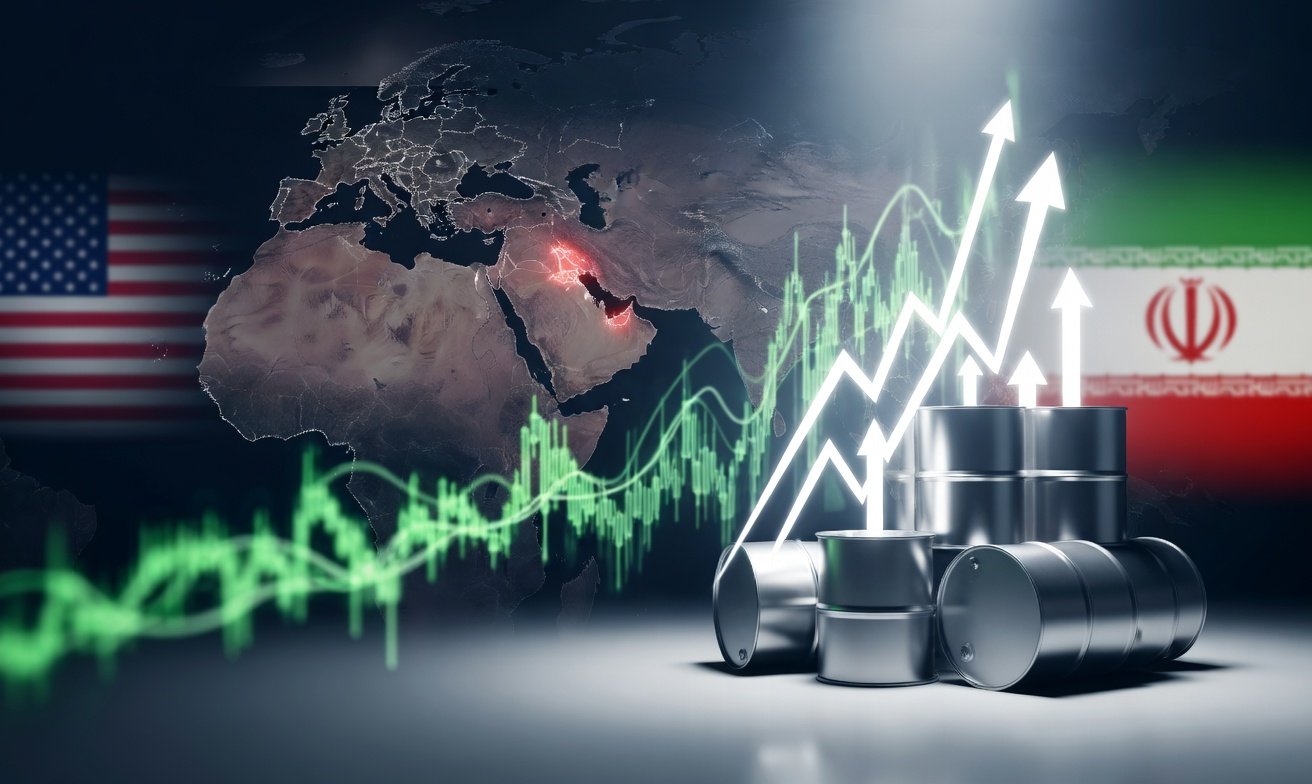
Global markets reacted sharply after oil prices surged above $100 per barrel, following the collapse of US-Iran peace talks and the announcement of a US naval blockade on Iranian ports.
In early trading, US benchmark West Texas Intermediate (WTI) for May delivery jumped nearly 8% to $104.50 per barrel, while Brent crude for June delivery rose about 7% to $102 per barrel, reflecting fears of disruption to global energy supplies.
Asian stock markets showed mixed reactions, with South Korea’s Kospi index initially falling 2% before recovering slightly, while Japan’s Nikkei slipped 0.3%. The volatility comes after a previous rally in equities driven by optimism over a short-lived ceasefire.
Oil prices had declined and stocks surged last week after a two-week ceasefire agreement mediated by Pakistan, but sentiment reversed quickly as the US-Iran talks failed to produce a breakthrough and tensions escalated again. Continued instability in the Strait of Hormuz, a critical global shipping route, further heightened concerns.
Meanwhile, the US dollar strengthened broadly, rising to its highest level in a week amid a risk-off mood in global markets. The US dollar index climbed 0.5% to 99.187, while major currencies weakened.
The euro fell 0.5% to $1.1667, the British pound declined 0.6% to $1.3383, while the Australian dollar dropped 0.8% to $0.7014 and the New Zealand dollar slipped 0.7% to $0.5798.
The market reaction followed US President Donald Trump’s announcement that the US Navy would begin blockading maritime traffic linked to Iranian ports, after marathon negotiations with Tehran failed to reach an agreement. The move, confirmed by US Central Command, is set to target vessels entering and exiting Iranian waters, raising concerns about global supply chains.
Analysts said the early market movements reflected a shift toward risk aversion, with investors turning to the dollar as a safe-haven asset amid escalating geopolitical tensions.
The developments have heightened fears of further economic disruption, as the situation in the Middle East remains volatile and the risk of broader escalation persists.