

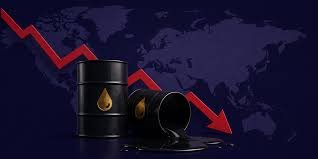
LONDON: Global oil prices fell in early trading on Thursday after the United States and Iran signed an interim agreement aimed at ending months of conflict, reopening the Strait of Hormuz, and restoring Iranian oil exports to international markets.
Brent crude futures declined 89 cents, or 1.12%, to $78.66 per barrel by 0005 GMT, while US West Texas Intermediate (WTI) crude fell 98 cents, or 1.28%, to $75.81 per barrel.
The losses extended a downward trend that began after Washington and Tehran finalized a 14-point memorandum of understanding designed to de-escalate tensions and restore stability to global energy markets.
The agreement initiates a 60-day negotiation period and includes provisions for toll-free maritime passage through the Strait of Hormuz, one of the world’s most critical oil and gas transit routes. Traffic through the waterway is expected to return to full operational capacity within 30 days.
Markets reacted positively to the prospect of increased oil supplies after the deal included US commitments to waive sanctions on Iranian oil exports, potentially allowing millions of additional barrels to re-enter global markets.
“The sell-off extended as energy markets continued to aggressively price in a faster-than-expected return of Iranian barrels following the recent US-Iran memorandum of understanding,” IG market analyst Tony Sycamore said in a market note.
The agreement follows months of conflict that disrupted energy flows across the Middle East and triggered what many analysts described as the most significant oil supply shock in modern history.
Despite the breakthrough, uncertainty remains. The preliminary accord postpones negotiations on several contentious issues, including Iran’s nuclear program, while also requiring the United States and its partners to develop a proposed $300 billion economic recovery package for Iran.
The International Energy Agency (IEA) warned on Wednesday that if the agreement is fully implemented and Middle Eastern oil production returns to normal levels, global markets could shift from supply shortages to a substantial surplus.
In its latest monthly market report, the agency projected that global oil supply could exceed demand by 5.05 million barrels per day in 2027, driven largely by the return of Iranian and regional exports.
Additional pressure on oil prices came from growing expectations that the US Federal Reserve may raise interest rates later this year to combat inflation.
Updated projections released on Wednesday showed that nine of the Federal Reserve’s 19 policymakers now believe a rate increase may be necessary, compared with none holding that view three months ago.
Higher interest rates could slow economic growth and reduce energy consumption, adding to concerns about future oil demand.
Oil markets also remained sensitive to comments from US President Donald Trump, who warned on Wednesday that military action against Iran could resume if Tehran failed to comply with the agreement.
Nevertheless, investors largely focused on the prospect of renewed energy flows and reduced geopolitical risk, sending crude prices lower as markets assessed the implications of a potentially lasting settlement between Washington and Tehran.