

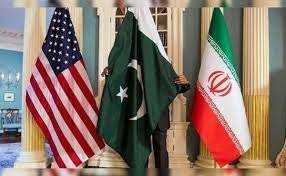
The US-Iran memorandum of understanding raises more questions than it answers -and the most dangerous ones involve neither Washington nor Tehran.
When Iranian Foreign Minister Abbas Araghchi stood before foreign diplomats in Tehran on Tuesday and declared that the war with the United States was “officially over,” the relief in the room was palpable. After weeks of strikes, counter-strikes, and a naval blockade that paralysed one of the world’s most critical maritime chokepoints, a ceasefire was not merely welcome -it was necessary. But relief, as any student of Middle Eastern diplomacy knows, is a poor substitute for analysis.
The Memorandum of Understanding (MOU) that now underpins this fragile ceasefire deserves scrutiny not as an exercise in cynicism, but as an act of sober regional responsibility. Viewed from Islamabad -a capital that sits at the intersection of Iranian proximity, Gulf economic dependency, and sustained US pressure -the architecture of this agreement raises two deeply troubling concerns that have received insufficient attention in Western commentary: the institutionalised distrust baked into the deal’s own foundations, and the extraordinary leverage it inadvertently hands to a party that never signed it.
The Intelligence Community’s Verdict
Begin with what may be the most extraordinary detail to emerge from this week’s reporting. According to Axios, CIA Director John Ratcliffe briefed President Trump and senior officials with a stark assessment: US intelligence had serious doubts about Iran’s willingness to make nuclear concessions in any final deal. More troublingly, intelligence suggested that Iranian officials’ internal discussions about the agreement were not aligned with what they were telling mediators and Washington.
This is not a minor footnote. The intelligence chief of a country raising formal doubts about the sincerity of an agreement his own president has just signed represents a fracture at the highest levels of the American national security establishment. The internal divisions are visible: Ratcliffe, Secretary of State Rubio, and Secretary of Defence Hegseth reportedly raised concerns, while Vice President Vance, Steve Witkoff, and Jared Kushner backed the deal. A White House official sought to reassure by noting that “Trump listens to all views” -a formulation that, intentionally or not, underscores rather than resolves the disagreement.
To be fair to the administration’s optimists, intelligence assessments are probabilistic, not deterministic. Iran’s internal deliberations may reflect negotiating posture rather than bad faith. And it is worth noting that Vance -who has been the deal’s most visible advocate -described the MOU as covering the “destruction of the highly enriched stockpile” as a core commitment, with IAEA inspectors set to return. These are not trivial concessions if honoured. The question is whether the word “if” is doing too much work in that sentence.
What is structurally concerning is not that disagreements exist within the US government -they always do. What is concerning is that the disagreement is between the people who assess Iran’s intentions and the people who negotiated the deal. When the evaluators and the negotiators reach different conclusions, the burden of proof must be high before proceeding. It is not yet clear that burden has been met.
A Page and a Half
Vice President Vance, in an appearance on CNN, described the MOU as “a very general document” of approximately a page and a half. “On a number of issues,” he acknowledged, “we are going to have to figure this stuff out during the technical negotiation phase.”
This candour is refreshing, but it also illuminates the fundamental problem with celebrating this agreement as a diplomatic achievement. What has actually been agreed is a framework for future negotiations, not a settlement of the underlying disputes. Araghchi confirmed as much, outlining a two-phase structure in which the Strait of Hormuz, the naval blockade, and reconstruction come first -while Iran’s nuclear programme and sanctions relief are deferred to a second phase aimed at a “final agreement.”
The sequencing here matters enormously. By placing nuclear and sanctions issues in the second phase, the agreement effectively asks the international community to normalise the post-war situation -including Iranian claims of having withstood US military pressure -before the most consequential questions are resolved. If the second-phase talks stall or collapse, Iran will have gained the lifting of the naval blockade and the reconstruction of its infrastructure while nuclear commitments remain aspirational.
There is a counter-argument worth engaging. Complex agreements often require phased approaches, and demanding everything at once can produce nothing at all. The Iran nuclear deal of 2015 itself emerged from a sequenced process. A short, general document can be a starting point rather than an endpoint. The question is whether the sequencing reflects diplomatic realism or strategic advantage -and on that question, analysts should remain cautious rather than conclusive.
The Clause Israel Did Not Sign
Perhaps the most consequential element of Araghchi’s Tuesday briefing received the least analysis in international coverage. The Iranian foreign minister explicitly linked the MOU to the situation in Lebanon, stating that “the continuation of the Israeli occupation of Lebanese territory is a violation of the memorandum of understanding.” He added, for emphasis, that future Israeli military action against Lebanon would “never be accepted.”
This is a remarkable claim. Israel was not a party to the US-Iran negotiations. It did not sign the MOU. And yet Iran is now publicly asserting that the terms of that agreement extend to constraining Israeli military options in a third country. Whether or not this reading has any legal or diplomatic validity -and it almost certainly does not in any formal sense -it establishes a political tripwire with potentially catastrophic consequences.
Consider the scenario: a future Israeli strike on Hezbollah infrastructure in southern Lebanon, of the kind Israel has conducted periodically for years, could now be framed by Tehran as a violation of an agreement with the United States. Iran would then face a choice between accepting that framing silently -thereby undermining its own negotiating position -or using it as justification to exit the agreement. In either case, the stability of the ceasefire becomes contingent on Israeli restraint that Washington cannot guarantee and Jerusalem has not offered.
Araghchi’s assertion that “Hezbollah cannot be dismantled” and that everything the world has seen from Hezbollah is “only the tip of the iceberg” -statements made by IRGC Quds Force Commander Qaani, echoed in official Iranian framing -suggests that Tehran views the Lebanon file not as a separate matter but as integral to its deterrence posture. From Iran’s perspective, this may be a coherent strategic position. From the perspective of anyone hoping this agreement will hold, it is a significant source of instability.
What the Strait Tells Us
One data point cuts through the diplomatic language more cleanly than any official statement: the world’s largest tanker operator, Japan’s Mitsui OSK Lines, announced on Tuesday that its vessels would not resume transit through the Strait of Hormuz for weeks. The reason, as its CEO put it, is that the deal must be “material and translated into real situations” before shipping companies will risk their assets.
This is market actors applying a rational discount to diplomatic announcements -a discount that reflects precisely the uncertainty this analysis has been tracing. The Strait of Hormuz carries roughly 20 percent of the world’s oil supply. Its continued effective closure, even after a ceasefire, has cascading consequences for energy markets, supply chains, and the economies of countries far removed from the immediate conflict -including Pakistan, which imports substantial quantities of fuel through Gulf-linked supply networks.
The tanker operators are, in effect, waiting for the same thing analysts are: evidence that this agreement is more than a page and a half of managed ambiguity.
Neither Cynicism Nor Credulity
Writing from the region, it would be easy to adopt either of two postures: cynical dismissal of an agreement that the CIA itself doubts, or relieved endorsement of anything that stops the fighting. Neither posture serves the analysis well.
The US-Iran MOU represents a genuine, if fragile, de-escalation. It stops active hostilities. It creates a framework -however skeletal -for addressing nuclear and sanctions questions. It includes commitments, however vague, on IAEA access and the destruction of enriched stockpiles. These are not nothing.
But the agreement also defers its hardest questions, is doubted by the intelligence community of one of its signatories, extends Iran’s deterrence claims into Lebanese territory it does not control, and has not yet convinced the shipping industry that the Strait is safe. A page and a half of general principles, contested internally by Washington and externally by Tehran’s maximalist framing, is the beginning of a diplomatic process -not the end of a conflict.
The region, and the world, should hope this agreement matures into something durable. But hope is not a policy. The weeks ahead -as the Strait reopens or doesn’t, as Phase Two negotiations begin or stall, as Israel makes its own calculations about Lebanon -will determine whether June 2026 is remembered as the moment the guns stopped, or merely as the pause before the next round.
Disclaimer: The views and opinions expressed in this article are solely those of the author and do not necessarily reflect the views, policies, or position of this website. The website does not endorse or oppose any opinion presented herein.