

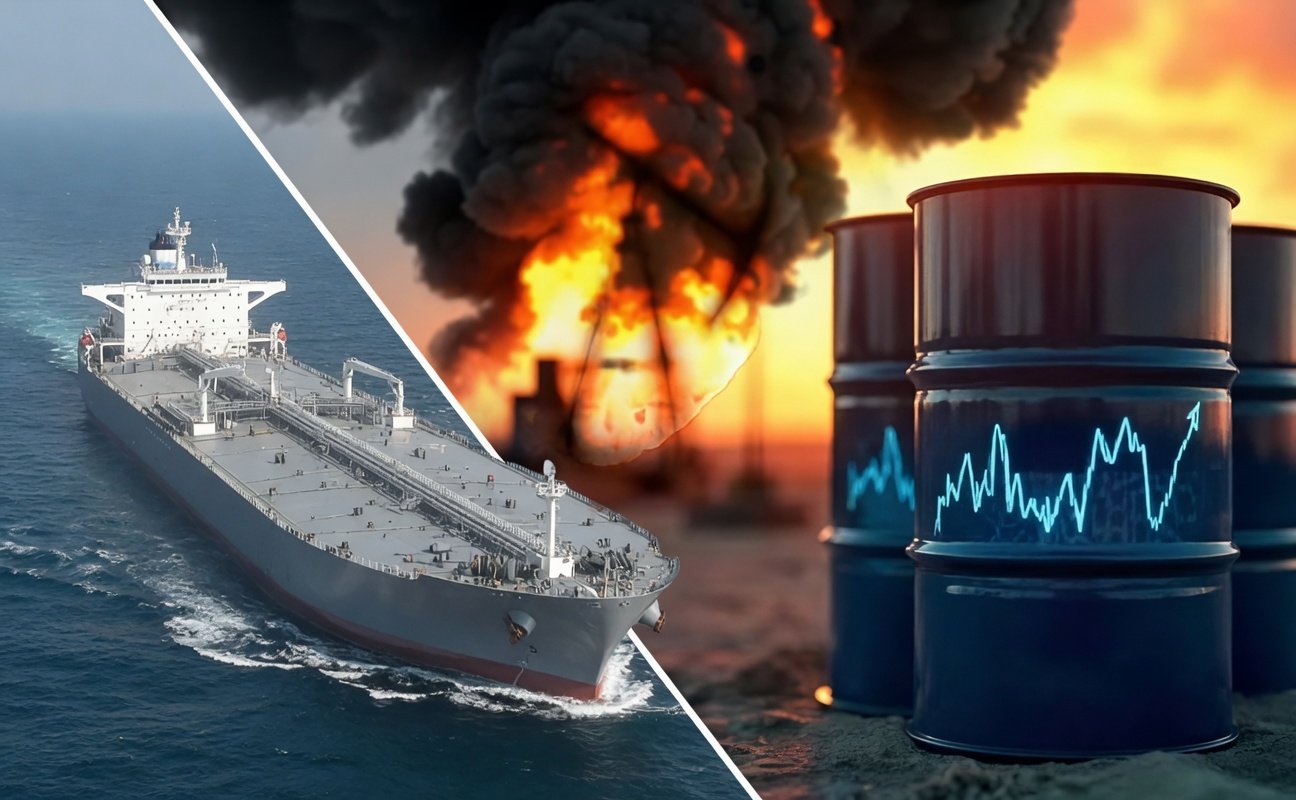
Global oil prices fell sharply after Iranian officials announced the reopening of commercial shipping through the Strait of Hormuz, easing fears of supply disruption and boosting global equity markets.
Iranian Foreign Minister Abbas Araghchi said Tehran would allow passage for commercial vessels following a ceasefire arrangement linked to developments in Lebanon. He stated that the waterway would remain open for the duration of the ceasefire.
The Strait of Hormuz, through which roughly one-fifth of global crude oil shipments normally pass, had faced disruptions since the escalation of regional tensions involving United States and Israel. Earlier disruptions had pushed oil prices close to $120 per barrel, significantly impacting global markets.
Following Iran’s announcement, Brent crude fell below $90 per barrel before recovering slightly, closing down more than 9%. US benchmark West Texas Intermediate also recorded significant losses.
Market analysts said the development had an immediate effect on investor sentiment. European equities rose by around 2%, while US markets extended gains, with the S&P 500 reaching record levels as geopolitical risk concerns eased.
Financial analysts noted that markets were rapidly pricing out worst-case scenarios linked to Middle East tensions, while also focusing on strong underlying economic and corporate earnings data in the United States.
Donald Trump welcomed the reopening of the waterway, stating in remarks to reporters that a broader agreement with Tehran was “very close” and that there were no major remaining obstacles to a deal.
However, Iranian officials rejected claims that they had agreed to transfer enriched uranium abroad, directly disputing earlier statements attributed to the US president.
Shipping companies responded cautiously to the development. Logistics firms said the reopening was positive but warned that operational uncertainties remained, including navigation safety and potential risks from mines or restricted movement protocols.
A spokesperson for German shipping company Hapag-Lloyd said vessels were ready to resume operations but stressed the need for clear instructions from Iranian authorities to avoid congestion and operational risks in the strait.
The situation remains fluid, with markets and shipping operators closely monitoring further developments in the region.