

North Korea has intensified its weapons development efforts in recent weeks, leveraging global instability linked to the Middle East conflict to advance its nuclear ambitions and reinforce its strategic position, analysts say.
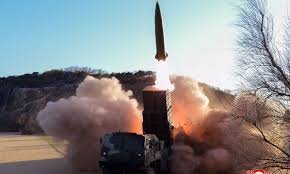
Since US-Israeli strikes on Iran began in late February, Pyongyang has conducted five missile launches, including four in April alone—the highest monthly total since early 2024, according to compiled data. The tests follow a pledge by leader Kim Jong Un to strengthen the country’s nuclear forces.
Experts suggest the launches reflect a calculated strategy to accelerate military upgrades while major powers, including the United States, Russia, and China, remain preoccupied with shifting geopolitical dynamics.
“The current global security environment has effectively weakened existing international norms,” said regional analysts, noting that North Korea is using this environment to push toward what it considers a complete and irreversible nuclear arsenal.
Pyongyang has condemned US strikes on Iran but has avoided direct criticism of US President Donald Trump, amid speculation over a possible high-level diplomatic engagement in the coming weeks.
The recent wave of tests began shortly after North Korea’s ruling Workers’ Party congress in February, a key political event that sets national policy direction. Observers say the timing indicates an effort to showcase rapid progress in weapons capabilities.
The launches have included ballistic missiles, anti-ship cruise missiles, and systems capable of carrying cluster munitions. Analysts note signs of technical advancement, including the potential miniaturisation of nuclear warheads and the development of “saturation attack” capabilities designed to overwhelm missile defence systems.
North Korea is expected to continue frequent missile testing as it shifts from development toward operational deployment of its nuclear and conventional forces.
At the same time, Pyongyang is deepening its ties with Russia, which has provided economic and technical support in exchange for North Korean military assistance in the Ukraine conflict. Recent engagements between the two countries include infrastructure projects and high-level visits by senior Russian officials.
Analysts say the growing partnership signals North Korea’s intent to counter international sanctions and demonstrate strategic backing from a major power.
Despite expanding cooperation, some experts caution that the relationship may remain transactional and tied largely to the ongoing war in Ukraine.
The developments underscore rising concerns over nuclear proliferation and the erosion of global arms control norms amid overlapping geopolitical crises.