

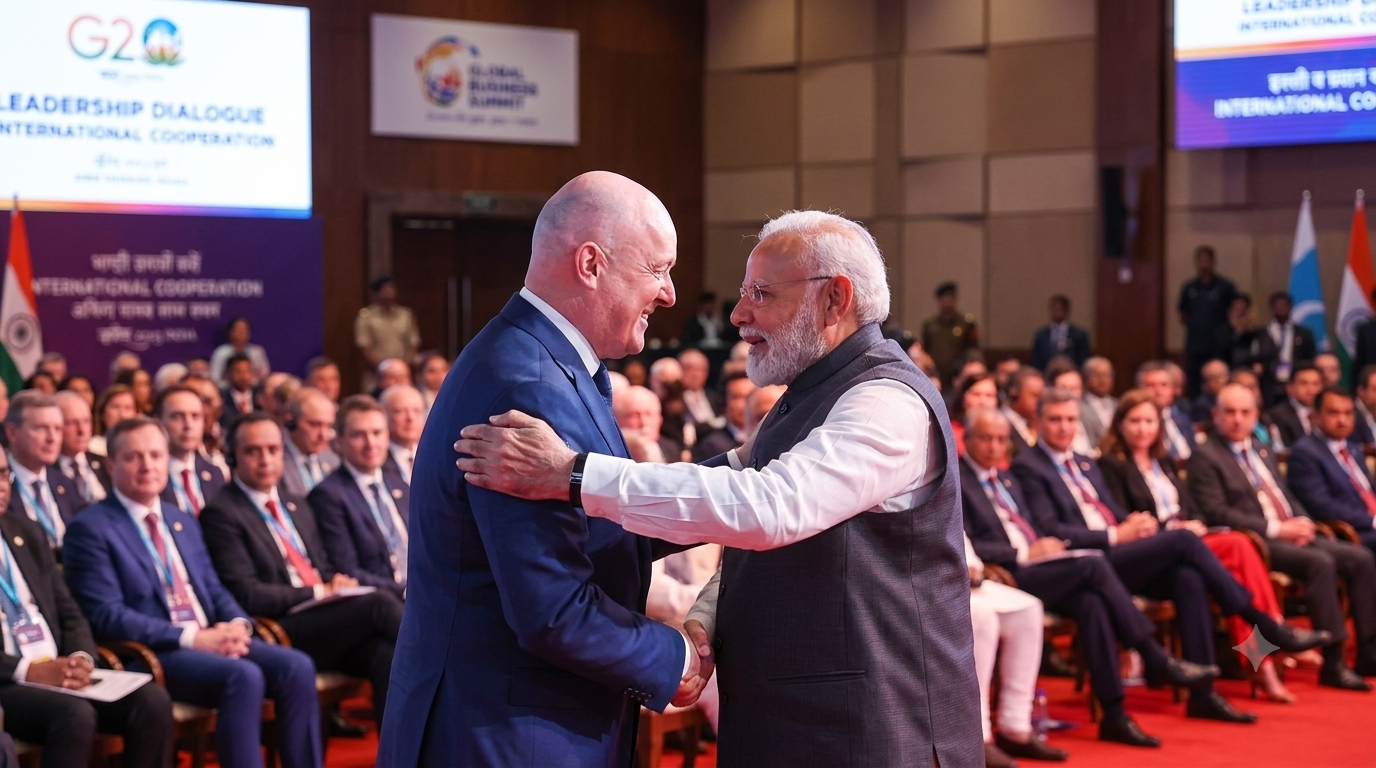
The two countries agree to deepen cooperation in defence, trade and the Indo-Pacific as Indian Prime Minister Narendra Modi makes his first visit to New Zealand in four decades.
AUCKLAND: New Zealand and India on Saturday announced a new strategic partnership covering defence, security, trade and diplomatic cooperation during Indian Prime Minister Narendra Modi’s first visit to New Zealand in 40 years.
Prime Minister Christopher Luxon welcomed Modi with a traditional Māori ceremony and a guard of honour in Auckland. The visit follows the signing of a free trade agreement in April, which the New Zealand government says will strengthen economic ties between the two countries.
What does the new strategic partnership include?
The agreement provides for closer cooperation in defence and security, including joint naval exercises, while expanding collaboration in trade, diplomacy, science, culture and sports.
In a joint statement, both governments reaffirmed their commitment to a “free, open, peaceful and prosperous Indo-Pacific.”
Modi described the partnership as a significant step forward in bilateral relations.
“Our firm belief in democratic values makes us natural partners,” he said.
Why is the partnership significant?
Modi’s visit comes after a regional tour that included Indonesia and Australia and follows China’s recent ballistic missile test into the Pacific Ocean, which has raised security concerns among several Indo-Pacific nations.
Speaking after bilateral talks, Luxon confirmed that the leaders discussed the Chinese missile launch but declined to characterize the expanded partnership as an effort to counter Beijing.
“We are a small trading nation. We are a maritime nation. We need to have as many relationships as we possibly can with partners around the world that are like-minded,” Luxon said.
He added that New Zealand supports growing regional cooperation in defence and trade as a means of promoting security and economic prosperity.
How was Modi received in New Zealand?
Thousands of members of New Zealand’s Indian community gathered at Auckland’s Spark Arena to welcome Modi during a community event.
Outside the venue, around 20 Sikh protesters demonstrated against the Indian leader, displaying a mannequin dressed in prison clothing and carrying banners critical of his government.
More than 100 Modi supporters responded with chants in support of the Indian prime minister, prompting police to separate the two groups and prevent clashes.
What challenges does the free trade agreement face?
Luxon has promoted the trade agreement as a driver of investment, jobs and economic growth ahead of New Zealand’s general election scheduled for November.
However, the agreement has faced criticism from some political figures over provisions aimed at easing immigration and visa access for Indian students and workers.
New Zealand First, a member of Luxon’s governing coalition, has opposed parts of the deal.
Government minister Shane Jones criticized the immigration provisions during a radio interview, saying he would not support what he described as a “butter chicken tsunami” coming to New Zealand.
The remarks were condemned by an Indian community leader, who described them as “outright racism.”