

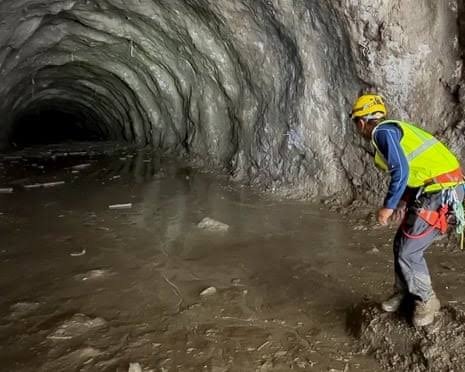
Nepal: Rescue teams backed by Chinese and Indian experts are working to reach hundreds of workers believed to be trapped inside hydropower project tunnels following devastating floods and landslides along the Nepal-Tibet border.
Nepali authorities said 903 people had died while 4,247 remained missing after the disaster, which struck the Himalayan region last week. Of those missing, 933 were reported to be workers at hydropower projects in the flood-hit areas.
The floods swept large amounts of mud, rocks and debris into several tunnels, complicating rescue efforts. Teams have been using heavy machinery to clear blocked entrances and search for possible survivors.
The International Federation of Red Cross and Red Crescent Societies estimated that more than 90,000 people were likely affected by the disaster.
How are rescue teams searching for the missing workers?
Nepal has deployed nearly 21,000 security personnel alongside civilian workers and volunteers for rescue and relief operations.
Nepal Army teams have been using earth-moving equipment and other specialised resources to clear debris from the hydropower tunnels. Rescue operations have faced delays because of difficult terrain, adverse weather and continuing landslide risks.
Nepal Army spokesperson Raja Ram Basnet said the large amount of debris inside the tunnels was the main challenge for rescue teams.
Authorities have also buried hundreds of unidentified bodies as efforts continue to identify victims.
What are the risks of further flooding and landslides?
Officials are monitoring newly formed lakes and unstable areas along rivers near the disaster zone because additional landslides could trigger further flooding.
Chinese authorities said a landslide-created lake upstream had largely drained naturally, while another reservoir formed by debris from the glacier collapse remained under observation.
Authorities have warned that a breach of the larger reservoir could send a surge of water downstream and trigger further flooding.
China has deployed more than 2,100 rescue workers and allocated 220 million yuan for relief operations, while India and China have provided technical assistance to Nepal for tunnel rescue efforts.
The disaster has also raised concerns about glacier instability, landslides and the need for stronger cross-border information sharing on water levels and geological risks.