

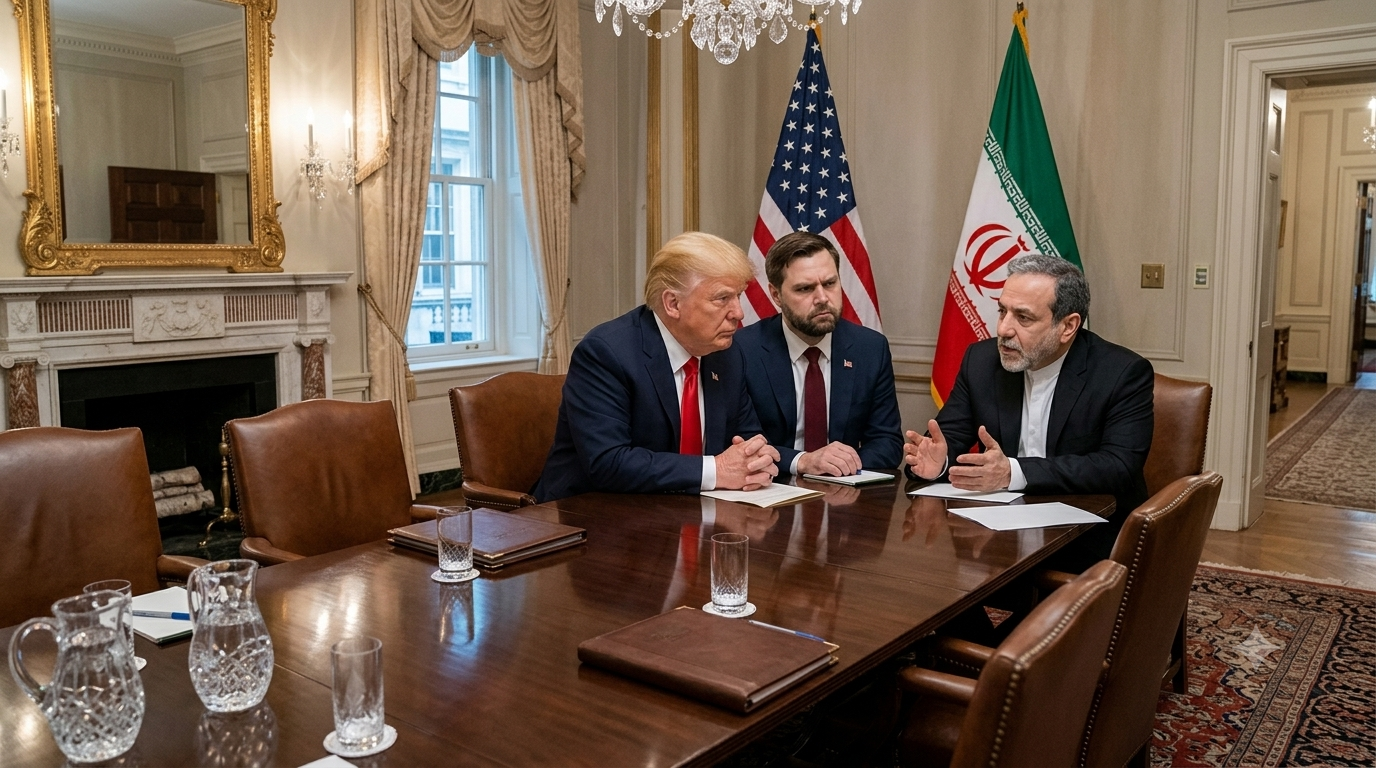
Tehran accuses Washington of violating the ceasefire memorandum while President Donald Trump says the truce has ended despite agreeing to further negotiations.
TEHRAN: Iran said on Saturday it has continued to comply with its ceasefire commitments with the United States, rejecting President Donald Trump’s assertion that the truce is over while reaffirming its support for diplomacy.
The exchange marks a further deterioration in relations after both sides traded strikes earlier this week, raising concerns over the future of a fragile ceasefire aimed at ending months of conflict.
What did Trump say about the ceasefire?
In a post on his Truth Social platform, Trump said the United States had agreed to continue negotiations with Iran but declared that the ceasefire had ended.
“The Islamic Republic of Iran has asked us to continue ‘talks’. We have agreed to do so, but the United States has stated to them, in no uncertain terms, that the ceasefire is over!” Trump wrote.
He also warned that the United States would “completely decimate” Iran if it attempted or succeeded in assassinating him.
Earlier this week, speaking at the NATO summit, Trump also dismissed the ceasefire, describing further engagement with Tehran as “a waste of time.”
How did Iran respond?
Iranian Foreign Minister Abbas Araghchi rejected Trump’s claims, saying Tehran had honored its commitments under the memorandum of understanding signed with Washington.
“Iran has so far kept its word,” Araghchi said, accusing the United States of violating provisions of the agreement by imposing new restrictions.
He argued that the memorandum required Iran to maintain the status quo of its nuclear program while the United States refrained from imposing new sanctions or deploying additional military forces in the region.
“There can only be mutual compliance,” Araghchi said.
Have diplomatic talks continued?
Since signing the memorandum of understanding, the United States and Iran have held one round of direct talks in Switzerland and indirect negotiations in Qatar.
No significant diplomatic breakthrough has been announced since those meetings.
Iranian media reported that a Qatari delegation arrived in Tehran as part of ongoing mediation efforts following this week’s escalation.
What is happening in the Strait of Hormuz?
Reports by Axios and Politico said Washington had given Tehran until Saturday to halt attacks on commercial shipping in the Strait of Hormuz and publicly acknowledge that the strategic waterway remains open.
The Strait of Hormuz is one of the world’s most important oil shipping routes and has remained a major point of tension between Iran and the United States.
Iran effectively closed the waterway after the conflict triggered by U.S.-Israeli strikes in February and has maintained that it has the right to regulate traffic through the strait.
Meanwhile, the U.S. Treasury Department revoked a temporary sanctions waiver that had allowed Iran to continue certain oil exports through August.
What role are regional mediators playing?
Iranian Foreign Minister Abbas Araghchi traveled to Oman on Saturday for talks focused on the Strait of Hormuz, according to Iran’s state media.
Qatar has also continued mediation efforts, with Iranian media reporting that a Qatari delegation visited Tehran following recent hostilities.
Pakistan remained engaged diplomatically, with Prime Minister Shehbaz Sharif speaking separately with Qatar’s Emir and Iranian President Masoud Pezeshkian to discuss efforts aimed at preserving the ceasefire.
Despite ongoing diplomatic initiatives, Iran’s Parliament Speaker Mohammad Bagher Ghalibaf said the country would not surrender under pressure.
“Ending the war is a priority for the countries of the world, but everyone must know that this confrontation will never end with Iran’s surrender,” he said, according to Iranian media.