

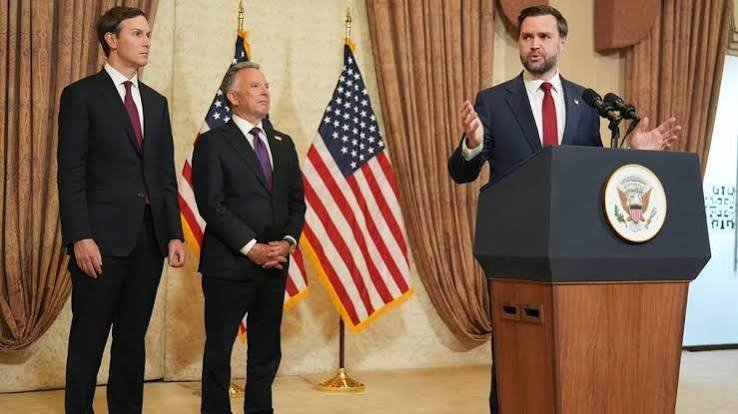
DOHA: Iran on Tuesday ruled out direct talks with senior US officials who travelled to the Gulf following the recent ceasefire, signalling that significant differences remain despite ongoing diplomatic efforts to secure a lasting peace agreement.
Iranian officials said both sides must first resolve outstanding issues related to the ceasefire reached two weeks ago before moving on to more contentious matters, including possible restrictions on Tehran’s nuclear programme.
Why is Iran refusing direct talks with the US?
Iranian Foreign Ministry spokesperson Esmaeil Baghaei said no meetings had been scheduled with the American delegation, despite the arrival of US envoy Steve Witkoff and President Donald Trump’s son-in-law Jared Kushner in Doha.
“There is no meeting at any level with the American side planned in the coming days,” Baghaei said.
Instead, Iran will continue engaging through mediators, with Qatar facilitating contacts between the two sides.
Who is mediating between Washington and Tehran?
The White House described the visit by Witkoff and Kushner as part of “high-level” diplomatic efforts. Qatar confirmed that Prime Minister Sheikh Mohammed bin Abdulrahman al-Thani met the US delegation.
Qatari Foreign Ministry spokesperson Majed al-Ansari said lower-level technical discussions involving mediators were expected to take place, although no direct US-Iran meeting had been scheduled.
What is delaying the next phase of negotiations?
Iranian officials said implementing and clarifying the terms of the ceasefire remains the immediate priority before negotiations can begin on broader political and security issues.
The preliminary framework reportedly provides for a 60-day negotiation period aimed at reaching a permanent peace agreement. It also envisages Iran easing restrictions on shipping through the Strait of Hormuz in exchange for financial incentives.
Can Iran control traffic through the Strait of Hormuz?
Tehran indicated it intends to maintain authority over maritime traffic through the strategic waterway.
Iran’s chief negotiator, Mohammed Baqer Qalibaf, said the Strait of Hormuz falls under the sovereignty of Iran and Oman, adding that new transit arrangements could be introduced once the 60-day negotiation period ends.
“The sovereignty of the Strait of Hormuz lies with Iran and Oman, and traffic in the Strait is subject to arrangements determined by Iran,” Qalibaf said on state television.
How has Washington responded?
US Vice President JD Vance rejected any suggestion that Iran could impose tolls on international shipping.
Speaking on The Michael Knowles Show, Vance said the United States would not allow Tehran to collect fees from vessels transiting the Strait of Hormuz. He also said oil shipments through the waterway had returned to pre-conflict levels and, on some days, had exceeded them.
Is President Trump considering further military action?
The diplomatic push comes amid reports that President Donald Trump has discussed the possibility of additional military strikes against Iran with senior defence officials.
According to The Wall Street Journal, Trump has consulted Defence Secretary Pete Hegseth and Chairman of the Joint Chiefs of Staff General Dan Caine on potential military options. However, the report said the US president has, for now, chosen to allow diplomacy more time. Reuters said it could not independently verify the report.
What is the impact on global energy markets?
Commercial shipping has partially resumed through the Strait of Hormuz, a strategic route that previously carried around one-fifth of global oil and liquefied natural gas supplies.
Despite continued uncertainty, oil prices have declined since the weekend after the United States struck Iranian military facilities in response to drone attacks on commercial shipping, while Iran retaliated by targeting US military sites in Kuwait and Bahrain.
What are the wider economic implications?
The UN trade and development agency warned that vulnerable economies could continue facing higher food and fuel prices even if energy markets stabilise.
The recent conflict has also fuelled global inflationary pressures, adding to domestic political challenges for the Trump administration ahead of November’s midterm elections. President Trump and Treasury Secretary Scott Bessent have urged fuel retailers to lower gasoline prices.
What does the agreement mean for Lebanon?
The interim US-Iran framework also includes efforts to reduce hostilities between Israel and the Iran-backed Hezbollah movement in Lebanon.
However, Lebanese Parliament Speaker Nabih Berri questioned the viability of a separate US-mediated proposal between Lebanon and Israel. Analysts warned that linking Israel’s withdrawal from southern Lebanon to Hezbollah’s disarmament could prolong the diplomatic deadlock rather than resolve it.