

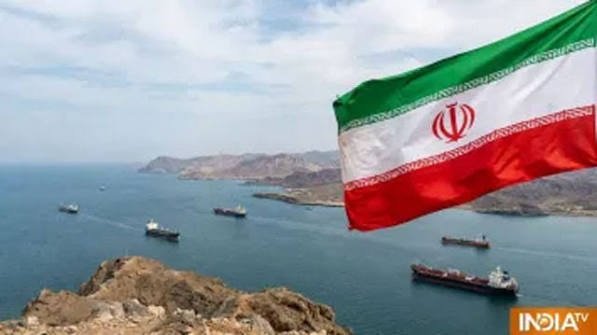
TEHRAN: Iran and Oman have reached agreements on their respective shares of the Strait of Hormuz and its revenues, while Tehran said negotiations had been delayed by US involvement, Iran’s Revolutionary Guards spokesperson said on Wednesday, according to semi-official Tasnim news agency.
The development comes as Iran and Oman negotiate an alternative transit arrangement through the strategic waterway, with Tehran maintaining that the Strait of Hormuz remains closed under its current conditions.
What Did Iran and Oman Agree on Hormuz?
Iranian Deputy Foreign Minister Kazem Gharibabadi said the two countries had held talks for around 40 days and agreed on a temporary maritime route about seven miles (11 kilometres) wide.
Under the proposed arrangement, the entry point and part of the exit route would pass through Iranian territorial waters.
Gharibabadi said the agreement did not amount to reopening the Strait of Hormuz. He said the proposed route would replace the previous route and that negotiations on a permanent arrangement would follow.
Iranian officials said the route had been proposed by Iran’s armed forces.
Why Is Hormuz Traffic Still Restricted?
Iran has said the Strait of Hormuz will not reopen through arrangements imposed by other countries and that any reopening would take place under Iranian arrangements.
Gharibabadi said Tehran had informed Pakistan, Oman and Qatar that normal operating standards for the waterway could not be maintained while Iran remained in a state of war.
He also said Iran considered the Strait of Hormuz part of its national security and retained the right to take measures it considered necessary to protect its security.
Despite Iran’s position, preliminary shipping data showed limited vessel movements through the waterway. Five commodity vessels transited the Strait of Hormuz on Tuesday, broadly unchanged from the previous day but well below the 10-day average of 15, according to ship-tracking data from Kpler.
Two tankers carrying liquefied petroleum gas and one carrying bitumen exited the strait, while two empty product tankers entered it. The figures could change because some vessels switch off their transponders during voyages.
What Is the Impact on Global Oil Supplies?
Two supertankers carrying around four million barrels of Saudi crude were heading to China after loading their cargoes through ship-to-ship transfers off Oman, according to shipping data.
The restricted traffic has also contributed to higher energy costs outside the region. Britain’s energy regulator Ofgem announced a 4% increase in its domestic price cap for October to December, citing higher international gas prices linked to the Iran war.
The new cap will increase by £60 to £1,723 ($2,348) and affect around 22 million households on variable tariffs.
What Is the Latest US Position on Iran?
US Secretary of State Marco Rubio told allied foreign ministers that Washington was not expected to launch new strikes against Iran “for the time being”, Axios reported, citing a US official and another source familiar with the matter.
The United States is instead expected to focus on other forms of pressure as tensions between Washington and Tehran remain high.
Britain has backed US efforts to seek a diplomatic solution to the Iran crisis. Finance Minister John Healey welcomed increased pressure on Tehran, including expanded US sanctions, while calling on Iran to end what he described as destabilising activity in the region, including around the Strait of Hormuz.
What Else Is Happening in the Gulf?
Iran has also asked Qatar to clarify the fate of Iranian pilots who went missing after their aircraft were shot down after entering Qatari airspace, according to Iranian state media.
Tehran said Qatar had told Iran it was unaware of the pilots’ fate. Iran said it had pursued the matter through diplomatic and military channels but had not received a clear response.
Meanwhile, Turkish President Recep Tayyip Erdogan said Türkiye would continue efforts to promote peace in the Middle East and would not allow what he called “bloody scenarios” to unfold in the region.
The developments come as regional tensions continue and the Strait of Hormuz remains a major focus of diplomatic, military and energy-security concerns.