

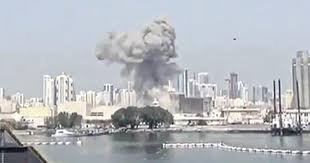
TEHRAN / WASHINGTON: Iran’s Revolutionary Guards said Wednesday they carried out coordinated attacks on a US base in Jordan and 21 additional targets across the Gulf region, in response to American strikes near the Strait of Hormuz, according to Iranian state media.
The escalation marks one of the most significant exchanges of fire since a ceasefire agreement in April, raising fresh concerns over regional stability in the Gulf.
Iranian media reported that the strikes targeted US-linked sites in Kuwait, Bahrain, and Jordan, including the al-Azraq base in Jordan. The Revolutionary Guards claimed the operation involved long-range missiles and drones and said it had also targeted US naval assets in Bahrain and military infrastructure in Kuwait.
Jordanian armed forces said five missiles fired toward al-Azraq were intercepted, with debris falling in unpopulated areas and no casualties reported. Kuwait’s military also reported air defence engagements after alleged drone activity near its territory, while Bahrain activated air raid sirens and confirmed its air defences had intercepted incoming threats.
The US military said it had conducted strikes earlier in the day on Iranian air defence systems, ground control stations, and radar installations near the Strait of Hormuz. A US official said nearly 20 Iranian targets were hit during the operation. Washington has not immediately commented on the latest Iranian claims.
Iran’s Foreign Ministry said the country acted in self-defence and warned Gulf states against allowing their territory to be used for US or Israeli operations, threatening further retaliation if attacks continued.
US officials said most incoming missiles and drones were intercepted and reported no confirmed US casualties or major damage. The Pentagon has not issued an official statement.
The confrontation follows a reported earlier incident involving a US Apache helicopter allegedly brought down by a drone strike, which US officials said did not result in injuries.
Oil prices rose about 1% following the renewed escalation, reflecting market concerns over potential disruption to shipping through the Strait of Hormuz, a critical global energy route.