

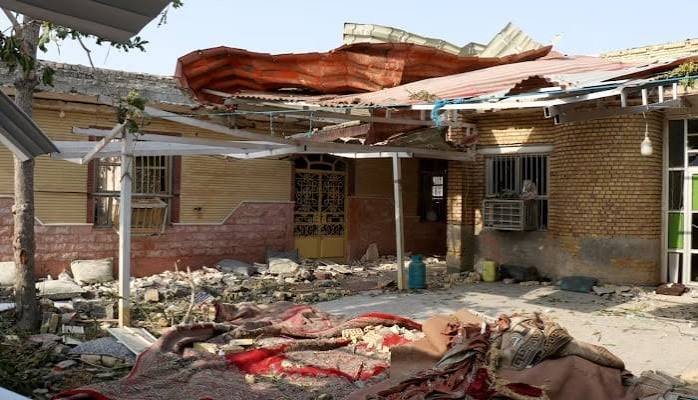
DUBAI: Iran buried victims of a reported US airstrike on a wedding gathering on Thursday as Tehran launched missiles and drones at a US military base in Kuwait, marking the most serious escalation in the region in more than a month.
Mourners gathered in Kuhestak village in Sirik County, on Iran’s Strait of Hormuz coast, where US airstrikes struck late Tuesday.
Iranian state television reported that a 22-year-old woman died in hospital from injuries sustained in the attack, raising the reported death toll from the strike to five. Iranian officials said nearly 70 people were wounded.
US Vice President JD Vance said Washington was investigating the incident.
“We’re investigating it because obviously we care. We want to know,” Vance told reporters.
The US military said it was aware of the reports but maintained that its forces “never target civilians.”
Iran Launches Missiles and Drones at Kuwait Base
The latest escalation followed US airstrikes on Tuesday, which Washington said targeted military sites along Iran’s coast in response to Iranian attacks on commercial shipping in the Strait of Hormuz.
Iran reported 18 deaths from the latest US strikes and responded on Wednesday with attacks on US military positions in Iraq, Jordan, Qatar, Kuwait and Bahrain.
Iran carried out further missile and drone attacks early Thursday, saying it was targeting another US base in Kuwait.
Kuwait’s military said its air-defence systems intercepted missiles and drones. No major follow-up attacks were reported later Thursday, suggesting the latest exchange had eased.
Oil Prices Rise as Strait Tensions Intensify
The renewed fighting has increased pressure on global energy markets because of the strategic importance of the Strait of Hormuz, through which a significant share of global oil and gas shipments previously passed.
Brent crude futures rose for a fourth consecutive day on Thursday, moving above $96 a barrel.
The Gulf region had experienced relative calm during August after US President Donald Trump halted an intensive air campaign in July.
Trump launched Operation Epic Fury in February with stated objectives that included dismantling Iran’s nuclear programme, limiting its ability to attack neighbouring countries and creating conditions for political change in Tehran.
Despite the military campaign and economic pressure, Iran’s clerical leadership remains in power.
The conflict has severely affected Iran’s economy, while Tehran continues to demand sanctions relief and has sought to use control over shipping through the Strait of Hormuz as leverage.
The latest attacks have raised further concerns over the durability of the current lull and the potential impact of renewed fighting on regional security and global energy supplies.