

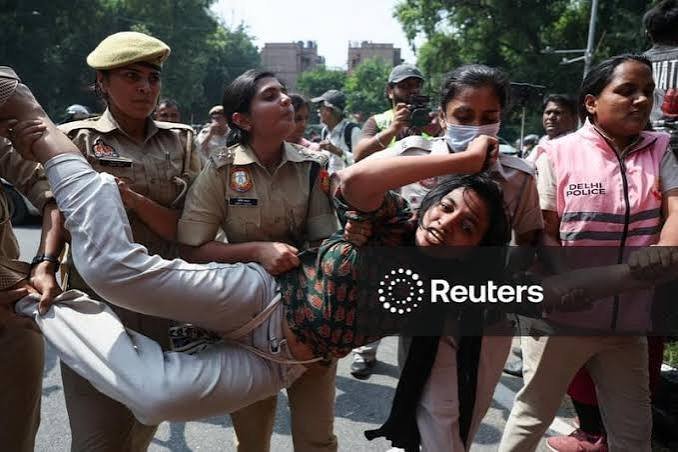
India: New Delhi remained on alert on Sunday as protests demanding the resignation of Chief Election Commissioner Gyanesh Kumar entered a second day, with police detaining more than 2,000 people and restricting access to the city centre to prevent a planned demonstration.
Abhijeet Dipke, founder of the Cockroach Janta Party (CJP), and two senior party leaders were released early Sunday after appearing before a magistrate. They had been detained upon arriving in Delhi on Saturday, when the group planned to gather supporters at Jantar Mantar.
Dhruv Rathee, an activist and social media influencer who was also detained, was released after midnight on the condition that he would not participate in further protests, according to an Indian interior ministry official.
Why Are Protesters Demanding the Election Chief’s Resignation?
The demonstrations are directed against Kumar over revisions to India’s electoral rolls. Critics allege that the process could disproportionately affect voters likely to oppose Prime Minister Narendra Modi’s ruling Bharatiya Janata Party (BJP).
The controversy intensified after The Indian Express reported in late September that two deputy election commissioners had raised concerns internally about voter-list revisions, registration procedures and digital systems.
The Election Commission has denied favouring any political party, saying differences of opinion are normal during internal deliberations. The BJP has also rejected allegations of electoral manipulation.
How Have Authorities and Opposition Parties Responded?
Police and paramilitary personnel remained deployed across New Delhi on Sunday. Metro stations reopened and mobile internet services were restored after restrictions imposed during Saturday’s demonstrations.
Opposition parties and government critics accused the authorities of using excessive force against protesters. A United Nations body also called on Indian authorities to respect the right to peaceful assembly.
India’s foreign ministry rejected the UN response as selective and described its statement as an unwarranted interference in the country’s internal affairs.
Election Commission data cited by the BJP indicates that approximately 130 million names have been removed from electoral rolls during the verification exercise. The figures include around 63 million people who had relocated and 30 million who could not be traced.
Opposition parties allege that Muslim voters and other minorities have been disproportionately affected, while the BJP and the Election Commission deny claims of manipulation.
The CJP, which began as an online satire movement before developing into a pressure group, has described the demonstrations as “Season 2” of its campaign against Kumar. The group says it will continue protesting until electoral reforms are introduced.