

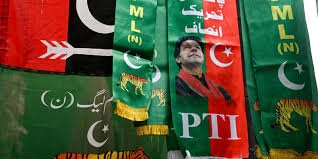
ISLAMABAD: Political tensions have intensified ahead of the Gilgit-Baltistan Assembly elections scheduled for June 7, as the government and Pakistan Tehreek-e-Insaf (PTI) exchanged accusations over alleged restrictions on campaigning and electoral fairness.
Election activity across Gilgit-Baltistan has increased in recent days, with major political leaders visiting the region to address rallies in the 24-seat assembly contest.
Pakistan Muslim League-Nawaz (PML-N) President Nawaz Sharif arrived in Gilgit on a brief visit, while Pakistan Peoples Party (PPP) leader Aseefa Bhutto Zardari held a campaign rally in Skardu’s GBA-7 constituency.
Government officials rejected PTI’s allegations of unequal treatment. Prime Minister’s Adviser on Political Affairs Rana Sanaullah said Nawaz Sharif’s visit was conducted after obtaining the required no-objection certificate (NOC) from relevant authorities. He added that no federal minister had engaged in campaigning in the region and denied any official interference in the electoral process.
Rana Sanaullah further stated that PTI Chairman Barrister Gohar Ali Khan had been conducting public meetings in Gilgit-Baltistan and argued that other PTI leaders could also campaign if they followed legal procedures. He also claimed that PTI does not have directly contesting candidates in the elections and maintained that the polls would be free and transparent.
PTI, however, rejected these claims, alleging discriminatory treatment against its party. PTI leader Shafi Jan said that all other major political parties, including PML-N and PPP, were actively campaigning in the region while PTI faced restrictions.
He also questioned the Election Commission’s response, stating that any similar activity by PTI representatives would have attracted immediate action. Referring to recent political developments in the region, he alleged that PTI candidates had been compelled to contest as independents following changes in its electoral alliances.
Shafi Jan further warned against what he described as attempts to influence the electoral process, alleging the possibility of irregularities in the upcoming polls.