

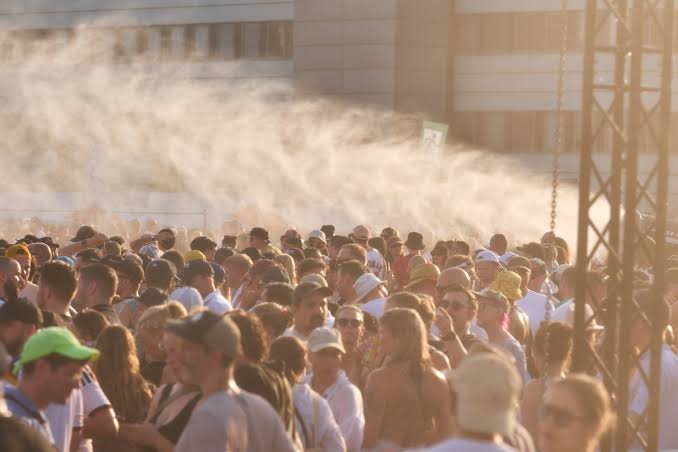
Public health authorities say most fatalities occurred during late June heatwave, while political pressure mounts over climate action and Europe endures its hottest June on record.
BERLIN: Germany has recorded an estimated 5,120 heat-related deaths so far this year, with the vast majority occurring during the intense late-June heatwave, according to the country’s Robert Koch Institute (RKI), highlighting the growing human cost of extreme weather across Europe.
The RKI said around 4,270 of the fatalities were among people aged 75 and older, making the elderly the hardest-hit group. More women than men died, largely because women make up a greater proportion of Germany’s oldest population.
Why did heat-related deaths rise sharply?
According to the RKI’s latest weekly report, the deadliest period occurred in late June when the weekly average temperature exceeded 20 degrees Celsius, significantly increasing health risks, particularly for older adults and vulnerable populations.
The institute said the latest figures underscore the severe impact of prolonged high temperatures on public health.
How severe is Europe’s heatwave?
Germany’s figures add to mounting evidence of a continent-wide climate emergency.
The European Union’s Copernicus Climate Change Service reported that Western Europe experienced its hottest June on record, with an average temperature of 20.74 degrees Celsius.
National authorities have also reported more than 4,700 excess deaths linked to the June 20–28 heatwave across France, Belgium, Spain and the Netherlands, reflecting the widespread impact of extreme temperatures across the region.
How does this compare with previous years?
The RKI said Germany’s deadliest heat years over the past decade remain 2018, when approximately 8,400 people died from heat-related causes, and 2019, when around 6,900 deaths were recorded.
This year’s death toll has already surpassed 5,000 despite the summer season still continuing.
Why is Germany’s government facing criticism?
The rising death toll has intensified political pressure on Chancellor Friedrich Merz’s government over its climate policies.
During a parliamentary debate, Green Party leader Katharina Dröge said 120 people died in the western city of Cologne alone during the June 27–28 heatwave—about four times the normal number of deaths for that period.
Dröge criticised the chancellor for failing to publicly address the heatwave and accused the government of weakening climate protection measures while reducing funding for environmental programmes.
What are Germany’s climate targets?
Germany aims to reduce greenhouse gas emissions by at least 65 percent below 1990 levels by 2030 and achieve climate neutrality by 2045.
Although emissions have fallen by approximately 48 percent, experts say current policies remain insufficient to meet the country’s legally binding climate goals.
The government announced an €8 billion climate package earlier this year to expand renewable energy, increase electric vehicle adoption and reduce reliance on fossil fuel imports, but proposed budget changes have triggered criticism from environmental groups and opposition parties.