

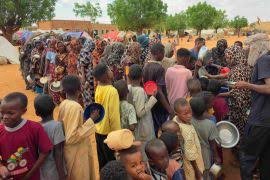
KHARTOUM: Intensifying fighting around the strategic Sudanese city of el-Obeid has displaced more than 11,000 people, including over 5,500 children, in the past two weeks, according to Save the Children, as the United Nations warns that up to 500,000 civilians could be at risk if violence escalates.
The renewed fighting marks a significant shift in Sudan’s three-year conflict between the Sudanese Armed Forces (SAF) and the Rapid Support Forces (RSF), with military operations increasingly concentrated in the Kordofan region.
Why Is El-Obeid Strategically Important?
El-Obeid, the capital of North Kordofan State, serves as a critical transport and logistics hub linking central Sudan with Darfur and the country’s southern regions.
The city remains under the control of the Sudanese Armed Forces, making it one of the military’s key strongholds in western Sudan and a vital route for both military supplies and humanitarian assistance.
What Is Driving the Latest Escalation?
The fighting has intensified after the Sudanese army regained territory around Khartoum earlier this year, shifting the conflict westward toward Kordofan and Darfur.
The RSF has increased military pressure around el-Obeid while the army has reinforced its positions inside the city, raising concerns over the possibility of a broader offensive.
The conflict has also seen increased use of drone strikes targeting military positions and critical civilian infrastructure, including electricity, water and fuel facilities.
How Are Civilians Being Affected?
Humanitarian agencies say residents are facing worsening shortages of food, clean water, fuel and medical supplies as fighting disrupts essential services.
Damage to water infrastructure and restricted humanitarian access have heightened concerns over the spread of waterborne diseases, including cholera.
Many of those fleeing el-Obeid had already been displaced by earlier fighting elsewhere in Sudan, with children accounting for more than half of the latest wave of displaced people.
Why Is the United Nations Concerned?
The United Nations has warned that up to 500,000 civilians living in and around el-Obeid could be at risk if the fighting intensifies.
Aid agencies fear the city could experience prolonged urban warfare similar to el-Fasher, where months of conflict have severely restricted humanitarian access and devastated civilian infrastructure.
The UN has also expressed concern over increasing attacks on civilian infrastructure, warning that continued hostilities could further deepen Sudan’s humanitarian crisis.
What Could Happen Next?
Military analysts say the next phase of the conflict will depend on whether the current military buildup develops into a full-scale offensive or whether diplomatic efforts succeed in reducing hostilities.
Aid organizations warn that further escalation could trigger additional displacement, worsen shortages of essential supplies and significantly disrupt humanitarian operations across Kordofan, a key corridor for relief assistance in Sudan.