

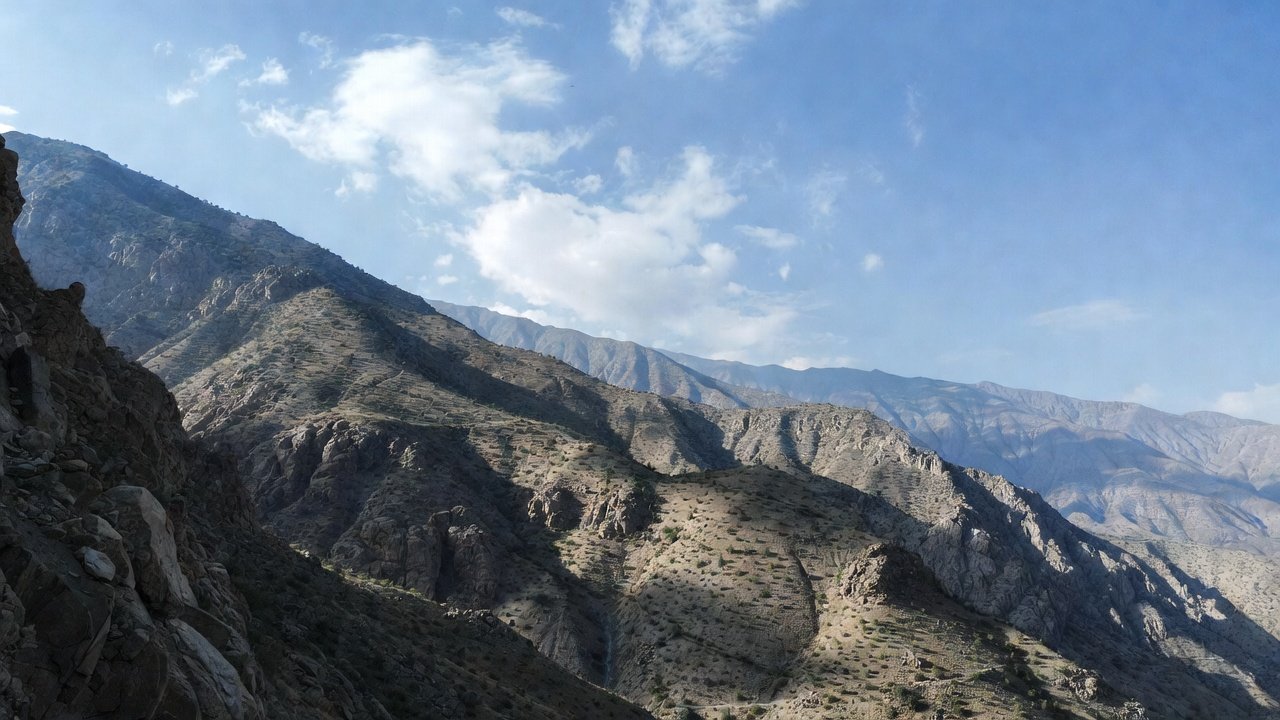
On 13 February 2026, a Financial Times article popularized the striking “ski lift changed countries” narrative, presenting it as a vivid illustration of climate-induced border shifts. A ski lift perched on a ridge beneath the Matterhorn effectively changed national jurisdiction, not due to conflict or diplomatic negotiation, but because glacial retreat altered the watershed that defines the frontier. Earlier coverage, including The Guardian’s 2024 reporting, had already documented the broader Alpine boundary adjustment driven by melting glaciers. At the Furgghorn saddle, roughly 150 meters of territory shifted from Italy to Switzerland as retreating ice altered the watershed that defines their border. Under Alpine legal arrangements, the boundary follows hydrology. When meltwater that once flowed southwest toward Italy began streaming northeast into Switzerland, the border followed the water.
The episode was peaceful and administrative. Yet it signals something far more consequential. Climate change is beginning to alter sovereign geography itself.
Public debate often focuses on rising sea levels and extreme weather. Far less attention is paid to the fact that many international boundaries are defined by rivers, glaciers and watersheds. When those natural systems shift, political maps may shift with them. In Europe, strong institutions absorbed the change without friction. In more volatile regions, the implications could be destabilizing.
The Himalayan Fault Line
Consider the Siachen Glacier, contested by India and Pakistan. Unlike the demilitarized Alpine frontier, Siachen is the world’s highest battlefield and embedded in nuclear deterrence logic and strategic mistrust. The glacier feeds the Nubra River, which joins the Shyok and eventually the Indus basin governed by the Indus Water Treaty. Hundreds of millions depend on this system for agriculture, energy and drinking water.
Scientific assessments indicate that Siachen has been retreating at approximately 35 meters per year since the 1970s. As the glacier shrinks, the physical features that underpin military positioning and cartographic interpretation evolve. Ice formations collapse, crevasses widen and previously inaccessible ridgelines emerge. Terrain once buried under thick glacial cover becomes exposed rock. In a region where high ground carries tactical value, such changes introduce strategic uncertainty.
Newly exposed terrain may invite repositioning. No explicit bilateral framework exists to determine the legal status of deglaciated land. At the same time, altered meltwater patterns could intensify downstream water stress. Territorial uncertainty and hydrological vulnerability could intersect, creating conditions conducive to miscalculation.
The Arctic Parallel
This phenomenon is not confined to South Asia. A similar structural transformation is unfolding in the Arctic Ocean. As Arctic sea ice retreats, new shipping routes have become seasonally navigable and access to hydrocarbon and mineral resources has expanded. Coastal states including Russia, Canada and Norway have recalibrated continental shelf claims and increased strategic presence. Military infrastructure has expanded and Arctic strategy has become embedded in national defense planning.
Although legal mechanisms under the United Nations Convention on the Law of the Sea provide a framework for adjudicating claims, geopolitical competition has intensified as environmental barriers recede. The Arctic demonstrates that climate change is not only an environmental stressor but also a geostrategic variable. It reshapes access, territory and influence. Where institutional arrangements are robust, environmental transformation can be managed through law and negotiation. Where rivalry dominates, environmental change risks militarization.
Climate Change as a Boundary Multiplier
Security scholarship has long described climate change as a threat multiplier. The German Advisory Council on Global Change warned in its report World in Transition that environmental stress amplifies existing fault lines. The United States Department of Defense has similarly characterized climate change as intensifying geopolitical instability. Yet the Himalayan context suggests an additional dimension. Climate change is becoming a boundary multiplier. It does not merely strain states internally; it alters the physical foundations upon which borders rest.
International law traditionally assumes relatively stable geography. Watersheds and glaciers serve as durable markers. Accelerated glacial retreat challenges that premise. When natural reference points dissolve, strategic certainty diminishes. In regions of high trust, this leads to technical negotiation. In regions of entrenched rivalry, it can elevate risk.
The Indus Equation
The durability of the Indus Water Treaty is often cited as evidence of resilience in a conflict-prone region. It has survived wars and political crises. However, it was negotiated under climatic assumptions that glaciers functioned as stable, long-term reservoirs. Accelerated glacial retreat introduces uncertainty into seasonal flow patterns and long-term water availability. Even if the treaty framework endures formally, shifting hydrological realities could complicate implementation and political perceptions of fairness.
Water insecurity combined with territorial ambiguity would create a dual-pressure environment. In such a scenario, environmental change becomes intertwined with national security.
Policy Imperatives for a Dynamic Geography
Policy foresight is therefore essential. South Asia requires mechanisms that anticipate environmental transformation rather than react to crisis. A supplementary climate protocol addressing deglaciated terrain and watershed shifts would reduce ambiguity. A joint glacier monitoring mechanism with transparent scientific data could build confidence and reduce suspicion. Integrating climate modeling into military and diplomatic planning would align strategic doctrine with environmental reality. Comparative lessons from Alpine and Arctic governance could provide technical guidance for managing dynamic natural borders.
The broader lesson is clear. Geography is no longer static. Rivers shift, glaciers retreat and coastlines erode. Political maps that once appeared permanent may prove contingent on environmental stability.
The ski lift that crossed a border in the Alps was a minor adjustment handled through institutional maturity. In the Himalayas, similar environmental shifts could intersect with nuclear deterrence and water security. Climate change is not simply an ecological challenge. It is a test of whether legal systems and security doctrines can adapt to a planet whose physical contours are changing.
The ice is retreating. The decisive question is whether governance will advance quickly enough to prevent geography from becoming the next trigger of instability.
Disclaimer: The views and opinions expressed in this article are solely those of the author and do not necessarily reflect the views, policies, or position of this website. The website does not endorse or oppose any opinion presented herein.
