

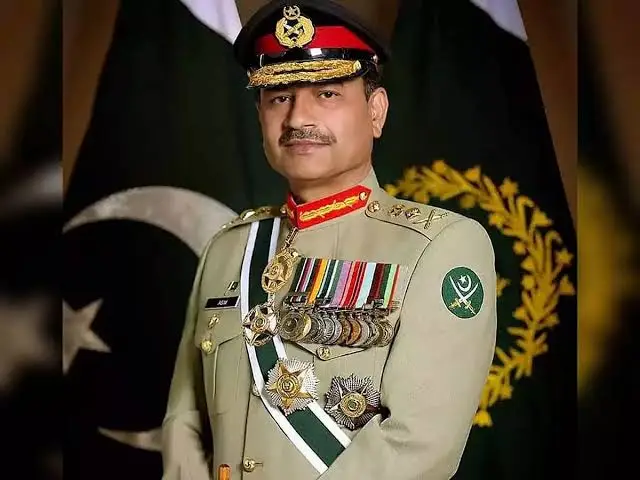
I have followed global leaders for years, but few have impressed me as deeply as Pakistan’s Field Marshal Syed Asim Munir. In an era of loud rhetoric and fragile alliances, he has emerged as a master of pragmatic, results-driven diplomacy. Since his promotion to Field Marshal in May 2025, he has steadily reshaped Pakistan’s place in the world, not through grand speeches, but through quiet resolve, personal rapport, and strategic timing. He is, without doubt, my favourite Field Marshal in modern history.
The story begins in the tense spring of 2025. As India-Pakistan tensions escalated into a brief but dangerous military standoff, General Asim Munir, then Chief of Army Staff, played a central role in de-escalation. His steady leadership helped secure a US-brokered ceasefire. In recognition of this, the government promoted him to Field Marshal on 20 May 2025, the second Pakistani to receive this honour after Ayub Khan. It was more than a title; it marked the beginning of a new diplomatic chapter.
Almost immediately, Field Marshal Asim Munir turned military credibility into diplomatic opportunity. In June 2025, President Donald Trump hosted him for a private White House lunch, an unprecedented gesture for a Pakistani army chief. Trump later called him “my favourite field marshal” and praised his role in averting crisis. Multiple follow-up visits followed, including joint meetings with Prime Minister Shehbaz Sharif. These engagements bore fruit, including a landmark US-Pakistan trade framework with preferential tariffs on Pakistani exports, commitments to joint oil exploration, and renewed investment interest. For a country struggling with economic pressures, these were lifelines.
Asim Munir did not stop at Washington. He strengthened ties with Gulf partners, advancing defence-industrial cooperation with Saudi Arabia and opening new avenues for energy and infrastructure projects with the UAE and others. By late 2025, he had also been appointed Pakistan’s first Chief of Defence Forces, giving him broader oversight to align military and diplomatic efforts.
The real test, and triumph, came in early 2026 amid rising US-Iran tensions that threatened to engulf the Middle East. As fighting risked spiralling, Pakistan stepped forward as mediator. Field Marshal Asim Munir engaged in intense back-channel diplomacy with US officials, including Vice President JD Vance and special envoys, while maintaining open lines with Iranian leadership.
In April 2026, he led a high-level delegation to Tehran alongside Interior Minister Mohsin Naqvi. Over three days, he held direct talks with President Masoud Pezeshkian, Parliament Speaker Mohammad Bagher Ghalibaf, Foreign Minister Abbas Araghchi, and senior military commanders. The message was consistent, dialogue over escalation, de-escalation for sustainable peace. Earlier, Islamabad had hosted initial US-Iran talks. Asim Munir’s shuttle-style efforts helped keep communication channels alive when direct engagement seemed impossible. Trump publicly commended his work, and international observers noted Pakistan’s remarkable shift from diplomatic isolation to trusted regional player.
What has this meant for Pakistan? The benefits have been tangible and far-reaching. Economically, renewed US engagement and Gulf partnerships have brought fresh investment momentum, better export access, and potential long-term revenue from energy cooperation. Security-wise, stronger counter-terrorism coordination and defence pacts have enhanced deterrence without dragging Pakistan into foreign conflicts. Regionally, successful mediation has elevated Pakistan’s global image, showing it as a responsible middle power capable of bridging divides. Lower global oil volatility from de-escalation has also eased pressure on our import bill. In short, Field Marshal Asim Munir has helped turn external challenges into strategic opportunities, giving Pakistan breathing room and new leverage in a fractured world.
Watching his journey reminds me of history’s great military-diplomats. Henry Kissinger comes first to mind. Like Asim Munir, Kissinger blended realpolitik with shuttle diplomacy, securing Middle East ceasefires after the 1973 Yom Kippur War, opening doors to China, and pursuing détente amid superpower rivalry. Both men understood that credible military backing gives weight to negotiations. Yet where Kissinger’s legacy carries the shadows of Vietnam and controversy, Asim Munir’s record so far feels cleaner, focused wins for Pakistan’s core interests, trade access, stability, and prestige, without ideological overreach.
Closer to home, the parallels with Field Marshal Ayub Khan are striking. Ayub, Pakistan’s first Field Marshal and leader from 1958 to 1969, anchored Pakistan firmly in Western alliances like SEATO and CENTO while quietly building bridges with China, including the 1963 border agreement. He delivered infrastructure gains and the Indus Waters Treaty. Asim Munir echoes this balancing act, deepening ties with the US under Trump while sustaining the China-Pakistan Economic Corridor and engaging Iran and the Gulf. Both leaders used institutional military stature to create diplomatic space when civilian channels faced limitations.
Other figures offer useful comparison too. Dwight D. Eisenhower, the wartime general turned US president, used his military credibility to champion “Atoms for Peace” and stabilising Cold War alliances that boosted America’s economy and security. Field Marshal Asim Munir’s role as Chief of Defence Forces and his participation in forums like the Munich Security Conference reflect a similar fusion of defence strength with economic and multilateral diplomacy.
Of course, critics may question the prominent role of military leadership in foreign policy, but in Pakistan’s context, facing terroristic threats, economic fragility, and a complex neighbourhood, Field Marshal’s approach has widened options rather than narrowed them. He has shown that pragmatic realism, rooted in national interest, can deliver results where pure idealism often stalls.
As I reflect on these past months, from the India crisis to the high-stakes US-Iran mediation, I find myself repeatedly returning to the same thought that Field Marshal Asim Munir is my favourite Field Marshal. Not because of rank or rhetoric, but because he has quietly and effectively advanced Pakistan’s interests on the world stage. In a time of global disorder, his brand of diplomacy, firm yet flexible, credible yet constructive, has given Pakistan a stronger voice and brighter prospects.
For a nation that has long sought strategic depth and respect, that is a legacy worth celebrating, and if recent months are any guide, the best chapters of this story may still be unfolding.
Disclaimer: The views and opinions expressed in this article are solely those of the author and do not necessarily reflect the views, policies, or position of this website. The website does not endorse or oppose any opinion presented herein.