

Astronauts aboard Artemis II have reported observing previously unseen features of the Moon as their spacecraft approached a planned lunar flyby, marking a key milestone in the mission.
According to NASA, the crew crossed the two-thirds mark of their journey, travelling nearly 200,000 miles from Earth and about 82,000 miles from the Moon by the fourth day of the 10-day mission.
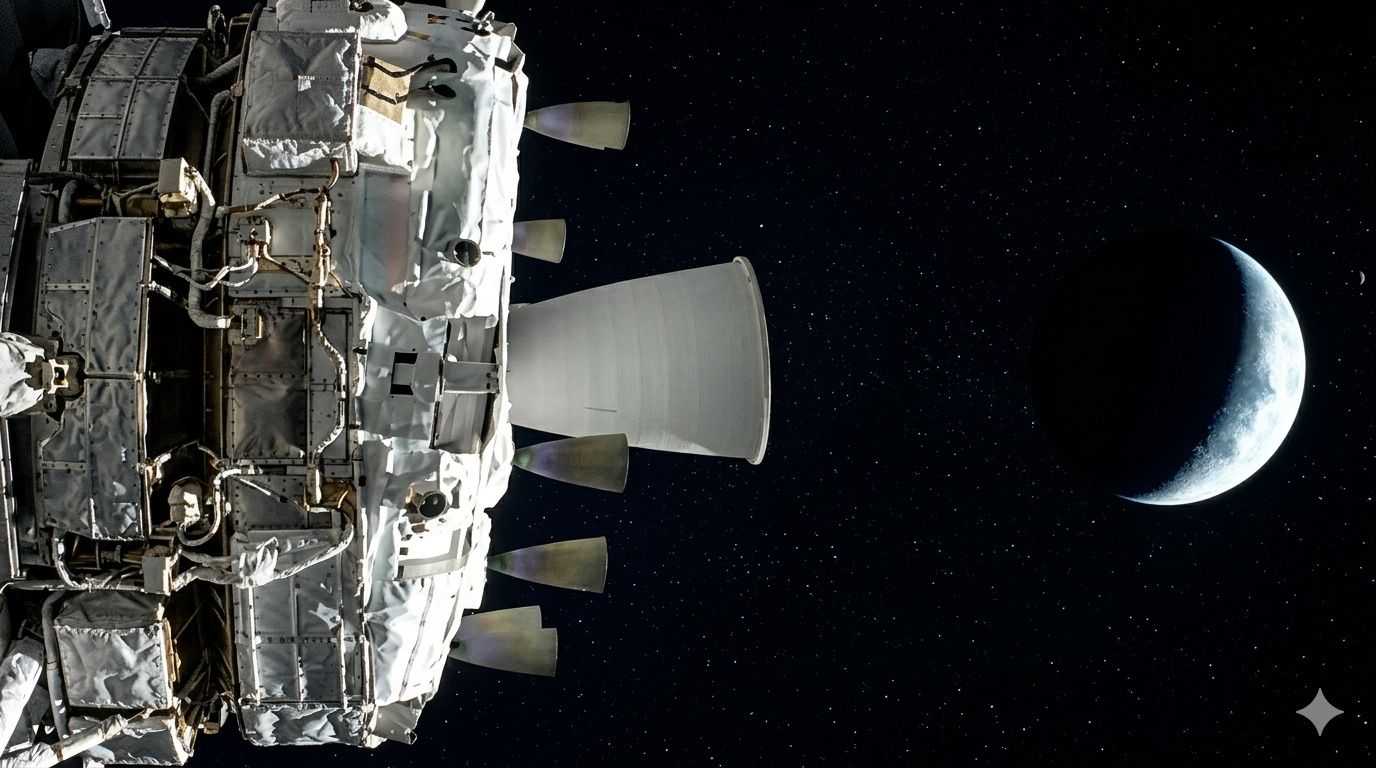
The agency released an image captured from the Orion spacecraft showing the Moon with the Orientale basin in view. NASA stated this is the first time the entire basin has been seen directly by human eyes, although it had previously been recorded by robotic missions.
Astronaut Christina Koch described the basin, often referred to as the Moon’s “Grand Canyon”, as a major highlight of the mission, noting its distinctive appearance during a live interaction with students.
The crew, which includes Reid Wiseman, Victor Glover, and Jeremy Hansen, is expected to reach the Moon’s sphere of influence, where lunar gravity overtakes Earth’s pull, ahead of the scheduled flyby.
NASA confirmed that astronauts have completed a manual piloting demonstration and reviewed operational plans for the flyby, including mapping and photographing lunar surface features such as impact craters and lava flows.
The mission could set a new distance record for human spaceflight as the spacecraft loops around the Moon.
Crew members also reported viewing the Moon’s far side, a region previously observed only by robotic spacecraft. Images transmitted from the mission showed features never before seen directly by humans.
The Artemis program aims to support future missions to establish a long-term human presence on the Moon, serving as a base for deeper space exploration.