

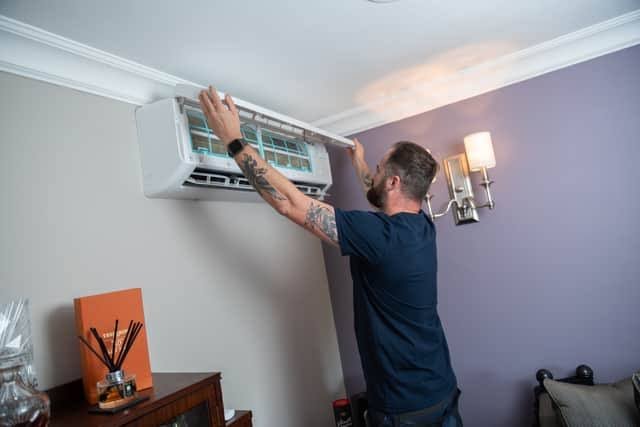
LONDON: Demand for air conditioning is rising across the United Kingdom as increasingly frequent and intense summer heatwaves prompt more households to install cooling systems, despite concerns over energy consumption and environmental impacts.
Industry figures and climate experts say Britain is witnessing a gradual shift in attitudes toward air conditioning, traditionally viewed as unnecessary in the country’s temperate climate, as record-breaking temperatures make homes increasingly difficult to live and work in.
Why Is Demand for Air Conditioning Increasing?
The surge follows England’s warmest June on record, marking the second consecutive year of record-breaking June temperatures. Scientists attribute the increasing frequency and intensity of heatwaves to human-induced climate change.
According to a 2025 report by the Centre for British Progress, only around 5% of UK homes currently have air conditioning, while approximately half experience overheating during the summer. The report warned that heat-related deaths, which number in the thousands each year, and declining productivity are likely to increase without improved cooling measures.
Air conditioning installers report a sharp rise in residential demand, with many fully booked for weeks after the latest heatwave. Retailers have also recorded a surge in searches for portable air-conditioning units, with some products selling out.
Why Are Climate Experts Concerned?
Sustainability specialists caution that widespread adoption of air conditioning could increase electricity demand, raise household energy bills and contribute to higher carbon emissions.
Experts also warn that air-conditioning systems release heat outdoors, intensifying the urban heat island effect, which can further increase temperatures in densely populated cities.
They argue that buildings should instead be adapted through better insulation, shading, natural ventilation and heat-resilient design before relying on mechanical cooling systems.
What Challenges Lie Ahead?
Many British homes were designed to retain heat rather than stay cool, making them increasingly vulnerable during prolonged heatwaves. While air conditioning is becoming more common, installation costs remain high, and operating expenses could significantly increase household electricity bills.
As climate change continues to reshape weather patterns, policymakers and urban planners face growing pressure to improve the resilience of homes and public infrastructure against extreme heat while balancing environmental sustainability.