

Close Menu

    Subscribe to Updates

    Get the latest creative news from FooBar about art, design and business.

    What's Hot

    Germany Wholesale Prices Rise 1.2% in February 2026 Amid Ongoing Inflation Pressure

    March 13, 2026

    Pakistan Acts as Bridge-Builder Among Regional Capitals Amid Middle East Conflict

    March 13, 2026

    Iran’s New Supreme Leader Vows Revenge, Confirms Strait of Hormuz Will Remain Closed

    March 13, 2026
    Facebook X (Twitter) Instagram
    Trending
    • Germany Wholesale Prices Rise 1.2% in February 2026 Amid Ongoing Inflation Pressure
    • Pakistan Acts as Bridge-Builder Among Regional Capitals Amid Middle East Conflict
    • Iran’s New Supreme Leader Vows Revenge, Confirms Strait of Hormuz Will Remain Closed
    • PNSC Oil Vessels Reach Karachi Safely Under Pakistan Navy Escort Amid Maritime Security Concerns
    • US and Allies Clash with Russia, China at UN Over Iran Nuclear Program
    • Shehbaz Sharif Meets Saudi Crown Prince Mohammed bin Salman, Reaffirms Pakistan’s Support Amid Middle East Tensions”
    • Navigating the Information Fog in a Multipolar World
    • Pakistan’s Frontier Resolve: The Pakistan Army and Air Force’s Decisive Operations in Afghanistan and Recent Diplomatic Ascendancy
    Facebook X (Twitter) Instagram
    echoasianews.com
    • Home
      • Fact Check
      • War Updates
    • World News
    • Local News
    • Opinion
    • Business
    • Entertainment
    • Sports
    • Politics
    • Technology
    echoasianews.com
    Home»Opinion»Pakistan’s Western Frontier: Enforcing Clarity in a Complex Environment
    Opinion

    Pakistan’s Western Frontier: Enforcing Clarity in a Complex Environment

    Shakeel AkhtarBy Shakeel AkhtarFebruary 27, 2026No Comments4 Mins Read
    Facebook Twitter Pinterest LinkedIn WhatsApp Reddit Tumblr Email
    Share
    Facebook Twitter LinkedIn Pinterest Email

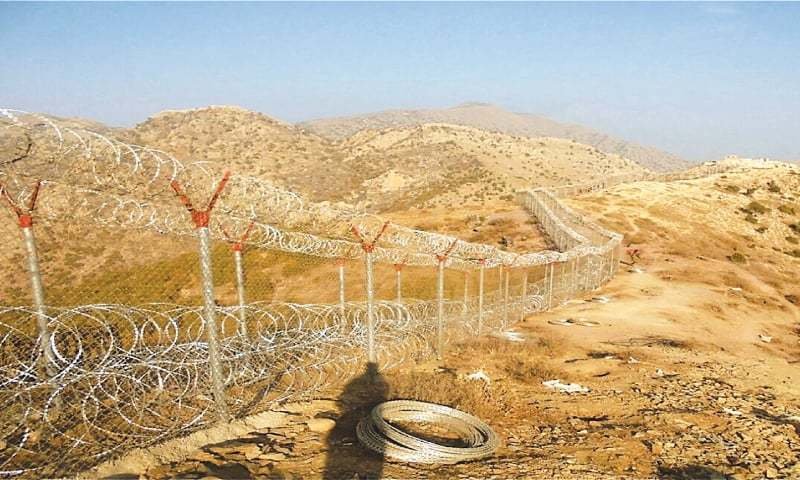
    The time has come for Pakistan to draw a firm line between patience and tolerance.

    For years, the western border was managed with restraint, selective enforcement, and dialogue. This approach was shaped by geography, regional instability, and the hope that accommodation would gradually reduce friction. Instead, it created operational space for armed actors to regroup, reorganize, and use the border as a staging ground for attacks inside Pakistan.

    That phase has ended.

    Authority Requires Action

    Power does not fail because it is challenged; it fails when it is assumed without enforcement. Along the western frontier, armed groups once operated through informal arrangements and tolerated presence. Enforcement existed, but inconsistently. Violence persisted because action was partial, intelligence not fully integrated, and networks not systematically dismantled.

    Now authority is exercised consistently. Intelligence flows across civilian and military structures. Surveillance is continuous. Movements are monitored. Cross-border attacks are intercepted before escalation. Armed groups can no longer operate freely, coordinate easily, or recover after losses.

    The methods that once allowed proxies to thrive are now outdated. Their networks are being dismantled, their communication lines severed, and their infrastructure degraded. The operational space for proxy warfare has shrunk to the point of strategic irrelevance.

    Targeting with Precision

    Recent operations are not random or reactive; they are intelligence-led, precision engagements. Every strike, raid, and interdiction is based on verified intelligence and multi-layered planning. Facilitators, safe houses, and logistical hubs are identified and neutralized systematically.

    These are not symbolic actions. They are targeted measures to ensure that armed actors can no longer use Pakistan’s borderlands to plan or execute violence. Proxies who rely on old methods of infiltration, concealment, or cross-border facilitation will no longer find sanctuary.

    Those who continue to pursue violence through proxies are now facing measurable consequences. Their networks are exposed, their plans are disrupted, and their survival depends on compliance with accountability. Proxy warfare is no longer effective; its practitioners are being contained and neutralized.

    Afghanistan and Baluchistan: Operational Realities

    The challenge extends beyond the western border. Areas in Afghanistan where armed groups operate continue to generate instability in Pakistan. These movements spill over, affecting local security and economic stability.

    In Baluchistan, attacks increasingly target infrastructure, transport corridors, and economic nodes. These are not symbolic targets-they are stabilizing mechanisms. The state’s response is structured borders are monitored, movement controlled, and cooperation assessed by tangible outcomes.

    Dialogue is available where peace is possible. Where violence persists, consequences follow.

    Accountability as Policy

    Stability cannot rely on indefinite accommodation. Allowing armed groups or proxies to operate without consequence only postpones disruption. Pakistan’s approach now makes accountability central: non-compliance carries consequences, cooperation is conditional, and enforcement is applied wherever violence threatens citizens or development.

    This is not escalation. It is disciplined enforcement. Those who continue to fund, direct, or support proxy operations are now seeing that their methods are failing and their networks collapsing under sustained pressure.

    Reality on the Ground

    Pakistan does not seek to dominate its periphery. Its objective is to maintain stability and prevent fragmentation. Power does not disappear because it is challenged; it disappears when authority is not exercised consistently.

    Along the western frontier, ambiguity has been reduced. Security forces are deployed strategically. Intelligence-led operations have disrupted networks. Surveillance and rapid response prevent large-scale attacks. Dialogue is conditional on behavior, and violence is no longer negotiable.

    The situation is neither complete peace nor full control. It is structured enforcement and measured stability. The operational space for militants is shrinking, and the state is ensuring that authority, not chaos, defines the border.

    Proxy networks that once thrived in uncertainty now face continuous disruption. Those who attempted to manipulate these groups, or support them as instruments of disorder, are experiencing the consequences of a state that enforces its mandate with precision. The era of old-style proxy warfare is over.

    Disclaimer: The views and opinions expressed in this article are solely those of the author and do not necessarily reflect the views, policies, or position of this website. The website does not endorse or oppose any opinion presented herein.

    Share this:

    • Share on Facebook (Opens in new window) Facebook
    • Share on X (Opens in new window) X

    Like this:

    Like Loading...
    Border Enforcement Pakistan Security Policy Pakistan Western Frontier Proxy Warfare
    Share. Facebook Twitter Pinterest LinkedIn Tumblr Telegram Email
    Shakeel Akhtar
    Shakeel Akhtar

    Shakeel Akhtar is a geopolitical analyst and writer based in Oslo, Norway. His work focuses on global power shifts, strategic behavior of states, and their implications for regional security, with particular emphasis on Pakistan’s defence posture and strategic maturity.

    Related Posts

    Navigating the Information Fog in a Multipolar World

    March 13, 2026

    Pakistan’s Frontier Resolve: The Pakistan Army and Air Force’s Decisive Operations in Afghanistan and Recent Diplomatic Ascendancy

    March 13, 2026

    Energy Markets, Regional Stability and Pakistan’s Strategic Stakes

    March 12, 2026
    Leave A Reply Cancel Reply

    Don't Miss
    Business & Economy
    Business & Economy

    Germany Wholesale Prices Rise 1.2% in February 2026 Amid Ongoing Inflation Pressure

    By EchoAsiaNewsMarch 13, 202602 Mins Read

    Germany’s wholesale prices rose 1.2 percent year‑on‑year in February 2026, extending an upward trend in producer…

    Share this:

    • Share on Facebook (Opens in new window) Facebook
    • Share on X (Opens in new window) X

    Like this:

    Like Loading...

    Pakistan Acts as Bridge-Builder Among Regional Capitals Amid Middle East Conflict

    March 13, 2026

    Iran’s New Supreme Leader Vows Revenge, Confirms Strait of Hormuz Will Remain Closed

    March 13, 2026

    PNSC Oil Vessels Reach Karachi Safely Under Pakistan Navy Escort Amid Maritime Security Concerns

    March 13, 2026

    Subscribe to Updates

    Get the latest news from echoasianews.

    Stay In Touch
    • Facebook
    • Twitter
    • Instagram
    • WhatsApp
    About Us
    About Us

    We cover a wide range of topics including World News, Business & Economy, Crypto, Entertainment, Politics, Sports, and Technology, ensuring our audience stays informed about both regional and international developments.
    We're accepting new partnerships right now.

    Email Us: social@echoasianews.com

    Facebook X (Twitter) Pinterest YouTube WhatsApp
    Our Picks

    Germany Wholesale Prices Rise 1.2% in February 2026 Amid Ongoing Inflation Pressure

    March 13, 2026

    Pakistan Acts as Bridge-Builder Among Regional Capitals Amid Middle East Conflict

    March 13, 2026

    Iran’s New Supreme Leader Vows Revenge, Confirms Strait of Hormuz Will Remain Closed

    March 13, 2026
    Categories
    • Blog
    • Business & Economy
    • Entertainment
    • Local News
    • Opinion
    • Politics
    • Sports
    • Technology
    • War Updates
    • World News
    © 2026 . All Rights Reserved EchoAsiaNews.

    Type above and press Enter to search. Press Esc to cancel.

    %d