
Close Menu

    Subscribe to Updates

    Get the latest creative news from FooBar about art, design and business.

    What's Hot

    CPEC, Gwadar and Balochistan: Why Indian-Sponsored Terrorism Must Fail

    October 26, 2026

    STRATAVERSE

    October 26, 2026

    Serbia’s Vučić Concedes Election Defeat as Student-Led Opposition Celebrates

    October 26, 2026
    Facebook X (Twitter) Instagram
    Trending
    • CPEC, Gwadar and Balochistan: Why Indian-Sponsored Terrorism Must Fail
    • STRATAVERSE
    • Serbia’s Vučić Concedes Election Defeat as Student-Led Opposition Celebrates
    • Shadab Khan’s Maiden ODI Century Leads Pakistan to Thrilling Win Over England
    • Trump Compares Muslim Senate Candidate Abdul El-Sayed to 9/11 Hijackers
    • Beyond the Threat of Force: Can the Makkah Accord Make Deterrence Work?
    • Pakistan: A Nation Whose Strength the World Recognises
    • Satellite Images Show Luxury Yacht With 50-Metre Pool Near Kim Jong Un’s North Korea Retreat
    Facebook X (Twitter) Instagram
    echoasianews.com
    • Home
      • Fact Check
      • War Updates
    • World News
    • Local News
    • Opinion
    • Business
    • Entertainment
    • Sports
    • Politics
    • Technology
    echoasianews.com
    Home»Opinion»Pakistan’s Water Crisis: Is the Country Running Dry?
    Opinion

    Pakistan’s Water Crisis: Is the Country Running Dry?

    Dr. Rana Muhammad AmirDr. Tahir MehmoodBy Dr. Rana Muhammad Amir and Dr. Tahir MehmoodOctober 16, 2026No Comments5 Mins Read
    Facebook Twitter Pinterest LinkedIn WhatsApp Reddit Tumblr Email
    Pakistan’s Water Crisis: Is the Country Running Dry?
    Share
    Facebook Twitter LinkedIn Pinterest Email

    Pakistan’s water problem is less about how much rain falls than about how little of it the country stores, protects and uses wisely.

    Water is not one resource among many; it is the condition on which every other resource depends. Yet the planet’s supply of usable water is surprisingly small. Only about 3 percent of the earth’s water is fresh, and most of that is locked in glaciers and ice caps, leaving well under 1 percent in rivers, lakes and accessible aquifers for drinking, farming and industry.

    Growing populations, expanding cities, soaring industries and the rising demand for food all draw on the available water resources. Climate change is making rainfall less predictable and disasters more severe. Across the world, fresh water per person is falling, and Pakistan is one of the countries that feel it first and most severely.

    At independence, each Pakistani had more than 5,000 cubic metres of water a year. Today the figure is well below 1,000 cubic metres, the line hydrologists use to mark water scarcity. Pakistan is presently water-stressed and stands at the edge of outright scarcity.

    The population has grown from about 33 million to over 240 million. The same flow is now divided among seven times as many people, and among far more factories, cities and farms.

    Almost all of that water passes through one system. The Indus and its tributaries feed the Indus Basin Irrigation System, one of the largest contiguous irrigation networks in the world. Agriculture takes over 90 percent of the water Pakistan withdraws, and it in turn employs over a third of the workforce and feeds the whole nation.

    On 7 October 2026, the Indus River System Authority (IRSA) approved a 22 percent water shortage for Punjab and Sindh for the Rabi season running to March 2027, after early estimates in late September had put it at 25 percent. Reservoirs held 9.34 million acre-feet (MAF) on 30 September, against 13.21 MAF a year earlier. Monsoon inflows were 7 percent below the ten-year average.

    Rabi is the wheat season. A cut of a fifth in canal water at sowing and during the critical growth stages means lower yields, higher costs for farmers who turn to tube wells, and more pressure on flour prices. For a country where wheat is the staple, water shortage is food insecurity by another name.

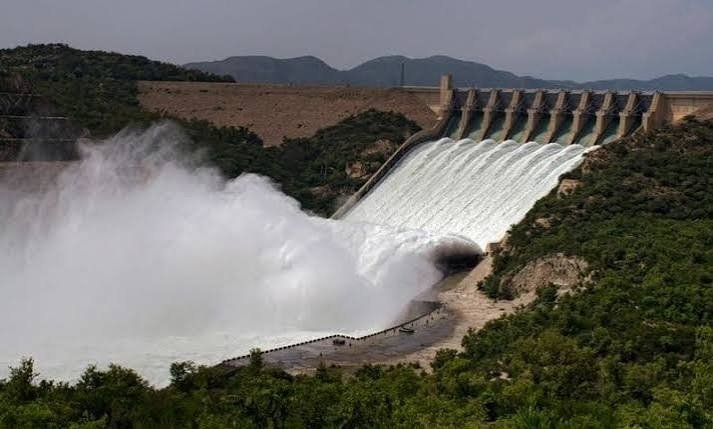
    It is tempting to blame nature or a neighbour for this crisis, but much of it is made at home. Pakistan can store only about 30 days of its river flow. Tarbela and Mangla have lost a large part of their capacity to silt, while new dams such as Diamer-Bhasha and Mohmand have moved slowly for years. The country therefore swings between surplus and shortage: in the monsoon, water runs off unused, and in winter the canals run dry.

    The canal network built in the British era was a marvel of its time, but much of it is now unlined, silted and poorly maintained. A large share of the water released at the canal head is lost to seepage before it reaches the crop, and flood irrigation remains the norm in the fields. Farmers pay only a nominal water charge (abiana), so there is little reason to save, and the country continues to grow thirsty crops such as sugarcane and rice, in effect exporting scarce water.

    When canals fall short, farmers turn to over a million mostly unregulated tube wells. Water tables are falling across Punjab and Balochistan, and in places the remaining water is turning saline. At the same time, untreated industrial and municipal waste, along with fertiliser and pesticide run-off, is polluting rivers and aquifers, so that even the available water is often unsafe to use.

    The 2022 floods, which caused losses estimated at over 30 billion dollars, showed the other face of the crisis: too much water and nowhere to hold it. Yet water reaching the sea is not simply “wasted”; the Indus delta needs a minimum flow below Kotri to hold back seawater and sustain mangroves and fisheries.

    Outside pressures add to the strain. Since April 2025, India has held the Indus Waters Treaty “in abeyance”, threatening the sharing of flood data and the timing of flows. Disputes between provinces under the 1991 Water Apportionment Accord persist for want of trusted, real-time flow data. Melting glaciers and erratic monsoons make the future less certain still. None of this, however, should become an excuse for failures within our own borders.

    The way forward lies in many ordinary measures pursued consistently. Pakistan must complete the dams under way, desilt existing reservoirs, build small dams and recharge ponds, and line canals and watercourses where losses are highest. Drip, sprinkler and laser land levelling should be expanded through credit and subsidies, and support shifted away from water-intensive crops in water-short areas. Abiana should be raised gradually, with relief for small farmers, and spent on canal maintenance. Large tube wells should be licensed and metered, industrial effluent treated before discharge, and telemetry installed at every barrage so that provinces argue over facts rather than suspicions. Pakistan must also defend its rights under the Indus Waters Treaty in every legal forum, and teach citizens that water is a trust, not a free good.

    Pakistan’s water crisis is real, but it is not fate. The rivers that built the Indus civilisation still flow; what has failed is the way the country stores, shares, prices and protects them. If nothing changes, the result will be falling harvests, rising food prices, emptier aquifers and sharper conflict between provinces. If the country acts now, the same Indus that sustained Harappa can sustain a nation of 240 million. The choice, unlike the rain, is in our hands.

    Disclaimer: The views and opinions expressed in this article are solely those of the author and do not necessarily reflect the views, policies, or position of this website. The website does not endorse or oppose any opinion presented herein.

    Authors

    • Dr. Rana Muhammad Amir
      Dr. Rana Muhammad Amir

      Dr. Rana Muhammad Amir is a writer and Associate Professor at the Institute of Agricultural Extension, Education and Rural Development, University of Agriculture Faisalabad. His writing explores agriculture, rural development, education, food security, and the social and economic challenges shaping rural communities.

    • Dr. Tahir Mehmood
      Dr. Tahir Mehmood

      Dr. Tahir Mahmood is an Associate Professor in the Department of Development Studies at the University of Agriculture, Faisalabad. His research and academic interests focus on development policy, governance, socio-economic transformation, and issues related to sustainable development. Through his teaching, research, and publications, he contributes to understanding contemporary development challenges and policy solutions in Pakistan and beyond. You can reach him at tahir.mahmood74@uaf.edu.pk

    Share this:

    • Share on Facebook (Opens in new window) Facebook
    • Share on X (Opens in new window) X

    Like this:

    Like Loading…
    Agriculture Climate change Indus River Indus Waters Treaty water management water shortage
    Share. Facebook Twitter Pinterest LinkedIn Tumblr Telegram Email
    Dr. Rana Muhammad Amir, Dr. Tahir Mehmood

    Dr. Rana Muhammad Amir is a writer and Associate Professor at the Institute of Agricultural Extension, Education and Rural Development, University of Agriculture Faisalabad. His writing explores agriculture, rural development, education, food security, and the social and economic challenges shaping rural communities.

    Related Posts

    CPEC, Gwadar and Balochistan: Why Indian-Sponsored Terrorism Must Fail

    October 26, 2026

    STRATAVERSE

    October 26, 2026

    Beyond the Threat of Force: Can the Makkah Accord Make Deterrence Work?

    October 24, 2026
    Leave A Reply Cancel Reply

    Don't Miss
    Opinion
    Opinion

    CPEC, Gwadar and Balochistan: Why Indian-Sponsored Terrorism Must Fail

    By Ayesha RafiqOctober 26, 202604 Mins Read

    Balochistan occupies a pivotal position in Pakistan’s economic future. Its coastline, mineral resources, and access…

    Share this:

    • Share on Facebook (Opens in new window) Facebook
    • Share on X (Opens in new window) X

    Like this:

    Like Loading…

    STRATAVERSE

    October 26, 2026

    Serbia’s Vučić Concedes Election Defeat as Student-Led Opposition Celebrates

    October 26, 2026

    Shadab Khan’s Maiden ODI Century Leads Pakistan to Thrilling Win Over England

    October 26, 2026

    Subscribe to Updates

    Get the latest news from echoasianews.

    Stay In Touch
    • Facebook
    • Twitter
    • Instagram
    • WhatsApp
    Recent Posts
    • CPEC, Gwadar and Balochistan: Why Indian-Sponsored Terrorism Must Fail
    • STRATAVERSE
    • Serbia’s Vučić Concedes Election Defeat as Student-Led Opposition Celebrates
    • Shadab Khan’s Maiden ODI Century Leads Pakistan to Thrilling Win Over England
    • Trump Compares Muslim Senate Candidate Abdul El-Sayed to 9/11 Hijackers

    Archives

    • October 2026
    • September 2026
    • August 2026
    • July 2026
    • June 2026
    • May 2026
    • April 2026
    • March 2026
    • February 2026
    • January 2026
    • March 2021
    • January 2021
    • January 2020

    Categories

    • Blog
    • Business & Economy
    • Entertainment
    • Fact Check
    • Local News
    • Opinion
    • Politics
    • Sports
    • Technology
    • War Updates
    • World News
    About Us
    About Us

    We cover a wide range of topics including World News, Business & Economy, Crypto, Entertainment, Politics, Sports, and Technology, ensuring our audience stays informed about both regional and international developments.
    We're accepting new partnerships right now.

    Email Us: social@echoasianews.com

    Facebook X (Twitter) Pinterest YouTube WhatsApp
    Our Picks

    CPEC, Gwadar and Balochistan: Why Indian-Sponsored Terrorism Must Fail

    October 26, 2026

    STRATAVERSE

    October 26, 2026

    Serbia’s Vučić Concedes Election Defeat as Student-Led Opposition Celebrates

    October 26, 2026
    Categories
    • Blog
    • Business & Economy
    • Entertainment
    • Fact Check
    • Local News
    • Opinion
    • Politics
    • Sports
    • Technology
    • War Updates
    • World News
    Meet Our Team
    • Editorial Board
    © 2026 . All Rights Reserved EchoAsiaNews.

    Type above and press Enter to search. Press Esc to cancel.

    %d