

How were the mice given human brain tissue?
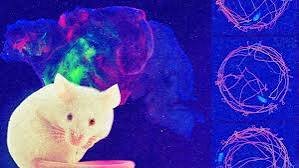
United States: Scientists at Stanford University have developed mice whose brains eventually contained human tissue accounting for roughly half of their total brain volume. Researchers first genetically engineered the mice to develop without most of their cerebral cortex, then transplanted laboratory-grown human brain tissue derived from stem cells into the vacant space.
The human tissue expanded rapidly, filling more than 90% of the space left by the missing mouse cortex within months. Researchers also observed connections between the human tissue and the mice’s nervous systems, with some human nerve fibres extending toward the spinal cord.
Did the human tissue make the mice think like humans?
Behavioural testing found no evidence that the mice developed human-like intelligence. The animals generally behaved normally, although researchers observed differences in memory and movement.
The study is primarily intended to provide a way to examine human brain development and disease in a living organism. Researchers say the model could help investigate conditions such as schizophrenia, epilepsy, cerebral palsy and certain forms of dementia that are difficult to study directly in living human brains.
The experiment underwent ethical review, while outside experts said animal welfare and any potential changes in cognition will require continued monitoring as human-animal brain research advances.