

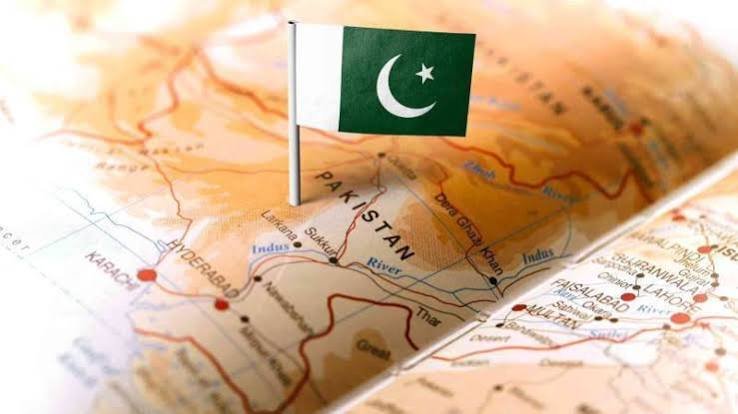
How strategic assumptions shaped South Asia
Pakistan sits at the crossroads of South Asia, Central Asia, the Middle East, and China. That geography has made it a theater where regional and global powers repeatedly placed bets. Some paid off. Many didn’t. “Missed calculations” here usually mean underestimating local complexity, overestimating leverage, or assuming short term gains wouldn’t create long term costs. Here are the major patterns seen over the last 75 years.
The Cold War: Alignment without integration
The calculation: The US and USSR both saw Pakistan as a frontline state. For Washington, Pakistan was a partner against communism and later the Soviets in Afghanistan. For Moscow, support for India was meant to balance that.
What was missed:
• Pakistan’s own security priority was India, not ideology. Aid tied to anti-communism didn’t automatically translate into alignment on Kashmir or India.
• Massive 1980s Afghan jihad funding created militant infrastructure that outlived the Soviet withdrawal. The goal was to bleed the USSR. The follow through on demobilization and state-building was thin.
• Sanctions after nuclear tests in 1998 assumed economic pressure would reverse the program. It didn’t, but it pushed Pakistan closer to China.
India: Mirror imaging and zero sum framing
The calculation: Both India and Pakistan often calculated that pressure would force the other to concede on Kashmir and cross border issues.
What was missed:
• Coercive diplomacy after 2001 and 2008 crises assumed the other side had a single “off switch” for non-state actors. The reality was fragmented authority and competing institutions.
• Economic integration was delayed for decades on both sides over the assumption that trade equals strategic vulnerability. The result: both missed out on a natural market of 1.7+ billion people, while China filled gaps in trade and infrastructure.
• Water, climate, and border management were treated as secondary to territorial disputes, even as they became primary sources of instability.
China: Infrastructure for influence
The calculation: CPEC and Belt and Road investments were meant to create a China Pakistan economic corridor, secure western access to the sea, and provide Pakistan with energy and transport.
What was missed:
• The scale of security costs. Attacks on Chinese workers and projects in Balochistan and KPK showed that economic corridors need local political buy in, not just financing.
• Debt sustainability and export capacity. The assumption that infrastructure alone would trigger industrialization overlooked Pakistan’s energy circular debt, tax base, and implementation capacity.
• Regional reaction. India saw CPEC passing through disputed territory as a red line, which hardened positions rather than opening new cooperation.
The US and NATO in Afghanistan: Proximity ≠ Control
The calculation: Pakistan’s border with Afghanistan made it essential for logistics, intelligence, and negotiations. Support would secure cooperation against militancy.
What was missed:
• Divergent endgames. The US priority was Al-Qaeda and later a negotiated exit. Pakistan’s priority was a friendly western border and preventing Indian influence in Kabul. Those weren’t the same.
• Assuming aid could buy alignment on all militant groups. The Afghan Taliban, TTP, and other groups had different relationships with the Pakistani state, and treating them as one bloc led to policy whiplash.
• The 2021 withdrawal showed the limits of 20 years of military investment without a political settlement that stuck.
Gulf Powers: Money, sectarianism, and labor
The calculation: Saudi Arabia, UAE, and Qatar invested in Pakistan for religious ties, labor, food security, and as a counterweight to Iran.
What was missed:
• That financial support without structural reform created dependency, not resilience. Bailouts helped in crises but didn’t fix energy or export issues.
• Sectarian funding in the 1980s-90s, intended to build influence, contributed to domestic violence that later destabilized both Pakistan and the region.
• Assuming Pakistan would pick sides in every Gulf-Iran dispute. Pakistan has tried to stay neutral, which frustrated patrons expecting automatic alignment.
Iran: The neglected neighbor
The calculation: Both sides assumed the border could be managed and that sectarian or proxy competition could be contained.
What was missed:
• Baloch insurgency and smuggling on both sides of the border. Military solutions without development kept the cycle going.
• Energy projects like the Iran-Pakistan pipeline were delayed by sanctions and financing fears, even as Pakistan’s energy crisis deepened.
Common threads in these missed calculations
1. Underestimating domestic politics: External powers often treated Pakistan as a unitary actor. In reality, civilian governments, military, judiciary, provinces, and public opinion pull in different directions.
2. Short-term vs long-term: Tactical wins in Afghanistan, Kashmir, or counterterrorism created strategic costs 10-15 years later.
3. Geography is not destiny: Being “important” didn’t automatically mean being “controllable.” Proximity gave leverage, but also blowback.
4. Economics as an afterthought: Security was prioritized over trade, energy, and climate. Now water stress, floods, and energy are the issues that most shape stability.
What’s different now?
The region in 2026 is less unipolar. China, Gulf states, Turkey, and Russia are all active. The US is less present militarily but still relevant on finance and tech. Climate, water, and youth demographics are forcing a shift: powers are recalculating around connectivity, energy, and food security instead of just military basing. The lesson repeated across decades: Pakistan and its neighbors can’t be solved for from the outside. They can be worked with. When powers assumed otherwise, the calculation missed.
Disclaimer: The views and opinions expressed in this article are solely those of the author and do not necessarily reflect the views, policies, or position of this website. The website does not endorse or oppose any opinion presented herein.