

UNITED STATES: NASA has successfully tested a high-powered lithium-fed magnetoplasmadynamic (MPD) thruster, marking a significant step toward developing faster and more efficient propulsion systems for future human missions to Mars.
The breakthrough test was conducted at NASA’s Jet Propulsion Laboratory (JPL) in California, where the experimental engine generated approximately 120 kilowatts of power—more than 25 times the output of the electric propulsion system currently used aboard NASA’s Psyche spacecraft. Unlike conventional chemical rockets, the MPD thruster uses electricity to convert lithium into plasma, which is then accelerated by magnetic fields to produce thrust.
NASA officials described the successful trial as an important milestone in advancing deep-space transportation technologies capable of reducing travel time to the Red Planet while significantly improving fuel efficiency.
Technology Promises Greater Fuel Efficiency but Faces Further Development
According to NASA, electric propulsion systems can use 70% to 90% less propellant than traditional chemical rockets, offering major advantages for long-duration space missions. The newly tested lithium-fed MPD thruster also addresses one of electric propulsion’s biggest limitations by operating at much higher power levels than existing systems.
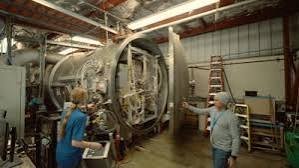
During testing, the thruster was fired five times inside an 8-metre water-cooled vacuum chamber, with the central electrode reaching temperatures exceeding 5,000°F. Researchers now aim to develop next-generation engines capable of producing 500 kilowatts to 1 megawatt of power.
Despite the successful demonstration, NASA said significant technical challenges remain before the technology can be used for crewed Mars missions. A single human mission is expected to require at least 2 megawatts of continuous power, meaning multiple thrusters would need to operate simultaneously for more than 23,000 hours under extreme conditions.
The project is being developed by NASA’s Jet Propulsion Laboratory, Princeton University, and NASA’s Glenn Research Center as part of the agency’s Space Nuclear Propulsion Project, with researchers also exploring nuclear-electric propulsion systems to provide the power required for future deep-space exploration.