

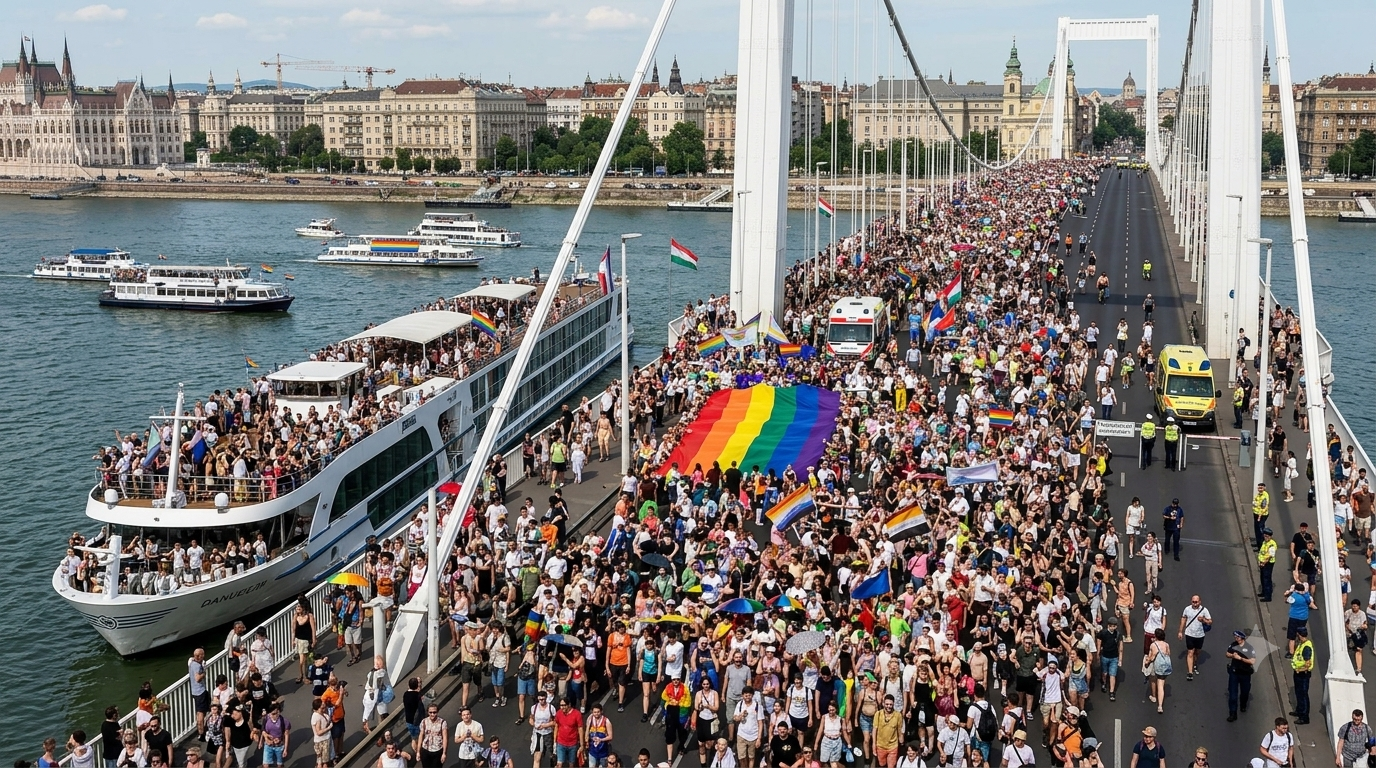
BUDAPEST: Thousands of people took part in Budapest’s Pride march on Saturday, the first major LGBTQ+ demonstration since Hungary’s recent political transition following the defeat of former Prime Minister Viktor Orbán in April 2026.
The march, held in the Hungarian capital, drew large crowds waving rainbow and European Union flags, marking a visible shift in public atmosphere after years of restrictions on LGBTQ+ rights under the previous government.
Organisers and participants described the event as both a celebration and a call for continued reforms, after years of legislation that had restricted same-sex adoption, gender recognition, and LGBTQ+ education content.
The rally comes after Orbán’s 16-year rule ended in April when the centre-right Tisza party, led by Péter Magyar, won national elections, opening the way for changes to previous policies.
Under Orbán’s government, Budapest Pride faced bans and legal challenges, and last year’s march turned into a large anti-government protest despite official restrictions.
This year’s event was authorised by authorities, reflecting a policy shift under the new administration, although activists say broader legal reforms are still needed.
Reports said attendance reached tens of thousands of participants, making it one of the largest Pride events in the country’s recent history.
Participants said the atmosphere was notably more open compared to previous years, although concerns remain among LGBTQ+ activists about the pace of legal change.
Organisers have urged the government to move beyond symbolic acceptance and implement concrete protections for LGBTQ+ rights.
The march is being viewed across Europe as a test case for how Hungary’s new leadership will address civil liberties after more than a decade of political restrictions.