

By EchoAsiaNews Desk
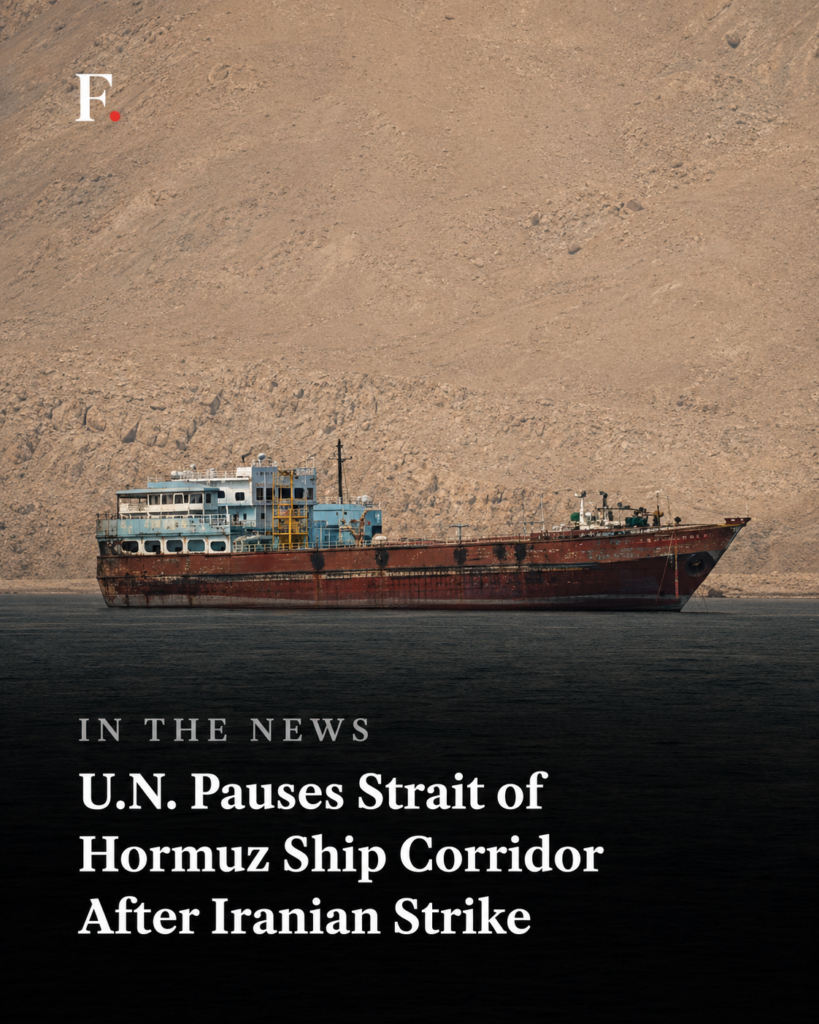
The United Nations’ maritime agency has temporarily paused its evacuation initiative for ships stranded around the Strait of Hormuz after a cargo vessel was struck near Oman, raising fresh concerns over the safety of one of the world’s most critical energy corridors.
The International Maritime Organization had launched the evacuation effort on June 23 to help hundreds of stranded vessels and thousands of seafarers leave the tense waterway through designated routes. According to Reuters, around 57 ships carrying nearly 1,100 seafarers had already used the evacuation corridors before the latest incident forced a reassessment of security guarantees.
The vessel hit near Oman was reportedly not part of the official evacuation framework, but the attack has still shaken confidence in the fragile arrangement. The ship was described as having been struck by an unknown projectile, while responsibility for the incident remains disputed. The IMO said the pause would allow time to review safety assurances for vessels using the route.
The escalation comes only days after a newly brokered US-Iran framework agreement sought to reopen the Strait of Hormuz, ease the naval blockade, and begin a 60-day negotiation process toward a broader settlement. The Express Tribune reported that the draft agreement includes a commitment to restore traffic through the strait and reduce interference with Iranian maritime movement.
For Gulf states, the latest attack is a serious test of US security assurances. Regional governments are now assessing whether the US-Iran deal can produce real maritime stability or whether the Strait of Hormuz will remain vulnerable to pressure, armed incidents and insurance shocks. The Express Tribune has reported that the deal has already pushed Gulf capitals to rethink their strategic posture, with concerns over long-term security guarantees.
The Strait of Hormuz remains a vital passage for global energy supplies, linking Gulf oil and gas exporters with Asian and global markets. Any prolonged disruption could affect shipping costs, insurance rates, oil prices and supply-chain confidence at a time when markets are already sensitive to Middle East instability.
For now, the pause in the UN-backed evacuation plan shows that the US-Iran deal may have lowered the temperature of the conflict, but it has not yet restored full trust at sea. The next few days will be critical for determining whether diplomacy can secure the waterway—or whether another maritime incident could pull the region back toward confrontation.