

IMEC’s Stalled Ambitions Expose India’s Zero-Sum Playbook, Connectivity Through Exclusion, Not Coexistence.
As a Pakistani observer attuned to the intricate geopolitics of West Asia and South Asia, the recent landmark agreements signed between Turkey and Saudi Arabia for a new railway corridor revive deep historical echoes while exposing the fragility of externally imposed economic visions.
The project, aimed at linking the Gulf to Turkey and Europe via Jordan, Syria, and potentially Oman, revives the spirit of the Ottoman-era Hejaz Railway. It promises an overland route that bypasses vulnerable maritime chokepoints like the Strait of Hormuz and the Red Sea, disrupted by ongoing conflicts. More pointedly, as highlighted by Indian media commentary, it deliberately sidesteps Israeli ports and diminishes the centrality of the India-Middle East-Europe Economic Corridor (IMEC).
From Islamabad’s vantage, this development is not merely infrastructure diplomacy, it is a stark illustration of how regional players are forging paths that prioritize their own strategic autonomy over grand designs pushed by external powers and their preferred partners.
The IMEC Mirage and Its Unraveling
Indian media has correctly noted the ambitions behind IMEC, unveiled at the 2023 G20 Summit in New Delhi with strong backing from the United States and Europe. The plan sought to connect India to Europe through the UAE, Saudi Arabia, Jordan, and crucially, Israel, positioning Israel as the vital “bridge” via its Mediterranean ports like Haifa. For India, this was projected as an economic masterstroke; for Israel, it carried deeper political aspirations of normalization and acceptance through commerce.
Yet reality has intervened. The Gaza conflict has imposed a harsh veto. Saudi Arabia has conditioned deeper engagement on irreversible progress toward a Palestinian state — a demand unmet by the current Israeli government. The northern leg of IMEC, spanning Jordan and Israel, has stalled. Turkey, historically viewing itself as the natural East-West bridge, has seized the moment to advance its own corridor, one that integrates a post-conflict Syria back into regional economics without requiring bows to Tel Aviv’s preferences.
This is pragmatic regionalism at work: an “iron road” over risky sea lanes plagued by Houthi disruptions, and a route that does not hinge on unresolved political conflicts.
The Pakistani Lens: Patterns of Exclusion and Rivalry
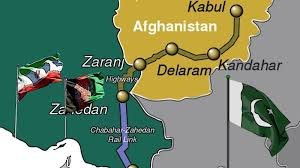
Here is where the Indian narrative, while insightful on West Asian shifts, reveals its selective framing. India has long pursued connectivity projects that amplify its influence while systematically marginalizing Pakistan. Whether it is bypassing Pakistan in energy corridors, pushing Chabahar as a counter to Gwadar, or embedding Israel into Middle Eastern economic architectures via IMEC, New Delhi’s approach consistently reflects a worldview uncomfortable with Pakistan’s sovereign existence and prosperity. Coexistence, in Indian policy, appears conditional — on Pakistan’s diminishment.
Pakistan has endured this pattern across international forums: from efforts to isolate us diplomatically, to water disputes, to trade barriers, and now in grand connectivity schemes that redraw maps while pretending Pakistan — a nuclear-armed state at the crossroads of South, Central, and West Asia — does not exist as a relevant player. The Hejaz revival and its extensions underscore a broader truth: West Asian states are prioritizing stability, reconstruction (notably Syria’s reintegration), and diversified routes over ideological alignments or Israeli-centric normalization.
If IMEC falters precisely because it tied economics too tightly to the Israeli-Palestinian impasse, the Turkish-Saudi initiative offers a model of flexibility. It does not demand the erasure of core disputes for participation. It acknowledges that trade can flow around, rather than through, unresolved conflicts.
Condemning the Fantasy of Conflict-Free Imposition
The deeper message conveyed by Indian media commentary — and which merits scrutiny from a Pakistani standpoint — is the illusion of a “conflict-free” regional order engineered to suit specific powers. IMEC was sold as a shining path to prosperity that would magically foster acceptance and peace. In practice, it exposed the limits: you cannot bypass the Palestinian question or regional sensitivities indefinitely. Forcing corridors through politically explosive nodes risks collapse when ground realities assert themselves.
Pakistan has long advocated for genuine coexistence based on justice, sovereignty, and mutual respect — not imposed normalizations that ignore occupation or historical grievances. Our foreign policy, rooted in principles of non-interference, support for Palestinian rights, and regional connectivity on equitable terms (think CPEC and engagements with GCC states, Turkey, and Iran), stands in contrast to zero-sum visions. We do not celebrate the sidelining of any party for its own sake, but we recognize when attempts to exclude or isolate legitimate stakeholders, like Pakistan in South Asian connectivity, backfire.
This railway project signals multipolarity’s advance. Turkey asserts its neo-Ottoman connectivity ambitions. Saudi Arabia diversifies beyond single dependencies. Syria gains economic oxygen. Gulf states secure alternatives to Hormuz vulnerabilities. India’s IMEC, once touted as inevitable, now looks like a victim of its own overreach and entanglement with intractable conflicts.
Strategic Imperatives for Pakistan
As Pakistan’s perspective demands, we must view this not as distant news but as an opportunity. Our diplomacy should engage proactively with Turkey, Saudi Arabia, and Gulf partners to explore synergies — perhaps linking CPEC westward or ensuring our ports and routes complement, rather than compete against, these emerging corridors. The lesson from Hejaz’s revival is clear: empires and projects rise and fall, but geography and resilient partnerships endure.
India may frame these shifts through its lens of rivalry and ambition. Pakistan sees them as validation that sustainable connectivity cannot be built on exclusion or denial of core realities, whether Palestinian statehood or Pakistan’s rightful place in regional architectures. True progress lies not in ghost projects or bypassed neighbors, but in corridors that accommodate coexistence, even amid differences.
The world moves fast, as Indian media itself notes. Power shifts. Alliances evolve. Pakistan stands ready, not as a sidelined spectator, but as a vital node demanding respect in any vision of Asian connectivity.
Disclaimer: The views and opinions expressed in this article are solely those of the author and do not necessarily reflect the views, policies, or position of this website. The website does not endorse or oppose any opinion presented herein.