

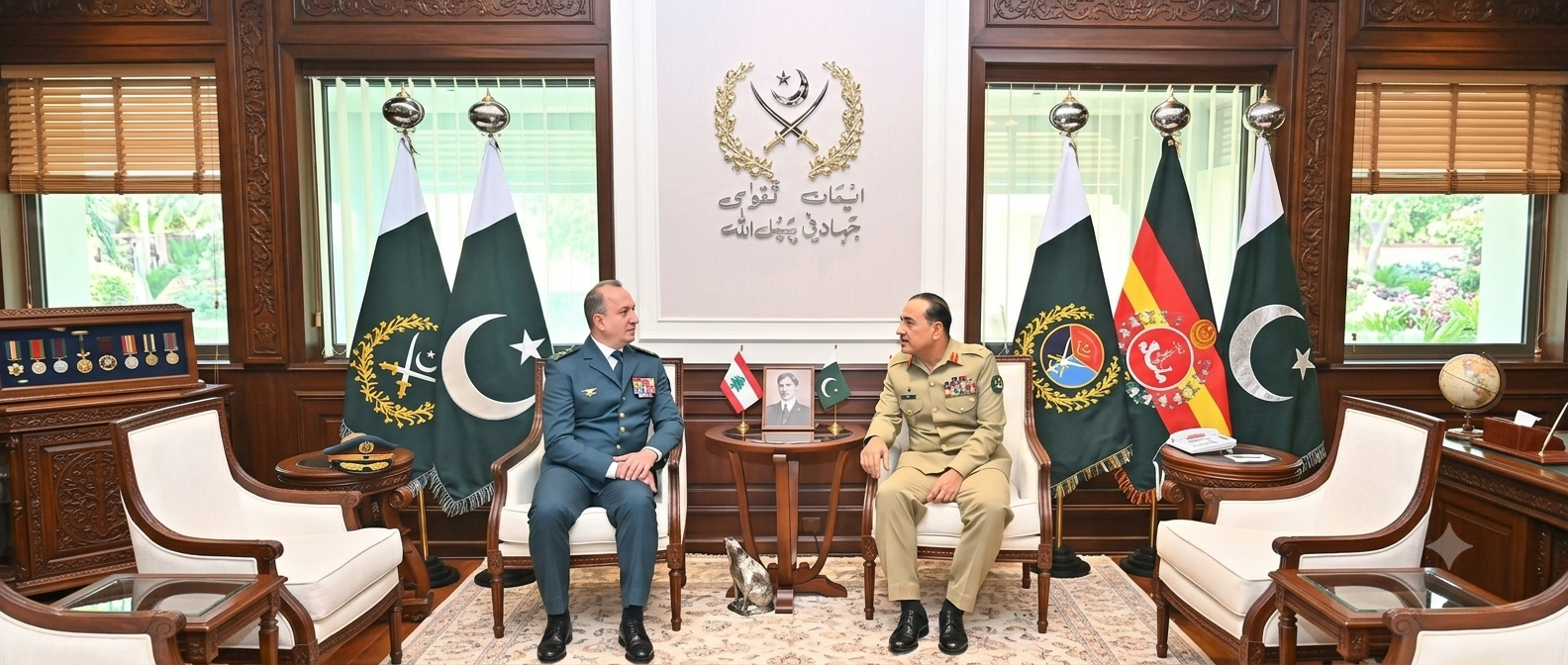
In an age of megaphone diplomacy, where states increasingly communicate through social media posts, televised threats, and carefully choreographed displays of military power, the most consequential conversations often happen in silence. The reported visit of Lebanese Army Chief Rodolphe Haykal to Pakistan, allegedly linked to wider United States-Iran negotiations, offers a glimpse into a less visible but increasingly important reality: diplomacy is once again being conducted away from the cameras.
If reports are accurate, this visit is about far more than military cooperation between two countries. It points to a larger strategic shift in which regional actors are becoming indispensable intermediaries in managing crises that global powers can no longer control alone.
For decades, discussions about Middle Eastern security revolved around Washington, Tehran, Tel Aviv, Riyadh, or Brussels. The assumption was that the region’s future would be negotiated by the major protagonists themselves. Yet the last several years have exposed the limitations of that framework. Wars have multiplied, proxy conflicts have intensified, and diplomatic channels have repeatedly collapsed under the weight of mutual distrust.
The result is a growing demand for credible intermediaries, states that maintain relationships across competing camps and possess enough strategic relevance to facilitate dialogue without dominating it.
This is where Pakistan’s role deserves closer examination.
For much of the international community, Pakistan remains trapped within outdated narratives centered on security challenges, economic instability, or South Asian rivalries. What often goes unnoticed is Islamabad’s consistent effort to position itself as a bridge between competing regional powers. It maintains ties with the Gulf states, engages constructively with Iran, retains channels with Western capitals, and enjoys diplomatic credibility across large parts of the Muslim world.
Such positioning does not automatically make a country a successful mediator. Mediation requires trust, discretion, and the ability to speak to all sides without becoming captive to any of them. Yet in an increasingly fragmented international order, those qualities are becoming more valuable than military power alone.
The significance of Lebanon’s reported connection to broader negotiations should not be underestimated. Lebanon today represents many of the Middle East’s unresolved tensions. It sits at the intersection of regional rivalries, domestic political paralysis, economic collapse, and security concerns that extend far beyond its borders. Any sustainable understanding between Washington and Tehran would inevitably have implications for Lebanon’s future stability.
That reality explains why military and security officials, not merely diplomats, are becoming central participants in regional conversations. Modern conflicts are no longer neatly divided between political and military spheres. Negotiations about ceasefires, deterrence, armed groups, border security, and reconstruction require both diplomats and security establishments to work in tandem.
The reported visit therefore reflects a broader truth about contemporary diplomacy: peace is no longer negotiated exclusively in foreign ministries. Increasingly, it is shaped through networks of military leaders, intelligence officials, and strategic interlocutors operating behind the scenes.
There is also a lesson here for the wider international community. The dominant narrative of global politics often assumes that influence belongs only to great powers. Yet recent history suggests otherwise. The normalization talks between regional rivals, the prisoner exchanges facilitated by third parties, and the quiet channels that have prevented escalation in multiple crises all point to the growing importance of middle powers.
These states may lack the economic weight of superpowers, but they possess something equally valuable: access. In a world defined by polarization, access has become a strategic asset.
Whether the current diplomatic efforts ultimately succeed remains uncertain. The Middle East has repeatedly demonstrated its capacity to frustrate even the most carefully crafted peace initiatives. Skepticism is understandable. But dismissing quiet diplomacy simply because it occurs outside public view would be a mistake.
History rarely remembers the private meetings that prevent wars. It remembers the wars themselves.
Yet the future of regional stability may depend precisely on those unpublicized conversations taking place far from the headlines. If a Lebanese army chief’s visit to Pakistan is part of a wider effort to sustain dialogue between adversaries, it serves as a reminder that diplomacy’s greatest successes are often invisible.
In a world exhausted by conflict, perhaps the most important geopolitical development is not who is making threats, but who is still willing to talk.
Disclaimer: The views and opinions expressed in this article are solely those of the author and do not necessarily reflect the views, policies, or position of this website. The website does not endorse or oppose any opinion presented herein.
