

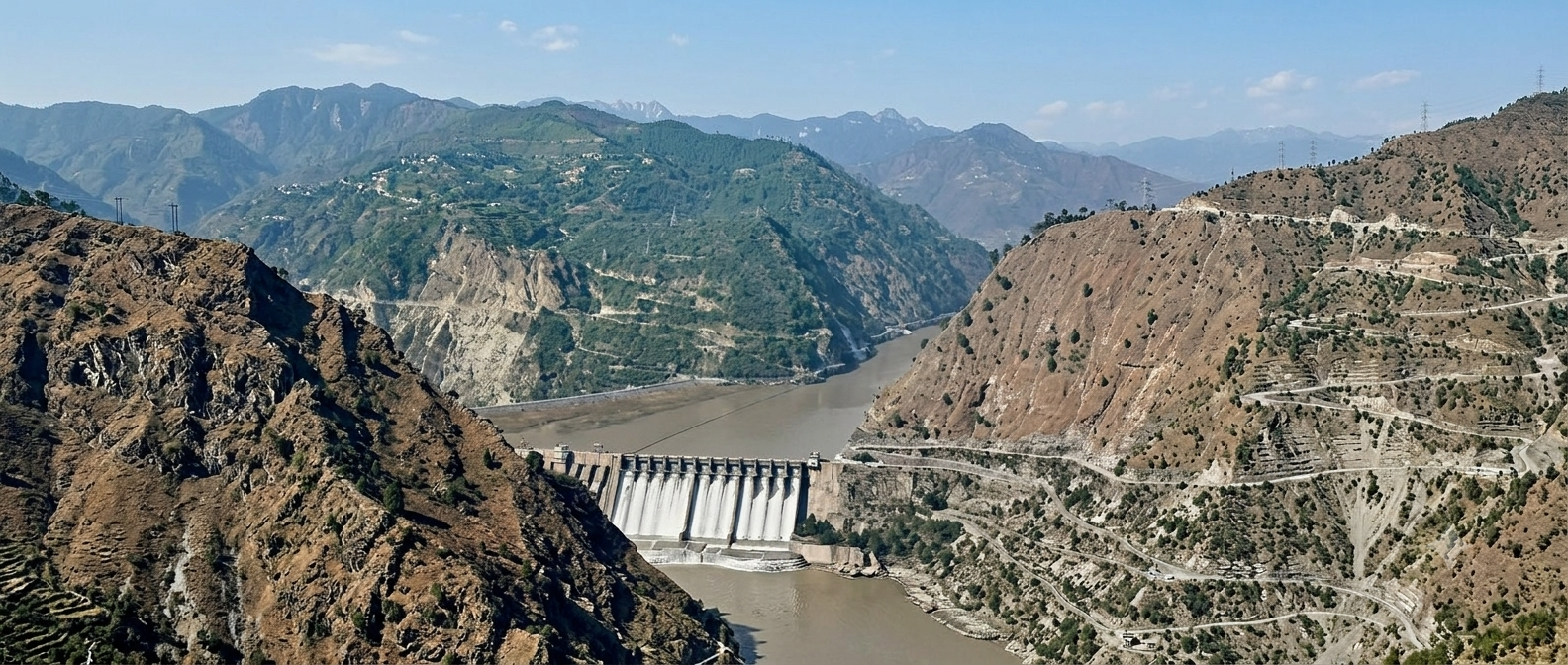
For long, water has been thought as one of the pillars of development and survival, which can be utilized as a means of change instead of as a weapon for change in geopolitical context. The recent remarks by the Indian government about the future water flows towards Pakistan, however, have alarmed a lot on the waters of peace and stability of South Asia and the future of trans-boundary river flow system of the world’s most important one. Such measures – recently mentioned in public discussions – would not just be a bilateral one, but would question on-going principles of international water law and would be a danger to the livelihoods of millions of people depending on the Indus Basin.
The Indus is of tremendous significance to Pakistan. It is home to approximately 80 percent of the country’s irrigated agriculture, provides resources for over 240 million people globally to access food and fodder, helps to meet the water demands of major cities, and plays a major role in drought recovery and hydropower generation. Pakistan’s Indus is more than just a river system. It can be viewed as the primary basis for food security, economic stability and human development for the nation.
In the background, comments that ‘not a single drop’ of water will reach Pakistan have raised the alarm among both the policy makers and the legal experts and regional observers. These remarks come at a time when there are discussions about the water infrastructure up-river and the future of the Indus Waters Treaty (IWT), one of the most important modern water-sharing treaties in history.
Signed with the help of the World Bank in 1960, the Indus Waters Treaty survives decades of political tension, scores of wars and military crises. Globally, it has been referred to as an excellent case study of how water has been cooperatively shared across different countries in a violent river corridor; and a successful example of water management. Especially, there are provision of dispute settlement and enforcement procedures included in the treaty. It was particularly created to keep water from being used as a tool of coercion in bilateral relations.
Treaties have long been recognized as having an end on their own, and not just because of politics.International law teachers have long held that a treaty cannot be suspended or disregarded because of the political climate. Pacta sunt servanda, ‘agreements are to be kept’ is one of the basic rules of international law, and was also included in the 1969 Vienna Convention on the Law of Treaties. India is not a signatory to all treaties that encompass the principle of treaty law, but it is generally accepted that this is an established principle of international law.
Beyond the Indus Waters Treaty there are widespread principles of international water law that are relevant. The aim of the 1997 United Nations Convention on the Law of the Non-Navigational Uses of International Watercourses is to provide guidelines on “Equitable and Reasonable” Entire Water Body uses. It also makes the point that there is a responsibility to avoid causing “significant harm” to co-riparian states. There is a consensus that actions taken to harm another downstream state in an “unfair” way do not fit with the proper utilization of a shared water resource; although interpretation of the law may differ.
It is not just a legal issue. That’s also a humanitarian concern.
The international community has rejected time and again pressure through access to necessary resources. In most of the world, intentional shortages of life-sustaining resources, in most cases food, energy or water, have been considered to be incompatible with responsible state behavior. Consider water – it is vital for sustaining human life as well as food production, and holds a special place of importance.
That means that the arguments on withholding water cannot be classified as ‘political rhetoric’. In the case of water being deliberately denied to a people downstream, as is commonly being talked about by public officials, the matter is no longer a matter of diplomacy, but an issue of human commandments. These declarations always raise questions about future policy directions, goals, and about millions of people that rely on the river’s continued support of flows.
Another worrying aspect of this is how limited the international response has been. Any country that publicly announced that it will impair the delivery of water to another state will probably appear on world news. The geopolitical and humanitarian impact would be a matter of international discussion and be addressed by policy research institutes and the media. However, events in the Indus Basin have not been as closely investigated, even though it is home to one of the greatest population water concentration.
That inconsistency has had some observers lambasting the international community for prioritizing political over legal and humanitarian concerns at times. Any rules-based order must be equally enforced, irrespective of strategic partnerships or political preferences of the international community.
The potential risk to the precedent that might be set is greater. The implications would have far-reaching effects off the contested rivers, if those strong upstream states decide to use the rivers as tools of force against one another in South Asia. Worldwide, over 300 international river basins transborder rivers. Cooperation with others over water resources is vital for the security and prosperity of Hundreds of millions of people. Degradation of water security regulations may lead to further increase in insecurity for water-stressed areas that are already under climatic stress.
The Pakistan question goes far beyond bilateral issue on Pakistan. It is about the protection of internationally known water rights, keeping of the Treaty and protecting a river system which supports a whole nation. The Indus Basin is too much to offer as a geopolitical chip. It’s a one, natural resource that millions of lives rely upon.
The uncertainties in the lives and livelihoods of millions must not be exposed. The international community needs to be aware of these worries and take them seriously before it becomes an issue of scale. To achieve regional stability it is essential that commitment to treaty obligations is respected, internationally recognized legal principles are followed and there is responsible stewardship of transboundary rivers. Water should be used as a means for collaboration, not compulsion.
In the 21st century, water ought not to be a weapon! The intentional employment of water as a weapon of pressure would be an assault on basic norms of international order as states assert to champion. How these new, or perhaps also old, international rules for sharing natural resources are applied and upheld in the future may serve as a measure for the viability of the Indus Basin and the validity of these norms.
Disclaimer: The views and opinions expressed in this article are solely those of the author and do not necessarily reflect the views, policies, or position of this website. The website does not endorse or oppose any opinion presented herein.
