

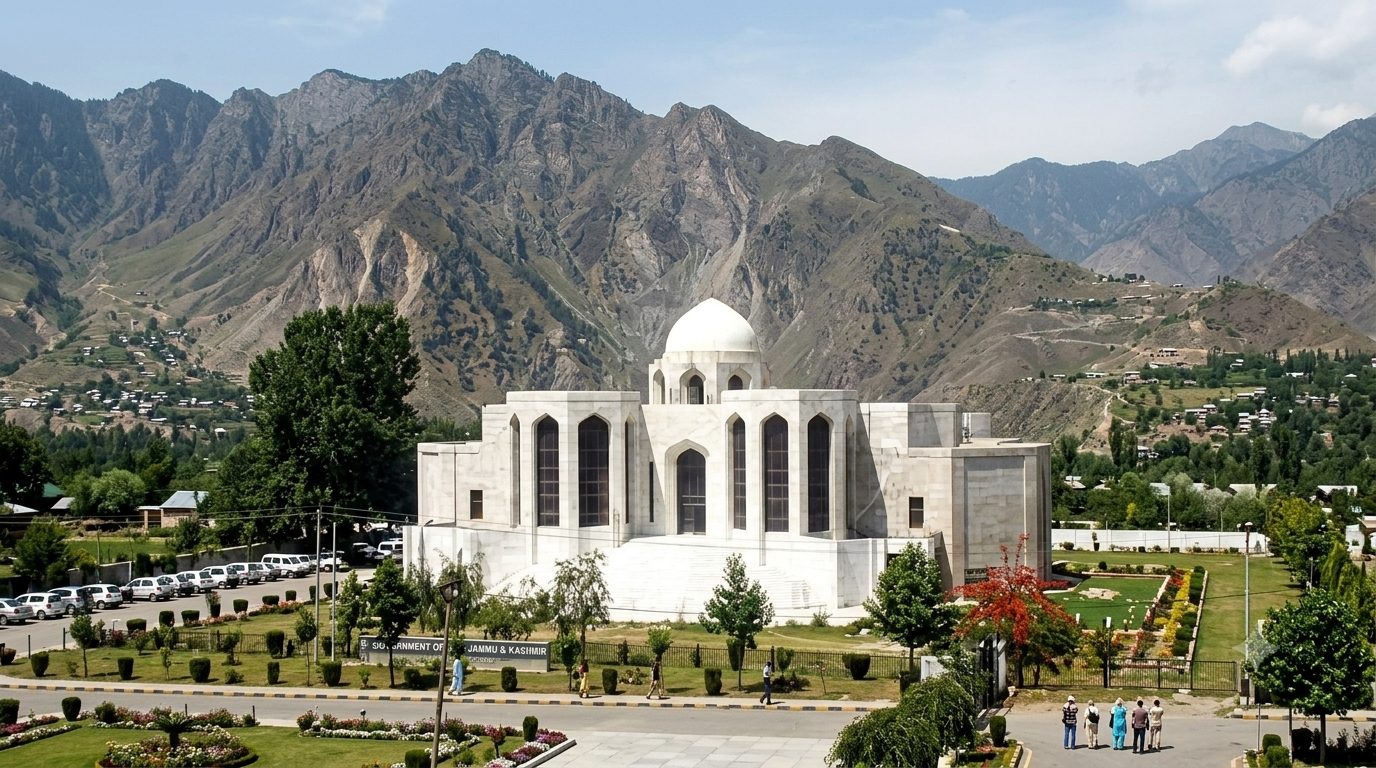
The Advisory Opinion rendered by the Supreme Court of Azad Jammu & Kashmir has brought much-needed legal clarity to one of the most contentious political disputes the region has witnessed in recent years. In doing so, it has unequivocally vindicated the stance taken by both the AJK Government and the Federal Government of Pakistan throughout the controversy surrounding the refugee seats championed by the Joint Awami Action Committee (JAAC). This ruling is a testament to Pakistan’s unwavering commitment to constitutional democracy and the rule of law.
Pakistan’s Federal Government: A Partner in Constitutional Governance
From the very beginning, Islamabad’s involvement in this matter reflected the Federal Government’s deep commitment to resolving disputes through dialogue, negotiation, and constitutional process. Rather than allowing the situation to escalate unchecked, the Federal Government proactively earmarked a high-level committee to engage with JAAC’s demands. That committee worked diligently and in good faith, successfully resolving 36 out of 38 demands, all of which were administrative in nature and fell within the legitimate scope of executive authority.
This was not a government that ignored public concerns. This was a government that listened, engaged, and delivered wherever the Constitution permitted it to do so. The two remaining demands, which touched upon constitutional provisions, could not be resolved through executive action, and the Federal Government was right to say so. Pakistan’s constitutional framework does not allow any government, however willing, to legislate by concession under pressure. Referring those matters to the appropriate elected forum was not weakness; it was wisdom.
The Rule of Law Is Non-Negotiable
The Supreme Court’s Advisory Opinion has now placed the full weight of judicial authority behind what Pakistan’s Federal Government has maintained throughout: that constitutional amendments are a solemn legislative act, not a bargaining chip to be surrendered on the streets. This principle goes to the very heart of what it means to be a constitutional democracy.
Pakistan has long championed the cause of representative governance in Azad Jammu & Kashmir. The Federal Government’s insistence that constitutional change must flow through elected institutions under Article 33 was not obstruction; it was protection, protection of the democratic process itself. Any government that caves to coercive demands sets a dangerous precedent, one that ultimately undermines the very institutions through which people’s voices are heard.
The Court drew a clear and necessary line: freedom of assembly is a protected right, but that right does not licence the blocking of highways, the shutting down of economic activity, the obstruction of elections, or the paralysis of public institutions. The rights of traders, commuters, students, patients, and ordinary voters are no less constitutionally protected than the rights of those who choose to protest. Pakistan’s position has always been that no single group may claim democratic legitimacy while simultaneously denying it to everyone else.
A Constitutional Duty Pakistan Upheld
One of the most significant aspects of this episode was the determination, supported firmly by the Federal Government, to hold elections within the constitutionally mandated timeframe. Article 22(4) is unambiguous: general elections are not optional, and political agitation cannot serve as a pretext for their postponement.
Pakistan’s federal establishment understood what was at stake. Delaying elections under pressure would have amounted to rewarding coercion and establishing a precedent that any sufficiently disruptive movement could override the democratic calendar. The Government held firm, and the Court has now confirmed that it was constitutionally obligated to do so. The electoral route was open to all. Any group genuinely committed to constitutional reform had every avenue available to contest elections, build a mandate, and pursue change through the Assembly. Confrontation was a choice, not a necessity.
Maintaining Order Was a Constitutional Imperative
The Federal Government’s support for law-enforcement operations in response to credible threats of violence has been questioned by some. The Advisory Opinion answers those questions definitively. When intelligence pointed to the potential for violence, acquisition of weapons, attacks on security personnel, and organised plans to disrupt public life, both the AJK Government and the Federal Government were not merely empowered to act; they were constitutionally required to do so.
Pakistan has consistently maintained that the State’s obligation to protect its citizens, its institutions, and its democratic processes is not a political choice but a constitutional duty. The proscription of JAAC and subsequent enforcement operations must be understood in this light. These were not acts of political vengeance. They were the response of a responsible state safeguarding constitutional order against organised coercion.
Pakistan’s Broader Commitment to Constitutional Democracy
This episode must also be read within the broader context of Pakistan’s commitment to strengthening democratic institutions across Azad Jammu & Kashmir. The Federal Government has consistently invested in the region’s political, administrative, and economic development. Its approach to this crisis, favouring dialogue over confrontation, negotiation over suppression, and constitutional process over executive overreach, reflects a mature democratic instinct.
The Advisory Opinion ultimately vindicates that instinct. Constitutional questions must be settled through constitutional means. Pakistan stood by that principle under enormous pressure, when it would have been far easier to make hollow promises or yield to demands that no government had the legal authority to fulfil.
Sovereignty of the Constitution Prevails
The Supreme Court of Azad Jammu & Kashmir has reaffirmed what Pakistan’s Federal Government has argued throughout: that in a constitutional democracy, it is the sovereignty of the Constitution, not the pressure of the street, that must govern. The Federal Government negotiated in good faith, protected the electoral process, maintained public order, and referred constitutional matters to their proper forum. Every one of those decisions has now been confirmed as not only legally sound but constitutionally required.
This is a moment of vindication, not only for the AJK Government, but for Pakistan’s entire constitutional and democratic framework. The rule of law has prevailed, and that is a victory for every citizen of Azad Jammu & Kashmir.
Disclaimer: The views and opinions expressed in this article are solely those of the author and do not necessarily reflect the views, policies, or position of this website. The website does not endorse or oppose any opinion presented herein.