

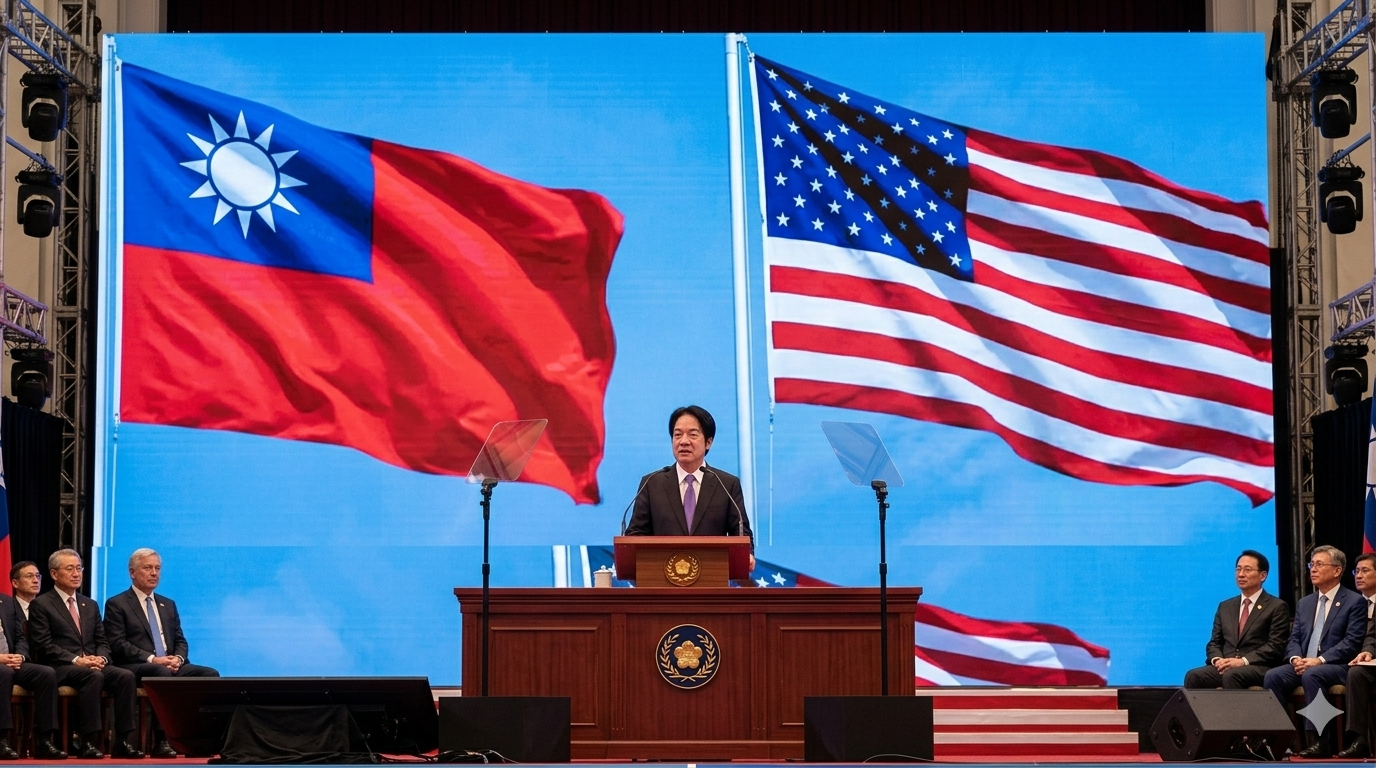
Taipei: Taiwan on Saturday strongly defended continued United States arms sales to the island after US President Donald Trump said he had not yet decided whether to approve a major new weapons package following high-level talks with Chinese President Xi Jinping in Beijing.
Taiwanese officials said American military support remains essential for regional peace and stability, particularly amid increasing military pressure from China around the Taiwan Strait.
The comments came a day after Trump concluded a two-day summit in Beijing, where he stated that he had not yet determined whether the United States would move forward with a proposed new arms sale to Taiwan, creating uncertainty over Washington’s future security commitments to the self-governed island.
Despite lacking formal diplomatic relations with Taiwan, the United States remains Taipei’s most important international security partner and is legally obligated under the Taiwan Relations Act to provide the island with defensive weapons.
In an official statement, spokesperson Karen Kuo, representing Taiwanese President Lai Ching-te, described China’s growing military activities as the primary destabilising factor in the Indo-Pacific region.
She stated that arms sales between Taiwan and the United States not only reflect Washington’s legal security commitments under the Taiwan Relations Act but also function as a shared deterrence mechanism against regional threats.
Taiwan also thanked Trump for what officials described as his continued support for security and stability in the Taiwan Strait, while reaffirming Taipei’s commitment to deepening cooperation with Washington.
Earlier in December, the Trump administration approved a record $11 billion military assistance package for Taiwan. Reports indicate that an additional weapons package worth approximately $14 billion is still awaiting final presidential approval.
Speaking to reporters in Taipei, Taiwanese Deputy Foreign Minister Chen Ming-chi declined to comment directly on the pending package because it has not yet been publicly finalised.
However, he stressed that US-Taiwan arms cooperation has long served as a “cornerstone of regional peace and stability.”
Taiwan’s government has meanwhile faced domestic political challenges in securing increased defence spending.
An opposition-controlled parliament recently approved roughly two-thirds of a proposed $40 billion defence expansion plan, with lawmakers specifying that the funding should primarily be used for purchasing American military equipment.
Both Republican and Democratic lawmakers in the United States have publicly urged the Trump administration to continue military support and weapons transfers to Taiwan despite objections from Beijing.
China considers Taiwan part of its territory and has repeatedly opposed US arms sales to the island, warning that such actions interfere in Chinese internal affairs and threaten bilateral relations between Washington and Beijing.
Beijing has also increased military drills, naval patrols, and air force operations near Taiwan in recent years, heightening tensions across the Taiwan Strait.
Following his summit with Xi Jinping, Trump also suggested he may speak directly with President Lai regarding the proposed arms sale package.
Analysts believe the US president may delay approving the additional military package until after a potential visit by Xi Jinping to the United States later this year as part of broader diplomatic negotiations between the two powers.
The Taiwan issue remains one of the most sensitive and strategically important flashpoints in US-China relations, with Washington maintaining unofficial ties and military cooperation with Taipei while officially recognising Beijing under the “One China” policy.