

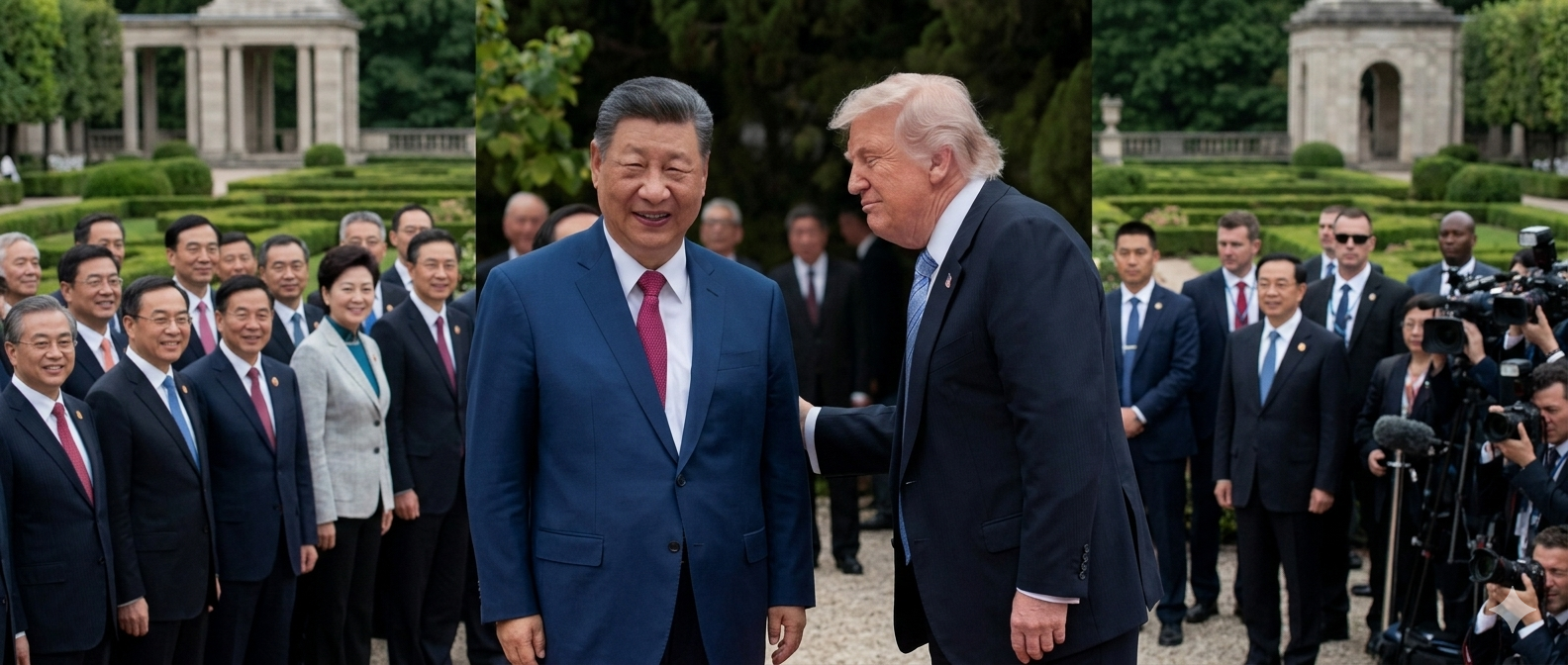
Beijing: China on Saturday described the tariff, agricultural, and aviation agreements announced during US President Donald Trump’s recent visit to Beijing as “preliminary”, indicating that negotiations between the two countries are still ongoing despite public declarations of progress.
In a statement released by China’s Ministry of Commerce, Beijing confirmed that both sides had agreed to establish joint investment and trade boards aimed at negotiating reciprocal tariff reductions and broader trade arrangements.
The statement marked China’s first official public assessment of the outcomes from Trump’s two-day state visit to Beijing, which concluded on Friday after high-level talks with Chinese President Xi Jinping.
Although the visit featured elaborate ceremonies, positive diplomatic rhetoric, and announcements regarding trade cooperation, Chinese authorities acknowledged that many of the agreements remain incomplete and subject to further negotiations.
According to the commerce ministry, both countries agreed to pursue product-specific tariff reductions while also discussing wider cuts on unspecified goods, including agricultural products.
Officials said the two sides would additionally work to resolve long-standing non-tariff barriers and market access disputes affecting agricultural trade between the world’s two largest economies.
The ministry stated that the United States had agreed to actively address several concerns repeatedly raised by China regarding export restrictions and inspection procedures.
These include issues involving the automatic detention of Chinese dairy and aquatic products, restrictions on exports of bonsai plants grown in soil media, and formal US recognition of eastern China’s Shandong Province as a region free from avian influenza.
In return, Beijing said it would work to address American concerns surrounding registration approvals for US beef-processing facilities and restrictions affecting poultry exports from certain American states.
However, Chinese officials did not provide detailed information regarding the scale, timeline, or financial value of the proposed agreements.
The statement also confirmed discussions surrounding aviation cooperation after Trump claimed during the visit that China had agreed to purchase 200 aircraft from Boeing.
While China acknowledged ongoing arrangements involving purchases of US aircraft and American guarantees regarding the supply of aircraft engines and spare parts to China, the ministry stopped short of confirming the exact number of planes involved.
Analysts and industry observers have questioned the lack of detailed timelines or contractual information surrounding the reported aircraft deal.
The commerce ministry said discussions on the finer details of the aviation agreements were still continuing and that all arrangements would be “finalised as soon as possible.”
Trump’s visit to China was his first state trip to Beijing in nearly a decade and was closely watched globally amid ongoing tensions over trade imbalances, tariffs, technology restrictions, and broader geopolitical rivalry between Washington and Beijing.
The meetings also followed separate trade-related discussions held this week in Seoul involving officials from both countries.
Despite recent efforts to stabilise economic relations, significant uncertainty remains over whether the proposed agreements will translate into binding long-term deals capable of easing trade tensions between the two powers.