

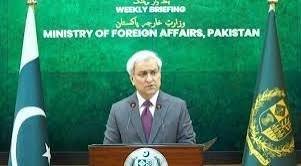
Pakistan: Pakistan on Thursday called on Amnesty International and the international community to examine what it described as the Afghan Taliban’s continued support and tolerance of militant groups, rejecting a recent report by the rights organization that called for an investigation into Pakistani airstrikes in Kabul.
What Did Pakistan Say About the Amnesty Report?
Speaking at a weekly briefing in Islamabad, Foreign Office spokesperson Tahir Andrabi rejected Amnesty International’s report, saying the allegations against Pakistan were made without credible evidence.
Andrabi said the Afghan Taliban government continues to provide what he described as a “permissive environment” for militant organizations, including the banned Tehreek-e-Taliban Pakistan (TTP) and the Balochistan Liberation Army (BLA).
He said no state could remain passive when its civilians and security personnel were repeatedly targeted, adding that Pakistan’s military operations were conducted under the principle of self-defence and as a measure of last resort.
According to the spokesperson, Pakistani strikes inside Afghanistan were directed only at militant groups and their alleged logistical networks.
What Else Did the Foreign Office Say?
Responding to questions about regional security, Andrabi said Pakistan considers any attack against Pakistani-flagged vessels or maritime interests in the Red Sea a serious threat to national security.
He condemned threats by the Houthi movement against Saudi Arabia and commercial shipping, saying such actions could affect regional stability, freedom of navigation, and global trade.
The spokesperson said Pakistan would continue to support dialogue and diplomacy in the Middle East while reaffirming its commitment to bilateral agreements with Saudi Arabia, including mutual defence arrangements.
On Pakistan’s trade relations with the European Union, Andrabi said the bloc’s latest GSP Plus monitoring report recognized Pakistan’s legislative progress and continued compliance with international conventions.
He said the GSP Plus framework remains important for Pakistan’s economy by supporting exports, employment, women’s economic participation, and poverty reduction.