

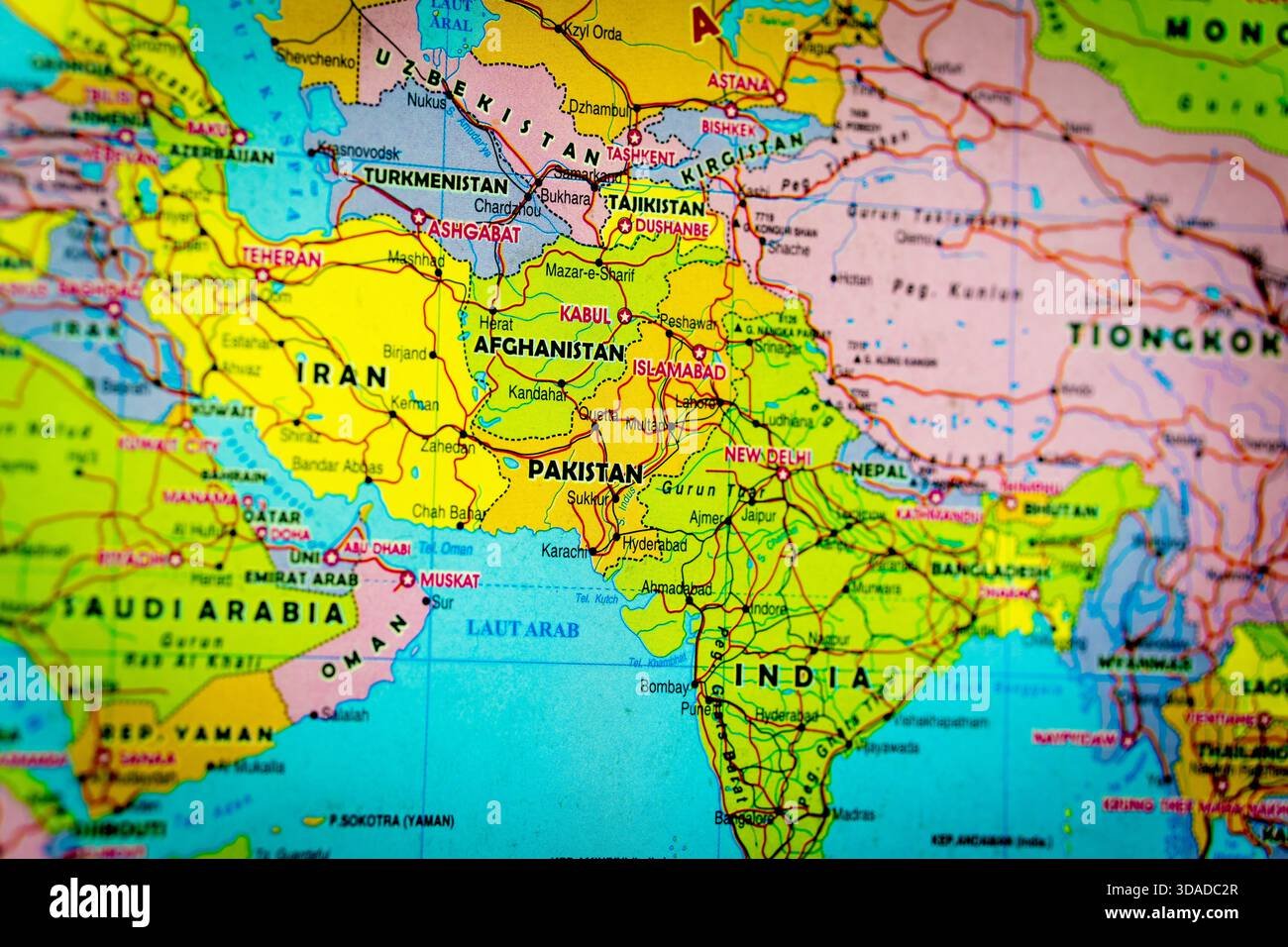
17 June 2026— Day 116
The conflict between Pakistan and Afghanistan continues at low-to-moderate intensity as of June 16–17, 2026, with no major large-scale offensive reported in this period, but sustained border skirmishes, militant activity inside Pakistan, and an active diplomatic track running in parallel. The war, now in its fourth month, has claimed hundreds of lives and drawn growing international concern over its civilian toll and regional instability.
The most significant military action of the past week remains the Pakistani airstrikes carried out around June 10, which broke weeks of relative calm along the Durand Line. Pakistan’s information minister said the strikes hit four targets, including a training camp, an ammunition cache, a hideout, and a facility linked to two TTP commanders, describing them as retaliation for militant incidents inside Pakistan. Afghanistan’s government spokesman Zabihullah Mujahid said 11 children, one woman, and one elderly man were killed in strikes across Khost, Kunar, and Paktika provinces, while additional civilian casualties were reported by local residents.
Pakistan linked the operation to a June 9 TTP attack in Peshawar that killed six Frontier Constabulary personnel and led to the abduction of eight others. Islamabad rejected Afghan casualty claims as propaganda and maintained the strikes were precise counter-terrorism operations against militant infrastructure.
UNAMA confirmed it had documented 13 civilian deaths and 10 injuries from the latest strikes, adding to an already severe humanitarian situation. A UN report released in May stated that at least 372 Afghan civilians were killed and 397 injured in the first three months of 2026 alone, the highest quarterly toll recorded since monitoring began in 2011. The deadliest incident remains the March 16 strike on the Omid Drug Rehabilitation Hospital in Kabul, which reportedly killed at least 269 people.
Despite continued violence, a fragile diplomatic track has remained active. Afghan and Pakistani representatives met in Istanbul for Track 1.5 dialogue facilitated by Turkish interlocutors, while consultations with regional partners including Türkiye and China continue to encourage restraint and communication.
At the United Nations, Pakistan defended its strikes on TTP-linked targets and reiterated that verifiable action against militant safe havens in Afghanistan is essential for any lasting de-escalation. Islamabad continues to demand written guarantees from Kabul on counter-terrorism cooperation.
There is no formal ceasefire, with only an earlier informal pause having lapsed. The Pakistan–Afghanistan border has remained closed since October, deepening economic pressure and disrupting cross-border trade.
Positions remain entrenched. Pakistan maintains that the TTP operates from sanctuaries inside Afghanistan and justifies its strikes as defensive action, while Afghanistan denies the allegations and accuses Pakistan of violating sovereignty. Taliban officials continue to describe the strikes as unprovoked aggression.
As of June 17, no new major strikes have been confirmed, though sporadic militant violence continues in Pakistan’s border regions. The diplomatic track remains the only active de-escalation channel, but prospects for a durable agreement remain limited due to deep mistrust and lack of enforcement mechanisms.
16 June 2026— Day 115
No major new cross-border airstrikes, armed clashes, or direct military escalation between Pakistan and Afghanistan were reported in credible coverage during this period, with the situation remaining in a lower-intensity phase following earlier strikes.
Attention during this window largely shifted toward diplomatic exchanges, UN-level statements, and internal security incidents inside Pakistan, rather than any fresh cross-border military action.
Within Pakistan, security forces continued counterterrorism operations against TTP-linked networks, particularly in border-adjacent districts. Separately, several militant attacks on security installations were reported in parts of Khyber Pakhtunkhwa, including incidents in areas such as Kurram, where checkpoints and patrols came under fire, resulting in casualties among both security personnel and civilians in isolated episodes.
Despite these developments, there were no confirmed Pakistani airstrikes into Afghan territory and no verified Afghan retaliatory strikes during this period. The most recent escalation continues to be associated with earlier operations targeting suspected militant infrastructure in Afghan border provinces, which remain the central point of dispute between Islamabad and Kabul.
Those earlier strikes continue to dominate the narrative, with competing claims over militant versus civilian casualties, and ongoing accusations exchanged between both sides regarding the presence of insurgent safe havens. Afghan authorities condemned the strikes as violations of sovereignty, while Pakistan maintained they were intelligence-driven actions against militant infrastructure.
Overall, the broader conflict remains characterized by intermittent violence, militant mobility across porous border regions, and sustained diplomatic friction, rather than continuous battlefield escalation. International actors continue to urge restraint and dialogue, but no breakthrough in de-escalation has been reported.
15 June 2026— Day 114
No fresh cross-border military escalation between Pakistan and Afghanistan has been reported, with the latest period marked instead by internal security operations inside Pakistan and continued diplomatic pressure over militancy concerns.
Pakistani security forces carried out large-scale counterterrorism operations against militant networks, including groups linked to the TTP, resulting in the reported killing of dozens of fighters in different engagements. However, these developments were confined within Pakistan’s borders and did not involve new confirmed cross-border strikes or retaliatory Afghan action during this phase.
The most recent major escalation in the broader conflict remains earlier Pakistani airstrikes targeting suspected militant hideouts in Afghan border provinces, which Islamabad described as precision intelligence-based operations against TTP infrastructure. Afghan authorities, however, alleged civilian casualties, including women and children, underscoring the continuing dispute over battlefield narratives and impact assessments.
Despite the absence of new high-intensity exchanges, the situation along the border remains volatile and fragmented, driven by ongoing militant activity, sporadic ambushes in frontier districts, and persistent accusations over the presence of insurgent sanctuaries. Diplomatic engagement involving regional actors has continued in the background, but no durable breakthrough has been achieved.
Overall, the conflict retains a pattern of asymmetric, intermittent violence, with competing claims from both sides and growing international concern over civilian harm, displacement, and the risk of renewed escalation.
14 June 2026— Day 113
Tensions between Pakistan and Afghanistan remained elevated following recent cross-border violence, although no new military escalations or airstrikes were reported in the latest period.
The situation continues in the aftermath of earlier militant attacks on Pakistani security forces in Khyber Pakhtunkhwa, which were followed by Pakistani airstrikes targeting alleged militant hideouts in Afghanistan’s Khost, Kunar, and Paktika provinces. Pakistan has claimed the strikes killed dozens of militants and destroyed training infrastructure.
Afghan Taliban authorities, however, reported civilian casualties including women and children, and strongly condemned the strikes as a violation of Afghan sovereignty. The United Nations has also noted reports of civilian deaths in the affected areas.
Diplomatic fallout has continued, with Afghanistan’s Foreign Ministry maintaining pressure on Pakistan through formal protests and earlier diplomatic summons over alleged airspace violations and civilian harm. Afghan officials have reiterated demands for Pakistan to address internal security challenges rather than conduct cross-border operations.
Despite ongoing rhetoric and heightened political tensions, no new incidents, strikes, or ground clashes were confirmed, with developments largely limited to official statements and responses to earlier events.
The broader border situation remains unstable, driven by Pakistan’s allegations that militants operating from Afghan territory are responsible for attacks inside Pakistan, and Afghanistan’s consistent denial of providing safe havens.
While the immediate situation has calmed operationally, the Durand Line region continues to be considered highly volatile with risk of renewed escalation.
13 June 2026— Day 112
Tensions along the Pakistan–Afghanistan border remained high following a recent militant attack and cross-border airstrikes, though no major new military escalation was reported in the latest period.
The situation stems from an attack on a Pakistani border post in Khyber Pakhtunkhwa that killed security personnel and was claimed by militants linked to the Tehreek-e-Taliban Pakistan (TTP). Pakistan responded with airstrikes targeting alleged militant hideouts in Afghan border provinces, which it said destroyed training sites and killed several militants.
Afghan authorities and Taliban officials reported civilian casualties, including women and children, and rejected Pakistan’s claims, calling the strikes a violation of sovereignty. The United Nations Assistance Mission in Afghanistan (UNAMA) also noted reports of civilian deaths.
In the aftermath, diplomatic tensions escalated, with Afghanistan’s Foreign Ministry summoning Pakistan’s diplomatic representative in Kabul to protest the airstrikes and alleged airspace violations. Strong objections were formally communicated.
Despite the sharp diplomatic exchange, no new strikes or ground clashes were confirmed, and the situation largely shifted to political statements, protests, and funerals for victims of earlier violence.
The broader conflict between the two countries continues at a low but persistent intensity, driven by Pakistan’s accusations that Afghan territory is being used by TTP militants, and repeated Taliban denials of providing safe havens.
The border remains tense, with ongoing risk of further escalation despite the current operational lull.
12 June 2026— Day 111
Tensions along the border remained high following cross-border airstrikes, with both governments exchanging accusations and warning of possible further escalation.
Pakistan’s Information Minister Attaullah Tarar indicated that military operations will continue, saying Islamabad’s counterterrorism campaign is targeting militant networks and national security threats. Pakistani officials dismissed Afghan claims of civilian casualties as propaganda, insisting operations are focused on terrorist infrastructure.
The warning followed Pakistani strikes in Afghanistan’s eastern provinces of Khost, Kunar, and Paktika, which Islamabad described as intelligence-based counterterrorism operations against Tehrik-i-Taliban Pakistan (TTP) targets.
The Afghan Taliban government condemned the strikes, calling them a violation of sovereignty and a “humanitarian crime,” while warning of a possible retaliatory response. Kabul accused Pakistan of hitting civilian areas, a claim denied by Islamabad.
Local reports from Afghan provinces described civilian casualties, including women and children, with residents alleging entire families were killed in residential strikes. Community representatives said some victims had no links to militancy.
Pakistan maintains the strikes were carried out in response to a deadly attack on a security post in Khyber Pakhtunkhwa in which six security personnel were killed, followed by retaliatory action against attackers.
The border region remained tense but without confirmed new strikes, though both sides have signaled continued confrontation — with Pakistan reiterating its ongoing operations and the Taliban warning of retaliation.
The United Nations has previously warned of rising civilian casualties amid cross-border violence in 2026, underscoring the humanitarian impact of the conflict.
Despite earlier diplomatic engagement efforts, no breakthrough has been reported, and the latest developments have further strained already fragile relations between Islamabad and Kabul.
11 June 2026— Day 110
The Pakistan–Afghanistan conflict intensified with fresh cross-border airstrikes and retaliatory claims of attacks, resulting in conflicting casualty reports and renewed tensions along the frontier.
Pakistani military aircraft conducted intelligence-based airstrikes in the early hours targeting areas in Afghanistan’s eastern provinces of Khost, Kunar, and Paktika. Security sources said the operations were carried out under ongoing counter-militancy efforts following a recent attack on Pakistani security personnel in Khyber Pakhtunkhwa.
Pakistan’s government said the strikes targeted militant infrastructure linked to the Tehrik-i-Taliban Pakistan (TTP), including training facilities, hideouts, and weapons depots. Officials claimed multiple targets were destroyed and dozens of militants were killed, including individuals identified as TTP-linked commanders.
Pakistani authorities said the strikes were a direct response to an attack on a security post in the Hasan Khel area, where six members of the Federal Constabulary were killed in an assault attributed to suspected TTP fighters.
Afghan Taliban officials, however, strongly condemned the strikes, accusing Pakistan of violating Afghan airspace and striking civilian areas. Taliban spokesperson Zabihullah Mujahid said women, children, and an elderly man were among those killed, with additional civilians injured in the attacks.
Local reports from Khost province’s Spera district described houses being struck during nighttime bombardment, with entire families reportedly affected. Residents and provincial officials said funerals were held for multiple victims, including children, while wounded civilians were taken to nearby medical facilities.
In Paktika province, residents also reported civilian casualties after airstrikes hit residential homes, with local accounts confirming child fatalities.
The escalation followed a militant attack on a Pakistani security checkpoint in Khyber Pakhtunkhwa, where authorities said six security personnel were killed and several attackers were neutralized in a subsequent operation.
The Afghan Taliban rejected Pakistan’s justification for the strikes, calling them violations of sovereignty and accusing Islamabad of targeting civilian populations. Pakistan maintained that its operations were aimed exclusively at militant infrastructure responsible for cross-border attacks.
The latest violence marks one of the most serious escalations in recent weeks along the Pakistan–Afghanistan border, despite earlier diplomatic efforts aimed at reducing tensions. UN-linked assessments have previously warned of significant civilian casualties amid ongoing cross-border exchanges throughout 2026.
10 June 2026— Day 109
Cross-border tensions between Afghanistan and Pakistan have intensified following a deadly militant attack on a Pakistani security post and subsequent Pakistani airstrikes inside Afghan territory, marking a renewed spike in low-intensity conflict along the frontier.
The violence was triggered after suspected Tehrik-i-Taliban Pakistan (TTP) militants attacked a border checkpoint in the Hassankhel area of Khyber Pakhtunkhwa, killing at least six paramilitary personnel and injuring several others. The group also claimed to have abducted security personnel, according to local reports.
In response, Pakistan carried out precision airstrikes targeting alleged militant positions in Afghanistan’s Khost, Kunar, and Paktika provinces. Security sources said the strikes destroyed training camps and operational hideouts, claiming the deaths of around two dozen militants.
Afghan authorities, however, said the strikes hit civilian areas, reporting multiple casualties, including women and children. They described the operation as a violation of Afghan sovereignty and condemned it as an act of aggression. Independent verification of the competing claims remains limited.
The escalation has drawn strong political reactions in Afghanistan, with former officials and Taliban representatives condemning the strikes and accusing Pakistan of destabilising the border region. Pakistan maintains that the operations are defensive measures aimed at dismantling cross-border militant infrastructure.
The conflict is rooted in long-standing tensions over militant safe havens along the Durand Line, with Pakistan repeatedly accusing Afghan-based networks of facilitating attacks inside its territory. The TTP insurgency has remained a central driver of violence since the Taliban takeover of Afghanistan in 2021.
Security analysts note that the latest escalation reflects a broader pattern of retaliatory strikes and militant activity, with both sides disputing casualty figures and responsibility for civilian harm. Despite periodic communication channels, the situation remains fragile, with the risk of further escalation along the border still high.
9 June 2026— Day 108
No major direct Pakistan–Afghanistan state military clashes or large-scale cross-border strikes have been reported in the period, even as the broader security environment remains volatile due to continued militancy and border tensions. The situation is largely shaped by ongoing counter-terrorism operations inside Pakistan, particularly against Tehrik-e-Taliban Pakistan (TTP), rather than conventional interstate warfare.
A significant security incident involved a Tehrik-e-Taliban Pakistan (TTP) assault on a Frontier Constabulary (FC) surveillance outpost in Musa Darra, Hassan Khel, located near the Peshawar–Kohat corridor in Khyber Pakhtunkhwa, a strategically sensitive area close to the Afghan border. The attack was part of a broader pattern of militant activity targeting security installations in northwestern Pakistan.
According to TTP claims, its fighters overran the outpost, killing 11 Frontier Constabulary personnel, injuring 3, and taking 7 personnel captive. The group also circulated images and videos of captured personnel, presenting the assault as part of retaliatory operations against Pakistani security forces. These claims have not been independently verified and often differ from official accounts in such incidents.
In response, Pakistani security forces launched a counter-operation, during which they repelled the attackers, killed approximately 8 militants, and regained control of the installation. Some personnel were initially reported missing, prompting continued search and clearance operations in the surrounding area. Casualty figures remain disputed, as is common in ongoing insurgency-related engagements.
The broader security context reflects sustained instability driven primarily by TTP-led militancy across Khyber Pakhtunkhwa and adjacent tribal districts, including North and South Waziristan. Pakistani forces continue counter-insurgency operations in these regions, while authorities maintain pressure on suspected militant hideouts near the border areas.
At the same time, diplomatic and security tensions between Pakistan and Afghanistan persist, with Islamabad repeatedly accusing elements across the border of providing safe havens to TTP militants. However, no confirmed large-scale direct military engagements between Afghan Taliban forces and Pakistani troops have been reported in this timeframe, indicating a shift away from open interstate escalation.
Overall, the situation reflects a transition from direct cross-border confrontation to a more fragmented pattern of asymmetric warfare, where localized militant attacks and counter-operations dominate the security landscape rather than conventional state-to-state conflict.
8 June 2026— Day 107
No large-scale direct military escalation between Pakistan and Afghanistan has been reported recently, even as the broader conflict that began earlier in 2026 continues at a lower and more fragmented intensity. The situation remains shaped by Pakistan’s longstanding allegations that elements within Afghanistan’s territory provide safe havens to Tehrik-e-Taliban Pakistan (TTP) militants, who continue to conduct cross-border and domestic attacks inside Pakistan.
The conflict initially escalated after Pakistani air operations targeted suspected TTP and ISIS-K positions inside Afghanistan, prompting retaliatory actions by Afghan Taliban forces and triggering exchanges along the border as well as limited strikes on urban and strategic locations. Although the confrontation at its peak involved significant casualties among security personnel, militants, and civilians on both sides, the intensity of direct state-to-state engagement has since declined compared to earlier phases.
The current security environment is instead dominated by persistent insurgent activity within Pakistan’s northwestern regions, particularly in areas adjacent to the Afghan border. One such incident involved an assault on a security outpost in Khyber Pakhtunkhwa by suspected TTP militants. According to conflicting accounts, attackers temporarily engaged the position and inflicted casualties on Frontier Constabulary personnel before being repelled in a counter-operation that resulted in militant losses. Search and clearance operations reportedly followed, with some uncertainty regarding missing or abducted personnel.
Overall, the evolving pattern reflects a shift from open cross-border military escalation toward sustained asymmetric warfare, with Pakistan conducting counter-insurgency operations domestically while tensions with Afghanistan remain politically unresolved. Diplomatic friction continues over allegations of militant sanctuaries, even as both sides avoid sustained conventional warfare.
7 June 2026— Day 106
There were no major new escalations, large-scale clashes, airstrikes, or confirmed cross-border incidents reported in the Pakistan–Afghanistan conflict during this period, with the situation remaining in a fragile low-intensity phase following earlier rounds of heightened violence. The overall border environment along the Durand Line remained tense but relatively stable, with no verified reports of direct military engagement between Pakistani and Taliban forces.
The conflict continues to be driven by Pakistan’s sustained concerns over the presence of Tehreek-e-Taliban Pakistan (TTP) militants operating from Afghan territory, which Islamabad holds responsible for attacks inside Pakistan. Pakistan has maintained ongoing counterterrorism operations against militant networks within its territory, while the Taliban authorities in Afghanistan continue to deny allegations of providing safe havens and accuse Pakistan of violating Afghan sovereignty during earlier phases of the conflict.
Along the border, the situation has remained in a tense but contained lull, with no confirmed artillery exchanges, airstrikes, or retaliatory cross-border operations during this period. Despite this relative calm, security officials on both sides continue to view the situation as highly fragile and vulnerable to rapid escalation.
In the broader 2026 conflict timeline, earlier months saw significant military escalation, including airstrikes, border clashes, and retaliatory operations that resulted in casualties and repeated disruptions along key crossings. Those developments led to intermittent ceasefires brokered through regional mediation, but no long-term political or security settlement has been achieved.
Despite the reduction in direct hostilities, core issues remain unresolved, including the status of TTP sanctuaries, cross-border militant activity, and persistent mistrust along the Durand Line border region. Border management restrictions continue to affect trade and civilian movement, contributing to ongoing economic pressure in affected areas.
Overall, the Pakistan–Afghanistan conflict remains in a low-intensity but unresolved security standoff, characterized by sustained tension, periodic militant threats, and the absence of a durable diplomatic resolution.
6 June 2026— Day 105
There were no major new escalations, large-scale clashes, or confirmed cross-border strikes reported in the Pakistan–Afghanistan conflict during this period, with the security situation remaining in a fragile low-intensity phase following earlier months of intensified fighting. The overall border environment along the Durand Line remained tense but comparatively stable, with no verified reports of direct state-to-state military engagement.
The conflict continues to be shaped primarily by Pakistan’s ongoing counterterrorism concerns regarding the presence of Tehreek-e-Taliban Pakistan (TTP) militants operating from Afghan territory, which Islamabad accuses of being responsible for repeated attacks inside Pakistan. Pakistan has maintained its counterterrorism posture through internal security operations and targeted actions against suspected militant groups, while the Taliban government in Afghanistan continues to deny providing safe havens and accuses Pakistan of violating Afghan sovereignty during earlier phases of the conflict.
On the border front, the situation has remained in a relative lull in direct combat activity, with no confirmed artillery exchanges, airstrikes, or retaliatory cross-border operations reported during this period. However, this calm is widely assessed as fragile and temporary, given the history of rapid escalation in earlier phases of the conflict.
In the broader 2026 timeline, the conflict previously saw significant escalation involving airstrikes, border clashes, and retaliatory operations, resulting in casualties on both sides and repeated disruptions along key border crossings. Those developments led to intermittent ceasefires and regional mediation efforts, which helped reduce immediate hostilities but failed to resolve underlying disputes.
Despite the reduction in direct violence, key issues remain unresolved, including the status of TTP sanctuaries, mutual accusations of cross-border militancy, and the contested security dynamics along the Durand Line. Border management restrictions and intermittent closures continue to affect trade and civilian movement, contributing to ongoing economic and humanitarian pressure in border regions.
Overall, the Pakistan–Afghanistan conflict remains in a low-intensity but unresolved security standoff, characterized by sustained mistrust, periodic militant activity, and the absence of a durable political or security settlement.
5 June 2026— Day 104
There were no major new escalations or large-scale clashes reported in the Pakistan–Afghanistan conflict during this period, with the situation remaining in a fragile low-intensity phase following earlier rounds of cross-border violence earlier in the year. The overall security environment along the border remained tense but relatively stable compared to prior escalation cycles.
The broader conflict continues to be driven by Pakistan’s longstanding concerns over the presence and activity of Tehreek-e-Taliban Pakistan (TTP) militants operating from Afghan territory, which Islamabad accuses the Taliban authorities of tolerating or failing to fully control. Pakistan has maintained that such groups are responsible for repeated attacks inside its territory and has conducted counterterrorism operations and targeted strikes in response during earlier phases of the conflict. The Taliban government in Afghanistan has consistently denied these allegations and has called for restraint, while also accusing Pakistan of violating Afghan sovereignty in previous cross-border strikes.
Along the border, the situation has shifted into a relative lull in direct military engagement, following earlier ceasefire arrangements and regional mediation efforts. However, this calm is described as fragile and temporary, with periodic security incidents still occurring in the background, particularly involving militant activity rather than state-to-state combat.
In the wider 2026 conflict timeline, earlier months saw significant escalation involving cross-border airstrikes, artillery exchanges, and retaliatory operations, including major incidents inside Afghanistan and along the Durand Line that resulted in casualties on both sides. Those events led to temporary ceasefires and diplomatic interventions, but a lasting settlement has not been achieved.
Despite the reduction in direct clashes, core issues remain unresolved, including the status of TTP sanctuaries, border security along the Durand Line, and mutual accusations of harboring hostile elements. Border management challenges and intermittent restrictions at key crossings continue to affect trade and civilian movement, adding to economic and humanitarian pressure in border regions.
Overall, the Pakistan–Afghanistan conflict remains in a low-intensity but unresolved security standoff, characterized by political mistrust, periodic militant incidents, and a lack of durable diplomatic progress toward long-term stabilization.
4 June 2026— Day 103
There was no major new escalation or confirmed large-scale outbreak of fighting reported in the Pakistan–Afghanistan conflict during this period. However, the broader situation remained tense and unstable, with continued low-level friction along the border and ongoing security concerns between the two countries.
The conflict is primarily driven by Pakistan’s repeated allegations that the Taliban government in Afghanistan provides safe space or insufficient control over Tehreek-e-Taliban Pakistan (TTP) militants, who are accused of carrying out cross-border attacks inside Pakistan. In response, Pakistan has conducted counterterrorism operations and targeted strikes on suspected militant hideouts, while maintaining that such actions are necessary for national security. Afghanistan’s Taliban authorities have denied these claims and, in some cases, responded with border-area retaliatory fire or warnings, further fueling mistrust.
Across the wider 2025–2026 period, the conflict has seen recurring spikes in violence, including cross-border airstrikes, artillery exchanges, and temporary ceasefire arrangements that often collapsed shortly after being agreed. These escalations have included incidents involving Pakistani strikes inside Afghan territory, including Kabul and southern regions, followed by Afghan retaliatory attacks along the Durand Line. The violence has periodically resulted in casualties on both sides, including military personnel and civilians, as well as border closures and disruptions to trade and movement.
At the core of the dispute remains the issue of TTP sanctuaries in Afghanistan, which Pakistan considers the primary driver of instability in its border regions. Afghanistan, meanwhile, maintains that it is dealing with its own internal security challenges and rejects allegations of systematically sheltering militant groups targeting Pakistan.
The long-standing Durand Line border dispute continues to act as a flashpoint, with frequent accusations of violations and localized skirmishes along multiple border sectors. Despite repeated mediation efforts involving regional and international actors, including neighboring and Gulf states, no lasting political or security settlement has been achieved.
Overall, the situation remains a persistent low-intensity conflict, characterized by intermittent violence, mutual distrust, and fragile diplomatic engagement, rather than a full-scale conventional war.
3 June 2026— Day 102
No major direct escalation, large-scale clashes, or new cross-border airstrikes have been reported in Pakistani media, as the 2026 Pakistan–Afghanistan conflict under Operation Ghazab lil-Haq remains in a low-intensity phase.
Pakistani security forces continue intelligence-based operations (IBOs) and clearance actions in border districts of Khyber Pakhtunkhwa, including North and South Waziristan, Bajaur, and Mohmand. These operations focus on targeting suspected Tehrik-i-Taliban Pakistan (TTP) militants, dismantling hideouts, recovering weapons, and foiling infiltration attempts. No major high-profile incidents have been reported in recent coverage.
Officials reiterate that Operation Ghazab lil-Haq remains ongoing with full resolve, with continued emphasis on eliminating terrorist infrastructure until verifiable action is taken against alleged sanctuaries across the border. No significant new diplomatic breakthrough or mediation outcome has been reported.
Diplomatic messaging from Islamabad continues to press Kabul to take action against anti-Pakistan militant groups, while Afghan authorities deny the allegations and reject claims of providing safe havens. The exchange of accusations persists without any notable shift in positions.
The situation remains marked by sporadic low-level militant activity, border vigilance, and ongoing counterterrorism operations, rather than any movement toward large-scale confrontation or escalation.
2 June 2026— Day 101
No major direct escalation, large-scale clashes, or new cross-border airstrikes have been reported in Pakistani media, as the 2026 Pakistan–Afghanistan conflict under Operation Ghazab lil-Haq remains in a low-intensity phase.
Pakistani security forces continued intelligence-based operations (IBOs) and clearance actions against suspected Tehrik-i-Taliban Pakistan (TTP) militants in border regions of Khyber Pakhtunkhwa, including North and South Waziristan, Bajaur, Mohmand, and Kurram. These operations focused on neutralizing militant hideouts, recovering weapons, and disrupting infiltration attempts, with no major incidents highlighted in recent reporting.
Authorities reiterated that Operation Ghazab lil-Haq remains ongoing with full resolve, emphasizing sustained efforts to dismantle terrorist networks and press for verifiable action against alleged sanctuaries across the border. No significant new cross-border strikes or large-scale battlefield developments were reported.
Diplomatic messaging from Islamabad continued to stress that Afghanistan must take concrete steps against anti-Pakistan militant groups, while Afghan authorities denied the allegations and rejected claims of providing support. The exchange of statements continued without any notable shift in positions or breakthrough in mediation efforts.
Overall, the situation remains marked by sporadic low-level militant activity, border vigilance, and ongoing counterterrorism operations, rather than any escalation toward open conflict.
1 June 2026— Day 100
No major direct escalation, large-scale clashes, or new cross-border airstrikes were reported in Pakistani media during the latest reporting period, as the 2026 Pakistan–Afghanistan conflict under Operation Ghazab lil-Haq remained in a low-intensity phase.
Pakistani security forces continued intelligence-based operations (IBOs) and clearance actions against suspected Tehrik-i-Taliban Pakistan (TTP) militants in border districts of Khyber Pakhtunkhwa, including North and South Waziristan, Bajaur, Mohmand, and Kurram. These operations involved targeted engagements, militant neutralizations, and recovery of weapons and explosive material, according to official security updates, though no major high-profile incidents were reported during the period.
Authorities reiterated that Operation Ghazab lil-Haq remains ongoing with full resolve, until what they describe as credible action is taken by the Afghan Taliban administration against TTP sanctuaries. No new large-scale cross-border strikes or significant battlefield escalation were reported during the period under review.
Diplomatic messaging from Islamabad continued to emphasize pressure on Kabul to take verifiable action against anti-Pakistan militant groups, while Afghan officials rejected the allegations and denied providing safe havens. No major diplomatic breakthrough or new mediation outcome was reported.
The situation remained marked by sporadic low-level incidents, border vigilance, and ongoing counterterrorism operations, rather than any shift toward open conflict.
31 May 2026— Day 99
No major direct escalation, large-scale clashes, or new cross-border airstrikes were reported in Pakistani media during the latest reporting period, as the 2026 Pakistan–Afghanistan conflict (Operation Ghazab lil-Haq) continued in a low-intensity phase.
Pakistani security forces maintained intelligence-based operations (IBOs) and clearance actions in border areas of Khyber Pakhtunkhwa, including North and South Waziristan, Bajaur, and Mohmand. These operations focused on targeting suspected Tehrik-i-Taliban Pakistan (TTP) militants, dismantling hideouts, and recovering weapons, according to official security updates. No major high-profile incidents or sustained engagements were prominently reported during the period under review.
Authorities continued to stress that Taliban warnings to TTP were insufficient and reiterated demands for verifiable action against militant sanctuaries operating across the border. Afghan officials rejected these allegations and denied providing support to TTP-linked elements. No significant diplomatic breakthrough or new mediation outcome was reported during this time.
Media coverage in leading Pakistani outlets, including Dawn, The Express Tribune, and Geo News, largely consisted of routine security briefs and domestic reporting, with no major breaking developments related to cross-border conflict. Sporadic low-level incidents and border vigilance were noted in broader context, but nothing significant was specifically tied to the reporting period.
Overall, the situation remained tense but contained, with ongoing counterterrorism operations and intermittent security incidents, rather than any marked escalation or shift toward open conflict.
30 May 2026— Day 98
No major escalation, large-scale clashes, or new cross-border airstrikes were reported in Pakistani media during the latest reporting period, as the 2026 Pakistan–Afghanistan conflict under Operation Ghazab lil-Haq remained in a low-intensity phase.
Pakistani security forces continued intelligence-based operations (IBOs) and clearance actions in border districts of Khyber Pakhtunkhwa, including North and South Waziristan, Bajaur, and Mohmand. These operations targeted suspected Tehrik-i-Taliban Pakistan (TTP) militants and reportedly resulted in the recovery of weapons and disruption of militant hideouts, according to official security updates.
No major new incidents, sustained firefights, or cross-border airstrikes were prominently reported in leading Pakistani media outlets during the period under review. Security officials maintained that operations were ongoing under a broader counterterrorism strategy aimed at dismantling militant networks along the Durand Line.
Political and security authorities reiterated calls for the Afghan Taliban administration to take action against alleged TTP sanctuaries operating across the border. Afghan officials, however, denied these allegations and rejected claims of involvement or support. No significant diplomatic breakthrough or new mediation outcome was reported during this period.
Overall, the situation remained tense but contained, with sporadic low-level militant activity and routine counterterrorism operations continuing rather than any marked escalation or shift toward open conflict.
29 May 2026— Day 97
No major new escalation or large-scale cross-border clashes were reported in Pakistani media during the latest reporting period, as the 2026 Pakistan–Afghanistan conflict (Operation Ghazab lil-Haq) remained in a low-intensity phase.
Pakistani outlets focused primarily on continued intelligence-based operations (IBOs) and clearance actions against suspected Tehrik-i-Taliban Pakistan (TTP) militants in border districts including North and South Waziristan, Bajaur, Kurram, and Bannu. These operations reportedly involved targeted raids in which militants were killed and weapons and improvised explosive devices were recovered.
No major high-casualty incidents or significant cross-border strikes were prominently reported in leading Pakistani media during the period under review. Security operations continued to emphasize disruption of militant networks rather than large-scale battlefield engagement.
Officials reiterated concerns over alleged TTP sanctuaries across the border and continued to call on the Afghan Taliban administration to take action against anti-Pakistan militant groups. Afghan authorities, however, denied these allegations and rejected claims of providing support to such elements. No breakthrough in ongoing diplomatic engagement or mediation efforts was reported during this period.
The overall situation remained tense but stable compared to earlier peaks of violence, with sporadic militant activity and routine counterterrorism operations continuing, rather than any significant new escalation.
28 May 2026— Day 96
No major escalation or large-scale clashes were reported in Pakistani media during the latest reporting period, despite continued tensions under the ongoing 2026 Pakistan–Afghanistan conflict, referred to in some reports as Operation Ghazab lil-Haq.
The situation along the border remains tense but controlled, with Pakistan continuing intelligence-based operations (IBOs) and clearance actions against suspected Tehrik-i-Taliban Pakistan (TTP) militants in areas including North Waziristan, Bajaur, Bannu, and Kurram. These operations are primarily focused on dismantling militant networks, recovering weapons, and targeting hideouts, according to official security statements.
No reports of major cross-border strikes, sustained firefights, or large-scale retaliatory action from Afghanistan were highlighted in leading Pakistani media outlets during the period under review.
Pakistani political and security leadership continued to accuse the Afghan Taliban administration of providing space or support to TTP-linked elements operating against Pakistan. Some official briefings also referenced alleged external backing of militant groups. Afghan authorities, however, have denied these claims and in some cases accused Pakistan of causing civilian harm through cross-border incidents.
At the diplomatic level, reporting pointed to ongoing efforts involving regional stakeholders, including China and other partners, aimed at preventing further escalation and maintaining a fragile de-escalation framework established after earlier tensions.
The border region continues to experience low-intensity militant activity, sporadic security operations, and ongoing political accusations, rather than open warfare or sustained military confrontation. Pakistani media coverage during this period has largely focused on internal counterterrorism operations and diplomatic messaging rather than active battlefield developments.
27 May 2026— Day 95
Pakistan–Afghanistan border tensions persist amid continued low-level militant violence, but no major escalation has been reported in recent coverage.
The broader conflict that intensified earlier in 2026 has since shifted into a lower-intensity phase, with no reports of large-scale clashes, airstrikes, or sustained artillery exchanges along the border in current Pakistani media coverage.
Security sources indicate that Pakistani forces are continuing intelligence-based operations (IBOs) in areas near the Afghan frontier, including North and South Waziristan, Bajaur, and Bannu, targeting suspected Tehrik-i-Taliban Pakistan (TTP) elements. These operations have resulted in the reported killing of militants, including local commanders, according to official statements.
At the same time, Afghan authorities have occasionally accused Pakistan of conducting cross-border strikes that have caused civilian casualties. Pakistani officials have rejected or disputed such claims, attributing incidents to militant activity operating across the border.
The situation remains tense due to ongoing concerns over TTP sanctuaries in Afghanistan, which Islamabad says are used to launch attacks inside Pakistan. The Afghan Taliban administration denies these allegations and has in turn accused Pakistan of initiating unprovoked actions.
Despite continuing diplomatic engagement and earlier mediation efforts aimed at de-escalation, the border region remains unstable with intermittent militant incidents, though no significant new escalation has been reported in recent days.
26 May 2026— Day 94
Pakistan’s military campaign under Operation Ghazab lil-Haq against TTP militants and Afghan Taliban-linked elements continues as the 2026 Afghanistan–Pakistan conflict remains ongoing but at reduced intensity. No major cross-border airstrikes or large-scale clashes were reported during the period, with fighting largely limited to sporadic border skirmishes, counter-terrorism raids inside Pakistan, and occasional artillery and quadcopter exchanges.
Pakistani security forces carried out continued intelligence-based operations in border districts including North Waziristan, Bajaur, and Bannu, targeting suspected TTP hideouts and militant networks as part of the ongoing campaign. In earlier related developments, Pakistani forces had killed around 27 militants in operations in North Waziristan and Bannu, including senior commanders, with some Pakistani personnel also killed in ensuing clashes.
Pakistan maintains that the Afghan Taliban regime continues to provide safe havens, funding, and weapons support to the TTP, which is estimated to have 6,000–6,500 fighters. Officials describe the operation as continuing with “full resolve” until cross-border militancy is dismantled. The humanitarian situation remains a concern, with earlier UN reporting citing over 370 Afghan civilian deaths in the first months of the year, mostly linked to earlier airstrikes.
Diplomatic engagement mediated by Qatar, Turkey, and Saudi Arabia previously led to temporary pauses in escalation, but core disputes over TTP sanctuaries and border security remain unresolved. Overall, the situation during the period remained relatively quiet compared to earlier peak violence, with no major escalation or ceasefire breakthrough, while low-level conflict and counter-insurgency operations continue.
25 May 2026— Day 93
No major direct cross-border clashes or large-scale military engagements between Pakistani forces and the Afghan Taliban were reported during the latest reporting window, although the broader Pakistan–Afghanistan conflict environment continues at a reduced but persistent level. The situation remains characterized by sporadic militant activity, cross-border accusations, and ongoing counter-terror operations inside Pakistan.
A major incident was reported in Balochistan, where a powerful explosion struck near a railway track in the Quetta region, derailing a shuttle train carrying security personnel and civilians. Initial reports indicated 14–24 fatalities and more than 30–50 injuries. Separatist militant groups operating in the province are believed to have claimed responsibility. The attack highlights the continued activity of insurgent networks in southwestern Pakistan, particularly in areas close to the Afghan border where overlapping militant dynamics persist.
Meanwhile, Pakistan continues operations against the Tehreek-e-Taliban Pakistan (TTP), with security forces reporting attempts to foil infiltration across the Afghan border. In recent weeks, multiple attacks attributed to the TTP have been recorded in regions including South Waziristan, Bajaur, Bannu, Hangu, and Lakki Marwat, resulting in casualties among civilians, police, and military personnel. Pakistani authorities continue to allege that elements operating from Afghan territory provide sanctuary to TTP militants, a claim denied by the Afghan Taliban.
The border situation remains fragile, with a tense and unstable ceasefire arrangement still in place following earlier mediation efforts by regional actors including China, Qatar, Saudi Arabia, and Turkey. Despite this, intermittent incidents such as drone activity, mortar fire, and cross-border accusations have continued to strain relations. Key crossing points, including Torkham and Chaman, have faced periodic closures and heightened security restrictions.
The broader conflict, which escalated from border skirmishes into a wider confrontation in late 2025 and early 2026, continues to shape the security landscape. Pakistan carried out strikes targeting militant positions in Afghanistan during earlier phases of the escalation, while Afghan forces reportedly responded with retaliatory actions. Although large-scale engagements have not been reported in the most recent period, the underlying tensions remain unresolved.
At present, the situation reflects a low-intensity conflict phase, with Pakistan maintaining counter-terror operations within its territory while diplomatic efforts continue to prevent further escalation. However, mutual distrust between Islamabad and Kabul remains high, and the risk of renewed escalation persists amid ongoing militant activity and unresolved border security disputes.
24 May 2026— Day 92
No major direct Pakistan–Afghanistan border clashes or large-scale cross-border military engagements were reported during the latest reporting period in Pakistani media. The overall situation remains in a low-intensity conflict phase, marked by continued counter-terrorism operations inside Pakistan, sporadic border tensions, and sustained diplomatic pressure on the Afghan Taliban government over militant sanctuaries.
A major incident occurred in Balochistan, where a powerful suicide bombing targeted a passenger or shuttle train near the Quetta–Chaman corridor area. The blast derailed multiple coaches and resulted in 14–24 fatalities and 50–70+ injuries, according to initial official estimates. The Balochistan Liberation Army (BLA) claimed responsibility, stating the attack targeted security personnel. Following the incident, senior government officials visited the region, security was tightened, and investigations were launched, with authorities treating it as a significant escalation in the province’s insurgency-linked violence.
Separately, Pakistani security forces continued counter-terrorism operations in Khyber Pakhtunkhwa and North Waziristan. According to ISPR-linked reporting, multiple militants were killed in intelligence-based operations targeting networks described by Pakistani authorities as “Fitna al-Khawarij”, a term used domestically for TTP-linked elements. Officials also claimed the presence of cross-border linkages and alleged external support, while emphasizing ongoing efforts to dismantle militant infrastructure inside border regions.
Across several recent operations, Pakistani forces reported the killing of more than a dozen suspected militants and the recovery or defusal of improvised explosive devices. At the same time, casualties among security personnel were also acknowledged in isolated clashes, reflecting the continued intensity of internal security operations despite the absence of conventional warfare.
On the border front, no major new exchanges were reported at key crossings such as Torkham or Chaman during this period. However, the border environment remains tense and heavily restricted, with periodic allegations of cross-border infiltration attempts and militant movement. Pakistani officials continue to accuse militant groups operating from Afghan territory of facilitating attacks inside Pakistan, a claim consistently denied by the Afghan Taliban administration.
Pakistani media coverage frames the ongoing operations as part of a broader national security campaign aimed at eliminating terrorism networks and stabilizing border regions. The emphasis remains on intelligence-based operations, internal security consolidation, and sustained pressure on militant groups, while avoiding large-scale cross-border escalation during the reporting window.
Overall, the situation reflects a continued low-intensity security conflict, with the most significant development being the Balochistan train bombing, while Pakistan’s counter-terrorism operations remain active and ongoing across the northwest and border-adjacent regions.
23 May 2026— Day 91
No major direct Pakistan–Afghanistan border clashes or cross-border military strikes were reported during the latest reporting period in Pakistani media. The security situation remained in a low-intensity phase, with primary focus on internal counter-terrorism operations against TTP-linked militants, described in official narratives as “Fitna al-Khawarij”, along with continued border vigilance and a fragile post-ceasefire environment.
Pakistani security forces conducted multiple intelligence-based operations (IBOs) in Khyber Pakhtunkhwa, particularly in North Waziristan and Bannu districts. According to ISPR-linked reporting, around 23–27 militants were killed over a short operational window, including individuals identified as commanders. Weapons, ammunition, and explosives were also recovered during these operations. Officials framed these actions as part of ongoing efforts to dismantle militant networks allegedly supported from across the Afghan border.
Security forces also reported casualties among their personnel, including at least two police officers martyred in separate engagements in the Bannu region. These incidents reflect the continued operational intensity of counter-terrorism activity despite the absence of conventional warfare or large-scale border escalation.
In addition, authorities highlighted the defusal of a significant improvised explosive device (IED) in the region, reportedly discovered through public intelligence input. This was presented in Pakistani media as evidence of increased civilian cooperation with security agencies in counter-terrorism efforts.
On the border front, no major shelling, incursions, or direct Afghan Taliban–Pakistan clashes were reported during this period. However, the western border remained under heightened surveillance, with continued concerns over militant infiltration attempts. Pakistani officials reiterated allegations that TTP elements operate from Afghan territory, a claim consistently denied by the Afghan Taliban administration.
Overall, Pakistani media coverage during this period emphasized successful counter-terror operations, internal security consolidation, and continued vigilance along the western border. The situation was described as tense but stable, with no significant escalation into cross-border military confrontation, but persistent underlying security challenges in border-adjacent regions.
22 May 2026— Day 90
Pakistan’s security forces have intensified counterterrorism operations along the Pakistan-Afghanistan border, killing dozens of militants and thwarting infiltration attempts in Khyber Pakhtunkhwa, according to statements released by the Inter-Services Public Relations (ISPR) and reports carried by Pakistani media outlets.
The military said security personnel intercepted two infiltration attempts by militants attempting to enter Pakistan from Afghanistan through border areas in Mohmand and North Waziristan districts. According to the ISPR, 13 militants were killed during exchanges of fire, including eight in Mohmand and five in North Waziristan.
Pakistani authorities described the militants as members of the banned Tehreek-e-Taliban Pakistan (TTP), which officials frequently refer to as “Fitna al-Khawarij.” The military reiterated allegations that the group receives support from hostile foreign elements and operates from sanctuaries inside Afghanistan.
Separate intelligence-based operations (IBOs) were also conducted across multiple districts of Khyber Pakhtunkhwa, including Dattakhel, Spinwam, and Bannu, where security forces reportedly killed 23 militants. Among those killed was a wanted militant commander identified as Janmer alias Toor Saab, according to local media reports citing security officials.
The military stated that underground tunnels, hideouts, and bunkers used by militants were destroyed during the operations as part of ongoing “sanitization efforts” aimed at clearing border regions of armed groups.
Pakistan has maintained heightened security and surveillance along the Durand Line following months of cross-border tensions and militant attacks. Officials continue to urge the Afghan Taliban government to take action against TTP fighters allegedly operating from Afghan territory.
While no major cross-border escalation or large-scale military confrontation was reported, Pakistani media described the security situation as tense but under control, with forces remaining on high alert to prevent further infiltration attempts.
The broader conflict between Pakistan and TTP-linked militants escalated earlier this year following Pakistani strikes targeting militant hideouts across the border. A fragile ceasefire has since reduced large-scale hostilities, though sporadic violence, infiltration attempts, and militant attacks continue in border regions.
Meanwhile, military ceremonies held at General Headquarters (GHQ) in Rawalpindi honoured soldiers for gallantry and counterterrorism operations linked to border security efforts.
21 May 2026— Day 89
No major battlefield escalation, cross-border airstrikes, or high-casualty incidents have been reported in the Pakistan–Afghanistan conflict, with the situation remaining at a low-to-moderate intensity marked by sporadic militant activity and routine border security operations.
The conflict, ongoing since early 2026, continues amid Pakistan’s allegations that TTP militants operate from Afghan territory to launch attacks inside Khyber Pakhtunkhwa and Balochistan, while the Afghan Taliban administration denies the claims and accuses Pakistan of cross-border violations.
In recent days, isolated incidents involving quadcopter strikes, mortar fire, and IED attacks were reported in border districts, resulting in limited casualties among civilians and security personnel. However, no confirmed coordinated offensive or major escalation has been recorded.
Pakistan maintains that counterterrorism operations against TTP networks are ongoing across frontier regions, while Afghan authorities insist they are safeguarding sovereignty and territorial integrity, with both sides continuing to exchange accusations over responsibility for instability along the border.
The broader situation remains defined by fragmented violence, intelligence-based operations, and localized militant attacks rather than sustained conventional conflict, with earlier mediation efforts failing to produce a durable de-escalation mechanism, leaving the border region in a persistent state of tension and volatility.
20 May 2026— Day 88
No major battlefield escalation or large-scale strikes were reported in the Pakistan–Afghanistan conflict during the period under review, with the situation remaining at a low-to-moderate intensity marked by sporadic militant activity and border-area security operations. The conflict, ongoing since early 2026, continues amid Pakistan’s allegations that TTP militants operate from Afghan soil, while the Taliban government denies the claim and accuses Pakistan of cross-border violations.
In the preceding days, isolated incidents involving quadcopter strikes, mortar fire, and IED attacks were reported in border districts, resulting in limited casualties among civilians and security personnel, but no confirmed coordinated escalation or major offensive took place during the timeframe.
Pakistan maintains that counterterrorism operations against TTP networks are ongoing in Khyber Pakhtunkhwa, while Afghan authorities insist they are acting to protect sovereignty and territorial integrity, with both sides continuing to exchange accusations over responsibility for instability along the frontier.
The broader situation remains defined by fragmented violence, intelligence-based operations, and localized militant attacks, with no durable de-escalation mechanism in place despite earlier regional diplomatic efforts, leaving the frontier in a persistently fragile security environment.
19 May 2026— Day 87
In a major counter-terrorism development in Pakistan’s northwestern tribal region, security forces conducted an intelligence-based operation in Shewa area of North Waziristan, eliminating 18 militants linked to the Tehrik-i-Taliban Pakistan (TTP), also referred to by state authorities as Fitna al-Khawarij.
According to security sources, the operation was launched after credible intelligence regarding the presence of militant hideouts in the area. During the engagement, troops targeted and cleared multiple positions used by the network allegedly involved in cross-border and domestic attacks.
Officials also reported that certain local individuals attempted to obstruct the operation by forming a human cordon around the militants, allegedly facilitating their escape. Authorities strongly condemned the incident, calling it evidence of continued local-level facilitation networks that complicate counter-terrorism efforts in the region.
The operation forms part of an ongoing nationwide counter-insurgency drive targeting militant groups operating along the Pakistan-Afghanistan border regions, where security forces have intensified intelligence-based actions in recent months.
Pakistan maintains that militant groups, particularly the TTP, continue to use sanctuaries across the Afghan border to launch attacks inside Pakistani territory. Islamabad has repeatedly urged Afghan authorities to dismantle these networks, while rejecting claims of civilian targeting and describing counter-statements from Kabul as misinformation.
The broader security environment along the Pakistan-Afghanistan frontier remains tense, with sporadic incidents of cross-border fire and competing narratives between Islamabad and Kabul regarding responsibility for militant activity. Despite this, Pakistani forces continue sustained operations aimed at degrading insurgent capabilities in Khyber Pakhtunkhwa and adjoining regions.
Authorities state that counter-terrorism operations will continue with full force until militant networks are dismantled and stability is restored in border districts.
18 May 2026— Day 86
The security situation along the Pakistan–Afghanistan border remains volatile, marked by ongoing militant violence, counter-terrorism operations, and continued mutual accusations between Islamabad and Kabul, despite a fragile ceasefire framework established earlier in the year.
Recent weeks have seen a sharp escalation in attacks attributed to the Tehreek-e-Taliban Pakistan (TTP), including a major assault in the Bajaur region targeting a security installation near the Afghan border. The attack involved an explosive-laden vehicle followed by armed engagement, resulting in the deaths of multiple security personnel and injuries to others. The group claimed responsibility, describing the attack as retaliation for Pakistani military actions.
In response, Pakistani security forces have intensified intelligence-based operations in border districts, including areas of Khyber Pakhtunkhwa such as North Waziristan, Dera Ismail Khan, Tank, Hangu, and South Waziristan. Officials have reported the killing of suspected militants and the disruption of infiltration attempts from across the border.
Unverified reports circulating on social media regarding an attack on a military convoy in North Waziristan have not been confirmed by official military sources. Instead, security officials have maintained that counter-operations continue against armed groups attempting cross-border movement.
Tensions between Islamabad and Kabul have also deepened at the diplomatic level, with Pakistan repeatedly urging Afghan authorities to take action against militant sanctuaries allegedly being used by TTP elements. Afghan officials, however, deny providing support to the group and accuse Pakistan of conducting cross-border strikes that have resulted in civilian casualties.
Humanitarian assessments indicate that cross-border violence has contributed to significant civilian casualties in Afghanistan during the broader conflict period, with hundreds reported killed or injured in various incidents linked to strikes and militant activity.
Despite mediation efforts involving regional stakeholders, including China and Gulf partners, no new diplomatic breakthrough has been achieved, and both sides continue to accuse each other of ceasefire violations. The situation remains characterized by asymmetric insurgent activity, counter-insurgency operations, and periodic border tensions, with the risk of escalation remaining high in the absence of sustained political resolution.
17 May 2026— Day 85
The fragile China-mediated ceasefire between Pakistan and Afghanistan came under renewed pressure after a major Tehreek-e-Taliban Pakistan (TTP) assault targeted a security forces compound in Bajaur district near the Afghan border.
Although no direct military confrontation between Pakistani and Afghan state forces was reported, the deadly militant attack sharply escalated tensions along the border and raised fears about the future of the already fragile truce.
According to security sources, militants launched a coordinated nighttime assault on a paramilitary outpost in Bajaur district of Khyber Pakhtunkhwa, a mountainous region bordering Afghanistan.
The attack reportedly began with a quadcopter drone strike targeting the compound before militants rammed an explosives-laden vehicle into the main gate, triggering a massive blast that was reportedly heard more than 20 kilometres away in nearby markets and residential areas.
Following the explosion, heavily armed militants stormed the installation and opened indiscriminate fire, leading to a prolonged gun battle with Pakistani security forces.
Casualty figures varied across security reports, but officials confirmed that between four and nine Pakistani security personnel were martyred, while up to 35 others sustained injuries during the assault.
Security forces later launched a counter-operation and reportedly killed between nine and ten militants, with some reports stating all attackers involved in the operation were neutralised.
No civilian casualties were reported in the incident.
The banned Tehrik-i-Taliban Pakistan quickly claimed responsibility for the attack through statements distributed to journalists.
Authorities sealed off the area following the assault, closed nearby roads, and initiated large-scale clearance and search operations around the targeted compound.
Security officials described the outpost as a strategically important installation used to monitor and counter cross-border militant movement along the Pakistan-Afghanistan frontier.
International media outlets later described the Bajaur attack as one of the deadliest recent TTP assaults and part of a broader wave of militant violence in northwestern Pakistan, including earlier incidents in Bannu and Balochistan that killed more than 20 people in recent days.
The latest violence has intensified concerns regarding the stability of the Pakistan-Afghanistan ceasefire, with several reports describing the truce as being “on life support.”
Islamabad has repeatedly accused the Afghan Taliban administration of allowing TTP leadership and fighters to operate from Afghan territory and launch attacks inside Pakistan.
The Afghan Taliban authorities have consistently denied the allegations and rejected claims that Afghan soil is being used for attacks against neighbouring countries.
Despite the escalating rhetoric, no fresh Pakistani airstrikes inside Afghanistan or retaliatory Afghan military action were officially reported.
However, low-level tensions continued along the Durand Line, including sporadic small-arms fire, drone activity, and increased security deployments in border regions.
The current ceasefire was initially introduced as a temporary halt in hostilities during Eid before later being formalised through China-mediated diplomatic efforts.
While the truce has so far prevented another round of direct military confrontation between Pakistan and Afghanistan, continued TTP attacks inside Pakistan are increasingly threatening to derail the agreement and push the region toward renewed instability.
16 May 2026— Day 84
The fragile China-mediated ceasefire between Pakistan and Afghanistan has come under renewed strain following deadly attacks by TTP militants in northwestern Pakistan, raising fears of another escalation along the border.
Although no major direct military confrontation between Pakistani and Afghan forces was officially reported, security tensions sharply intensified after militants launched a major assault on a Pakistani security installation near the Afghan border.
According to security officials, heavily armed militants rammed an explosives-laden vehicle into the gate of a paramilitary compound in Bajaur district of Khyber Pakhtunkhwa before initiating a prolonged gun battle with security forces.
At least eight Pakistani security personnel were martyred while dozens of others sustained injuries during the coordinated suicide-style attack.
The banned Tehrik-i-Taliban Pakistan later claimed responsibility for the assault.
Pakistani security officials described the incident as one of the most serious militant attacks
15 May 2026— Day 83
The fragile China-mediated ceasefire between Pakistan and Afghanistan came under renewed pressure after a major Tehreek-e-Taliban Pakistan (TTP) assault targeted a security forces compound in Bajaur district near the Afghan border.
Although no direct military confrontation between Pakistani and Afghan state forces was reported, the deadly militant attack sharply escalated tensions along the border and raised fears about the future of the already fragile truce.
According to security sources, militants launched a coordinated nighttime assault on a paramilitary outpost in Bajaur district of Khyber Pakhtunkhwa, a mountainous region bordering Afghanistan.
The attack reportedly began with a quadcopter drone strike targeting the compound before militants rammed an explosives-laden vehicle into the main gate, triggering a massive blast that was reportedly heard more than 20 kilometres away in nearby markets and residential areas.
Following the explosion, heavily armed militants stormed the installation and opened indiscriminate fire, leading to a prolonged gun battle with Pakistani security forces.
Casualty figures varied across security reports, but officials confirmed that between four and nine Pakistani security personnel were martyred, while up to 35 others sustained injuries during the assault.
Security forces later launched a counter-operation and reportedly killed between nine and ten militants, with some reports stating all attackers involved in the operation were neutralised.
No civilian casualties were reported in the incident.
The banned Tehrik-i-Taliban Pakistan quickly claimed responsibility for the attack through statements distributed to journalists.
Authorities sealed off the area following the assault, closed nearby roads, and initiated large-scale clearance and search operations around the targeted compound.
Security officials described the outpost as a strategically important installation used to monitor and counter cross-border militant movement along the Pakistan-Afghanistan frontier.
International media outlets later described the Bajaur attack as one of the deadliest recent TTP assaults and part of a broader wave of militant violence in northwestern Pakistan, including earlier incidents in Bannu and Balochistan that killed more than 20 people in recent days.
The latest violence has intensified concerns regarding the stability of the Pakistan-Afghanistan ceasefire, with several reports describing the truce as being “on life support.”
Islamabad has repeatedly accused the Afghan Taliban administration of allowing TTP leadership and fighters to operate from Afghan territory and launch attacks inside Pakistan.
The Afghan Taliban authorities have consistently denied the allegations and rejected claims that Afghan soil is being used for attacks against neighbouring countries.
Despite the escalating rhetoric, no fresh Pakistani airstrikes inside Afghanistan or retaliatory Afghan military action were officially reported.
However, low-level tensions continued along the Durand Line, including sporadic small-arms fire, drone activity, and increased security deployments in border regions.
The current ceasefire was initially introduced as a temporary halt in hostilities during Eid before later being formalised through China-mediated diplomatic efforts.
While the truce has so far prevented another round of direct military confrontation between Pakistan and Afghanistan, continued TTP attacks inside Pakistan are increasingly threatening to derail the agreement and push the region toward renewed instability.
14 May 2026— Day 82
The Afghanistan–Pakistan border situation remains tense, with the broader security environment continuing to be defined by allegations of cross-border militancy originating from Afghan territory. While no major fresh clashes were reported in the latest reporting window, Pakistani officials maintain that the underlying threat from militant groups remains active and unresolved, keeping the security situation fragile.
According to a UNAMA report, 372 Afghan civilians were killed and 397 injured between January and March 2026 in incidents linked to cross-border violence. The report also referenced casualties in multiple provinces, including Kabul, Kunar, and Paktika, with Kabul accounting for the highest proportion of reported incidents. Pakistani policy circles have consistently highlighted concerns that Afghan territory continues to be used by non-state actors, including the Tehrik-i-Taliban Pakistan (TTP), for launching attacks into Pakistan, a position Islamabad maintains as central to the ongoing security dispute.
In diplomatic and political developments, Pakistan’s Defence Minister Khawaja Asif issued strong statements warning the Taliban administration over continued inaction against militant networks operating from Afghan soil. He reiterated Pakistan’s position that Afghanistan cannot be allowed to serve as a safe haven for groups conducting cross-border terrorism and linked the threat environment in Afghanistan with broader regional security concerns. He also warned that Pakistan reserves the right to respond decisively if attacks persist. He further noted that multiple mediation efforts involving regional partners, including Qatar, Türkiye, and Saudi Arabia, have so far failed to produce concrete results, as assurances from the Taliban regarding action against the TTP have not translated into measurable outcomes on the ground.
On the humanitarian front, significant population movement continues to be reported. 5,229 Afghan nationals (975 families) returned from Pakistan in a single day, according to official Afghan sources cited in regional reporting. Returnees were provided initial facilitation at border entry points before onward relocation to their home districts. This movement is part of a broader pattern of voluntary and enforced returns of undocumented Afghan nationals from Pakistan, a process which has accelerated amid heightened security concerns and ongoing policy enforcement. Pakistani authorities have maintained that such measures are necessary for internal security management and border regulation, while emphasizing the need for orderly repatriation mechanisms.
The humanitarian and economic situation inside Afghanistan remains under severe pressure. An estimated over 13 million people are facing acute food insecurity, with conditions further aggravated by economic instability, limited fiscal capacity, and recurring drought stress. Pakistani assessments of the situation also highlight that Afghanistan’s ability to absorb returning populations remains constrained, particularly in rural areas with weak infrastructure and limited employment opportunities. Restrictions on women’s participation in education and the workforce under the current governance framework continue to be cited as additional structural challenges affecting long-term recovery prospects.
On the domestic front, the Standards & Quality Authority signed a $46 million agreement with a private sector entity aimed at infrastructure and quality-related initiatives. In the sports sector, the National T20 Cup concluded in Kunduz, with Boost Region securing the championship title. Diplomatic activity also continued, with engagements between Taliban representatives and officials from Norway and China focusing on regional connectivity and political engagement.
Separately, a magnitude 4.3 earthquake struck in Badakhshan province at a depth of around 165 kilometers. No significant casualties or structural damage were reported.
13 May 2026— Day 81
Tensions between Pakistan and Afghanistan remain high following the deadly militant assault on a police checkpoint in Bannu that killed at least 15 Pakistani security personnel, intensifying fears of renewed cross-border escalation.
Pakistani authorities blamed militants allegedly operating from Afghan territory for the coordinated attack, which involved a car bomb and armed assault near the border region of Khyber Pakhtunkhwa. Islamabad subsequently summoned Afghanistan’s chargé d’affaires and conveyed what it described as “grave concerns” over militant safe havens across the border.
Afghanistan’s Taliban administration rejected the allegations, insisting that Pakistan’s security challenges are an internal matter and denying the presence of Tehreek-e-Taliban Pakistan (TTP) fighters on Afghan soil.
Meanwhile, a new United Nations report highlighted the growing humanitarian toll of the conflict, stating that at least 372 Afghan civilians were killed and hundreds more injured during the first months of the year due to cross-border violence and airstrikes.
The report linked a significant number of casualties to Pakistani strikes on targets in Kabul that Islamabad said were being used by militant networks. Pakistan maintains that its operations are directed solely against terrorist infrastructure and not civilians.
Although no major new offensives were reported, sporadic border clashes, drone activity, artillery exchanges, and infiltration attempts continue along the volatile frontier.
Security analysts warn that the situation remains extremely fragile, with the risk of further escalation growing after repeated militant attacks inside Pakistan and rising diplomatic tensions between Islamabad and Kabul.
12 May 2026— Day 80
Pakistan has issued a strong diplomatic demarche to the Afghan Taliban authorities following a deadly suicide attack in Khyber Pakhtunkhwa’s Bannu district, as tensions between the two countries continue over cross-border militancy concerns.
The Foreign Office summoned the Afghan Taliban’s Chargé d’Affaires and conveyed Islamabad’s serious concerns over the use of Afghan territory for attacks inside Pakistan. The protest comes after a vehicle-borne improvised explosive device (VBIED) targeted a police post in Bannu, triggering a deadly blast followed by an armed assault.
Security officials confirmed that 15 police personnel were martyred and several others, including a civilian, were injured in the attack. The structure of the police post partially collapsed due to the intensity of the explosion.
Pakistani authorities have linked the assault to militants operating under the umbrella of Fitna al-Khawarij, a term used for banned groups including factions associated with the Tehreek-i-Taliban Pakistan (TTP). Islamabad maintains that the attack was planned and directed from Afghan soil, citing intelligence-based assessments.
The Foreign Office stated that Pakistan has “credible evidence” of terrorist networks operating from Afghanistan and reiterated that such groups continue to threaten national security. It warned that Pakistan reserves the right to respond decisively against those responsible for targeting its security forces.
Islamabad also urged the Afghan Taliban administration to fulfill earlier commitments made in regional and mediated engagements, calling for verifiable action against terrorist safe havens, including groups linked to cross-border attacks.
In parallel developments, militants also destroyed a key bridge near Bannu, further disrupting transport links in the region and affecting civilian movement in surrounding areas.
No major cross-border military clashes were reported during this period; however, tensions remain elevated as Pakistan continues counter-terror operations under ongoing security initiatives against militant networks.
The latest escalation highlights continued strain in Pakistan-Afghanistan relations, with Islamabad repeatedly pressing Kabul to prevent its territory from being used for attacks inside Pakistan, while diplomatic engagement remains active but fragile.
11 May 2026— Day 80
Pakistan’s security situation further deteriorated after a deadly suicide car bombing and armed ambush targeted a police checkpoint in Fateh Khel, Bannu district, intensifying concerns over the ongoing Afghanistan-Pakistan conflict and rising militant violence along the border region.
According to security officials, a suicide bomber rammed an explosives-laden vehicle into the police post before heavily armed militants opened fire from multiple directions. The powerful explosion caused part of the checkpoint building to collapse, trapping officers under the rubble as rescue operations continued for hours.
The death toll from the attack rose to between 14 and 21 police personnel, according to varying media and official reports, while several others sustained injuries. Authorities confirmed that all officers stationed at the checkpoint were later accounted for following clearance operations.
The attack was claimed by Ittehad-ul-Mujahideen Pakistan (IMP), a militant outfit described by Pakistani authorities as a splinter alliance linked to the banned Tehrik-e-Taliban Pakistan (TTP). Security officials view the assault as part of the broader insurgency fueling instability across Pakistan’s northwestern frontier.
Funerals for the slain officers were attended by senior police officials, relatives, and local residents amid heightened security and growing public anger over militant attacks targeting law enforcement personnel.
Prime Minister Shehbaz Sharif and Interior Minister Mohsin Naqvi strongly condemned the attack, vowing that Pakistan would continue its counter-terrorism operations until militant networks are dismantled.
Pakistan’s military leadership also renewed accusations that militants continue to operate from Afghan territory. Chief of Army Staff Asim Munir reiterated that Afghan soil is allegedly being used by anti-Pakistan groups to launch attacks inside the country and warned that Pakistan would maintain decisive action against terrorist threats.
The latest violence comes amid the broader 2026 Afghanistan–Pakistan conflict, which erupted after Pakistani airstrikes targeted alleged TTP and ISIS-K hideouts inside Afghanistan earlier this year. The confrontation escalated into cross-border clashes, drone strikes, artillery exchanges, and Pakistan’s military campaign known as Operation Ghazab lil Haq.
Although a fragile ceasefire was attempted through regional mediation efforts, tensions remain high and militant attacks continue across Pakistan’s border regions. No major new state-on-state military escalation was reported during the latest reporting period, but officials warn the conflict remains active and volatile.
Security analysts say the Bannu attack highlights the persistent threat posed by militant networks operating near the Pakistan-Afghanistan border and underscores the fragile nature of regional stability.
10 May 2026— Day 79
The security situation in Khyber Pakhtunkhwa remained volatile as Fitna al-Khawarij (TTP)-linked militants carried out a major attack on a police post in Bannu district, while Pakistani security forces continued intelligence-based counterterrorism operations in southern districts of the province.
According to police and security officials, heavily armed militants launched a coordinated assault on the Fateh Khel police post using a vehicle-borne improvised explosive device (VBIED) followed by intense small-arms fire. The explosives-laden vehicle rammed into the facility, triggering multiple explosions that partially destroyed the post and damaged nearby houses.
At least three police personnel embraced martyrdom in the attack, while several others, including civilians, sustained injuries during the exchange of fire and subsequent rescue operations. Security forces immediately cordoned off the area and launched a large-scale search and clearance operation to track down the attackers.
The banned militant alliance Ittehad-ul-Mujahideen Pakistan (IMP), which includes factions linked to Tehrik-i-Taliban Pakistan (TTP), reportedly claimed responsibility for the assault.
Meanwhile, Pakistan Army and law enforcement agencies continued follow-up intelligence-based operations in Tank and Dera Ismail Khan districts. Security officials confirmed that at least five terrorists were killed during the operations, including four militants in Tank and one in Dera Ismail Khan. Weapons and ammunition were also recovered from the militants’ hideouts.
No major direct clashes between Pakistani forces and Afghan Taliban regular units were officially reported during the period. However, security officials reiterated concerns regarding militant sanctuaries operating from across the Afghan border. Islamabad has repeatedly urged the Afghan interim government to prevent the use of Afghan soil for terrorist activities against Pakistan, allegations denied by Taliban authorities.
Despite the fragile ceasefire brokered earlier this year, low-intensity militant attacks, infiltration attempts, and counterterror operations continue across sensitive border regions. Pakistani security forces remain on high alert as operations against terrorist networks continue in Khyber Pakhtunkhwa and adjoining tribal districts.
09 May 2026— Day 78
Pakistani security forces continued intelligence-based counterterrorism operations across Khyber Pakhtunkhwa as the security situation along the Pak-Afghan border remained tense amid ongoing threats from Fitna al-Khawarij (TTP) militants.
In Bannu district, a militant-operated quadcopter drone exploded in a residential locality, injuring at least eight civilians, including women and children. Security officials said the attack reflected a growing trend of low-cost aerial tactics being employed by terrorist groups operating near the border regions. The injured were shifted to nearby medical facilities, while security forces launched search operations in surrounding areas.
Meanwhile, Pakistan Army and law enforcement agencies carried out successful intelligence-based operations in Tank and Dera Ismail Khan districts against terrorist hideouts linked to Fitna al-Khawarij. According to security sources, at least five terrorists were killed during the operations, including four militants in Tank district and one in Dera Ismail Khan. No casualties among security personnel were reported during the engagements.
Officials described the operations as part of continuing efforts to eliminate terrorist networks involved in attacks on civilians and security forces in Khyber Pakhtunkhwa. Security agencies stated that follow-up clearance and intelligence-gathering activities remained underway in sensitive districts bordering Afghanistan.
Although no major cross-border clashes between Pakistani forces and Afghan Taliban regular units were reported during the period, Islamabad continues to maintain that banned TTP militants are using Afghan soil to organize and launch attacks inside Pakistan. Afghan Taliban authorities have denied the allegations and rejected claims of providing sanctuary to militant groups.
The latest incidents come amid the fragile regional ceasefire brokered earlier this year, which has failed to fully halt militant infiltration and sporadic attacks in border areas. Security officials say Pakistan’s counterterror operations will continue until all terrorist threats are neutralized and stability is restored in affected regions.
08 May 2026— Day 77
Pakistani security forces intensified counterterrorism operations across Khyber Pakhtunkhwa as attacks by Fitna al-Khawarij (TTP) militants continued in several border districts, leaving multiple civilians injured and killed. Security officials said the militants involved in the attacks maintained links with elements operating from Afghan territory.
In Hangu district, security forces successfully completed a major clearance operation in the Thall and Zargari areas after heavily armed militants attempted to establish control over strategic positions, including a police checkpost, a school, and Shinwari Fort. During the operation, terrorists resorted to mortar shelling targeting civilian localities and market areas. At least six civilians embraced martyrdom while more than a dozen sustained injuries. Two police personnel were also injured in sniper attacks during the exchange of fire.
According to security sources, police, Counter-Terrorism Department teams, and Pakistan Army units jointly participated in the operation and restored full control of the affected areas after intense fighting with militants.
In Upper South Waziristan, terrorists planted an improvised explosive device disguised as a cylinder bomb near a civilian settlement in the Gawa Khwa area. The explosion resulted in the martyrdom of at least three children and left several others injured.
In another incident near Angoor Adda, mortar shells fired from across the Afghan border struck a local market area, including the Ghazi Rehman Hotel and nearby shops, injuring at least ten civilians. Several of the injured were reported to be in critical condition.
Security forces also carried out intelligence-based operations in Tank and Dera Ismail Khan districts, killing at least five terrorists linked to recent attacks in the region. Officials stated that operations against Fitna al-Khawarij elements would continue until the complete elimination of terrorist networks.
Meanwhile, in Bannu district, a militant-operated quadcopter drone exploded in a residential area, injuring eight civilians, including women and children. Security authorities described the incident as part of a growing trend of low-cost aerial attacks being employed by terrorist groups operating near the Pak-Afghan border belt.
Pakistan has repeatedly urged the Afghan interim government to prevent the use of Afghan soil for terrorist activities against Pakistan. Islamabad maintains that banned TTP elements continue to receive safe havens across the border, a claim denied by Afghan Taliban authorities.
Despite a fragile ceasefire brokered earlier this year, incidents of cross-border infiltration, terrorist attacks, and retaliatory operations continue to threaten peace and stability in the region. Security forces remain on high alert as counterterror operations continue in sensitive border districts.
07 May 2026— Day 76
The security situation along the Pakistan-Afghanistan border remained tense as Pakistani forces carried out major counterterrorism operations against Tehrik-i-Taliban Pakistan (TTP) militants in several districts of Khyber Pakhtunkhwa. The operations came amid continued allegations by Islamabad that militants are receiving support and sanctuary from across the Afghan border, claims repeatedly denied by the Afghan Taliban authorities.
In the Hangu district, more than 100 heavily armed militants reportedly infiltrated the Thall area and temporarily captured a police checkpost, a school building, and the strategically important Shinwari Fort. Pakistani security forces, including police units, the Counter-Terrorism Department, and army support teams, launched a large-scale clearance operation involving heavy weapons and mortar fire. After prolonged clashes lasting over two days, security forces regained full control of the area.
The fighting resulted in significant civilian casualties after mortar shells fired during the clashes landed in residential neighborhoods and local market areas. At least six civilians were killed, while more than a dozen others sustained injuries. Security officials also confirmed injuries to police personnel during sniper attacks carried out by militants.
In Upper South Waziristan, separate attacks linked to TTP militants further escalated tensions in border regions. A cylinder bomb planted near a civilian settlement in the Gawa Khwa area exploded, killing at least three children and injuring several others. In another incident, mortar shells allegedly fired from Afghan border positions near Angoor Adda struck a local market, damaging shops and injuring around ten civilians, some of them critically.
Pakistani forces also conducted follow-up intelligence-based operations in the districts of Dera Ismail Khan and Tank, where at least five suspected TTP militants were killed during security raids.
The latest violence forms part of the broader 2026 Afghanistan-Pakistan conflict, which intensified after Pakistan launched strikes against TTP hideouts inside Afghanistan earlier this year. Although a China-brokered ceasefire reduced the scale of direct confrontation between Islamabad and Kabul, cross-border militant infiltration and sporadic attacks have continued to undermine stability in the region.
Pakistan maintains that the Afghan Taliban administration has failed to prevent militant groups from using Afghan territory to launch attacks inside Pakistan, while Taliban officials continue to reject the accusations and blame Islamabad for escalating regional tensions. Independent verification of casualty figures and operational claims from both sides remains limited due to restricted access to conflict zones.
06 May 2026— Day 75
Low-intensity clashes and mutual accusations between Pakistan and Afghanistan continue to strain a fragile ceasefire, with no major escalation but persistent cross-border incidents adding to tensions along the frontier.
Afghan Taliban authorities accused Pakistani forces of carrying out cross-border strikes in the Dangam district of Kunar province, alleging that artillery, missile, or drone attacks targeted civilian areas. According to Afghan officials, at least three civilians, including women and children, were killed, while more than a dozen others were injured. They also claimed that several civilian structures, including homes, two schools, a health facility, and two mosques, were damaged.
The Taliban described the incident as an unprovoked act and a violation of the ceasefire, releasing statements and images to support their claims. Pakistani officials, however, strongly denied the allegations, dismissing them as propaganda and questioning the authenticity of the evidence presented. Islamabad maintained that it had not conducted any strikes across the border and pointed to previous cross-border attacks originating from Afghan territory.
In a separate incident, a mortar shell fired from the Afghan side landed in the Angoor Adda region of South Waziristan, killing one civilian. The attack is being viewed as part of the ongoing pattern of retaliatory or sporadic border fire, although no immediate large-scale response was reported.
The latest incidents follow a series of earlier attacks attributed to Afghan territory, including drone and rocket strikes that injured Pakistani security personnel and civilians in border districts. Pakistani authorities have cited these developments as evidence of continued militant activity and have expressed concern over the presence of Tehrik-i-Taliban Pakistan (TTP) elements across the border.
Despite the absence of large-scale military operations, the situation remains tense, with both sides accusing each other of ceasefire violations. The truce, brokered through diplomatic efforts earlier in the year, appears increasingly fragile as low-level hostilities persist.
Diplomatic engagement continues, but there have been no significant breakthroughs or announcements indicating de-escalation. Officials and observers note that while the conflict has not escalated into full-scale warfare in recent days, the continued exchange of fire and competing narratives risk undermining regional stability.
The current phase of the conflict reflects a pattern of limited engagements and information disputes, with casualty figures and responsibility for incidents often contested by both sides. The situation remains fluid, with the potential for escalation if tensions continue to rise.
05 May 2026— Day 74
The Pakistan–Afghanistan border conflict saw a fresh escalation on May 4–5, 2026, as Afghanistan accused Pakistan of cross-border strikes into eastern Kunar province, marking one of the most serious flare-ups in the ongoing war that has persisted since late February.
Afghan authorities alleged that Pakistani forces carried out mortar and artillery fire targeting civilian-populated areas in and around Asadabad, the capital of Kunar province. According to Afghan officials, at least three people were killed and 14 others injured, with additional damage reported to civilian infrastructure, including two schools, two mosques, and a health facility. Afghan deputy government spokesman Hamdullah Fitrat condemned the alleged strikes, calling them a violation of territorial sovereignty.
As of late May 5, there was no official confirmation from Pakistan regarding the specific May 4 allegations. Pakistani authorities have consistently denied similar claims in past incidents, often describing Afghan accusations as unverified or politically motivated.
The latest escalation forms part of a broader and sustained conflict along the Pakistan–Afghanistan border, where low-to-medium intensity fighting has continued for months. The violence includes cross-border shelling, artillery exchanges, drone and quadcopter strikes, and intermittent ground clashes across volatile frontier regions such as Kunar, Nangarhar, Khost, and Paktika on the Afghan side, and Bajaur, Mohmand, and the North and South Waziristan districts on the Pakistani side.
Pakistan has repeatedly stated that its military operations are aimed at dismantling Tehrik-i-Taliban Pakistan (TTP) positions allegedly operating from Afghan territory. Islamabad accuses the Afghan authorities of providing sanctuary to militant groups that carry out attacks inside Pakistan. Kabul, however, denies these allegations and maintains that Pakistani military actions have repeatedly struck civilian areas, including educational and religious sites.
Tensions had already been elevated in late April following reports of cross-border incidents in Kunar province, including disputed claims of strikes near civilian infrastructure and educational institutions. Both sides issued conflicting casualty figures, reflecting the ongoing challenge of independent verification in the conflict zone.
Diplomatic efforts to stabilize the border situation remain under strain. Earlier mediation attempts have failed to produce a durable ceasefire, and recent developments suggest a further deterioration in trust between the two governments. Observers note that communication channels remain open but fragile, with no confirmed breakthrough in peace or de-escalation talks.
The humanitarian situation along the border continues to worsen. Displacement figures from earlier phases of the conflict remain significant, and renewed violence has raised concerns over additional civilian displacement, disruptions to healthcare services, and damage to already vulnerable educational infrastructure.
With both sides maintaining opposing narratives and limited independent access to conflict zones, the Pakistan–Afghanistan frontier remains one of the most volatile active conflict areas in the region, with risks of further escalation in the absence of a sustained political settlement.
04 May 2026— Day 73
The Afghan Taliban on Sunday accused Pakistan of carrying out artillery and mortar strikes on civilian areas in eastern Afghanistan, claims that Islamabad dismissed as “fake propaganda” amid ongoing border tensions.
According to Taliban officials, the shelling struck Dangam district in Kunar province, near the Durand Line, killing three civilians and injuring 14 others, most of them women and children.
Taliban authorities said the strikes caused extensive damage to civilian infrastructure, including the destruction of two schools, damage to a health clinic, and impacts on two mosques. They also reported the loss of around 80 livestock.
Taliban deputy spokesman Hamdullah Fitrat accused Pakistan of targeting public facilities and residential areas, while Dangam district governor Mohammad Omar Sadiq claimed Islamabad had shifted to indirect attacks on civilians. He added that 12 schools have been destroyed in Kunar since the latest escalation began.
Pakistan’s Ministry of Information rejected the allegations, calling them baseless and fabricated. Officials pointed to inconsistencies in images circulated by Taliban sources, suggesting the damage appeared consistent with manual demolition or staged scenes, rather than artillery strikes.
Islamabad linked the accusations to recent cross-border militant attacks, including an incident in Bajaur district that killed nine Pakistani civilians, which authorities attributed to militants operating from Afghan territory.
The exchange comes amid an escalating conflict that began in late February 2026, when Pakistan launched airstrikes targeting Tehrik-i-Taliban Pakistan (TTP) positions inside Afghanistan. The strikes were followed by Taliban retaliation and a subsequent declaration of “open war” by Pakistan.
Since then, fighting along the border has involved artillery, mortars, drones, and occasional airstrikes, particularly in eastern Afghan provinces such as Kunar and Nangarhar.
Recent weeks have seen repeated incidents in Kunar. In late April, strikes in Asadabad, the provincial capital, and near Sayed Jamaluddin Afghani University reportedly caused multiple casualties, including students, according to Taliban sources. Pakistan denied targeting civilian or educational facilities.
Both sides have accused each other of cross-border shelling and militant incursions, with Pakistani officials alleging that the Taliban are harboring TTP fighters, a charge the Taliban deny.
The conflict has led to a growing humanitarian impact, with tens of thousands displaced and damage reported to schools, health facilities, and basic infrastructure on both sides of the border.
Diplomatic efforts, including China-mediated talks in April, have so far failed to produce a lasting ceasefire, with frequent violations reported.
There were no confirmed reports of a major new offensive on May 3–4, but border tensions remain high, and independent verification of claims continues to be limited due to restricted access and competing narratives.
03 May 2026— Day 72
Pakistan has rejected claims of any ceasefire with Afghanistan, warning that no truce is currently in place as tensions persist along the border amid ongoing security concerns.
Officials said the brief pause observed earlier had ended, accusing Afghan authorities of continuing to allow Tehreek-e-Taliban Pakistan (TTP) militants to operate from their territory and launch cross-border attacks.
According to government figures, at least 52 Pakistani civilians have been killed in militant attacks since the temporary lull, prompting Islamabad to reiterate demands for action against militant safe havens inside Afghanistan.
Pakistani security forces remain on high alert along the Durand Line, with routine operations continuing to prevent infiltration attempts. While no major new strikes were reported, sporadic cross-border shelling incidents have been observed in some sectors.
Afghan authorities have denied the allegations, maintaining that they do not harbour militant groups and accusing Pakistan of violating Afghan sovereignty through earlier military actions.
Despite the tensions, no significant escalation or large-scale offensives have been reported, with the conflict largely confined to border skirmishes and security operations.
Humanitarian concerns persist, particularly in eastern Afghanistan, where earlier fighting has caused displacement and damage to infrastructure, affecting thousands of civilians.
With no active diplomatic breakthrough and both sides maintaining firm positions, the situation remains tense but contained, with the risk of further escalation still present.
02 May 2026— Day 71
Pakistani security forces have killed 13 militants while foiling cross-border infiltration attempts from Afghanistan, as Islamabad reiterated that no ceasefire exists in the ongoing tensions with Kabul.
According to the military, the operations were carried out in Mohmand and North Waziristan districts, where militants linked to the Tehreek-e-Taliban Pakistan (TTP) attempted to cross into Pakistan. Officials said all attackers were neutralised, with no casualties reported among Pakistani forces.
Authorities also reported sporadic shelling in border مناطق, with some civilian impact noted in nearby areas, while security forces remain on high alert along the Durand Line to prevent further incursions.
In a separate development, Pakistan’s Foreign Office rejected claims of any truce with Afghanistan, clarifying that only a brief pause had taken place earlier and that “no ceasefire is currently in place.”
Officials accused Afghan authorities of failing to act against militant groups operating from their territory and said at least 52 Pakistani civilians have been killed in attacks since the temporary pause ended.
The Afghan Taliban denied the allegations, maintaining they do not harbour militant groups and accusing Pakistan of violating Afghan sovereignty through earlier military actions.
Despite the continued tensions, no large-scale offensives or major airstrikes were reported, with the situation largely limited to border skirmishes and security operations.
The conflict, which escalated earlier this year, continues to strain relations between the two neighbours, with humanitarian concerns persisting in affected border regions.
01 May 2026— Day 70
The Pakistan–Afghanistan border situation under Operation Ghazab lil-Haq remained tense but largely contained, with continued defensive operations, foiled infiltration attempts, and limited cross-border activity reported by Pakistani media and official security sources.
In Khyber Pakhtunkhwa’s Mohmand and North Waziristan districts, security forces successfully foiled two major infiltration attempts originating from across the Afghan border. Official statements confirmed that a total of 13 militants were killed during intense exchanges of fire. The militants were identified as TTP-linked elements associated with the Fitna al-Khawarij network, allegedly operating from Afghan territory. No casualties were reported on the Pakistani side, and security forces maintained full control of the situation.
In the Chaman sector of Balochistan, retaliatory precision strikes continued against Afghan Taliban positions following earlier cross-border firing incidents. Security sources stated that targeted posts and vehicles were destroyed, forcing opposing elements to retreat. The strikes were described as part of ongoing defensive actions under Operation Ghazab lil-Haq.
Across the broader border region, Pakistani forces remained on high alert with sustained surveillance and patrol operations along multiple sectors of the Durand Line. Officials reported sporadic activity but no major escalation or large-scale offensive during the period. No new civilian casualties were reported on Pakistani territory in this timeframe.
Security sources reiterated that Afghan-based militant elements continue to operate across the border, and Pakistan’s response policy remains focused on immediate retaliation against any infiltration attempt or unprovoked firing. Authorities emphasized that all operations are defensive in nature and aimed at securing the border and dismantling militant networks.
The overall situation remained stable but highly sensitive, with no major new incidents recorded. Diplomatic engagement through third-party mediation channels is reported to be ongoing, though no significant breakthrough has been achieved. Pakistani forces continue to maintain a high state of readiness, while Operation Ghazab lil-Haq remains active across key border sectors.
30 April 2026— Day 69
The Pakistan–Afghanistan border conflict under Operation Ghazab lil-Haq remained active during the reporting period, with continued low-intensity clashes, cross-border firing, and multiple infiltration attempts along the frontier, according to Pakistani media and official security sources.
In the Chaman sector of Balochistan, Pakistan Army conducted precision retaliatory strikes targeting Afghan Taliban positions after what was described as unprovoked cross-border aggression involving Afghan Taliban elements and TTP-linked militants. Security sources reported the destruction of multiple posts and vehicles, forcing the opposing side to retreat from positions in the Sarshan, Al-Marjan, and Edhi Post areas.
In South Waziristan, mortar fire originating from across the Afghan border landed in Angoor Adda, resulting in civilian injuries, including women and children. Pakistani forces responded with counter-fire targeting the originating positions, after which Afghan-based elements reportedly abandoned their posts. The incident was described as part of repeated cross-border provocations in the region.
Security operations continued across Khyber Pakhtunkhwa, where Pakistani forces reported foiling two major infiltration attempts in Mohmand and North Waziristan districts. According to official statements, security forces killed 13 militants, identified as TTP-linked fighters attempting to enter Pakistani territory from Afghanistan. Authorities described the actions as part of ongoing defensive operations to secure the border.
Pakistani military sources maintained that retaliatory actions were part of a broader operational framework aimed at countering infiltration, dismantling militant networks, and responding to cross-border attacks. Officials also reiterated allegations that Afghan-based militant elements continue to use territory across the border for staging attacks inside Pakistan.
No large-scale ground offensive or major escalation beyond these incidents was reported during the period, although sporadic firing and heightened alertness continued along multiple border sectors. Civilian casualty reports inside Pakistan were limited to the South Waziristan incident, while no new major losses were reported in other areas.
Overall, the situation remained tense but contained, with Pakistan conducting targeted retaliatory actions and defensive operations in response to infiltration attempts and cross-border firing. Security sources emphasized continued vigilance, while diplomatic engagement through third-party mediation channels was reported to be ongoing without any significant breakthrough.
29 April 2026— Day 68
Pakistan on Tuesday firmly rejected allegations by Afghan Taliban authorities regarding cross-border strikes in eastern Afghanistan’s Kunar Province, terming the claims “baseless propaganda” and reiterating that it does not target civilian populations under any circumstances.
Officials said reports alleging damage in Asadabad, including at the Sayed Jamaluddin Afghani University, were “fabricated narratives” aimed at diverting attention from the presence of militant elements operating from Afghan soil.
Islamabad maintained that any security-related actions along the border are intelligence-driven and precise, strictly targeting terrorist threats, particularly militants linked to the Tehrik-e-Taliban Pakistan, which Pakistan says continue to use Afghan territory to launch attacks.
The government emphasized that Pakistan remains committed to regional peace but will defend its sovereignty and protect its citizens against cross-border terrorism.
Meanwhile, the United Nations Office for the Coordination of Humanitarian Affairs noted an uptick in hostilities over the past two days in its latest update, referring to reported shelling incidents in Kunar districts. However, officials pointed out that independent verification of claims remains limited.
Security sources linked the escalation to tensions following a reported incident near Spin Boldak on April 26, underscoring the fragile situation along the Durand Line.
Despite heightened rhetoric, no major new clashes were reported on April 29. Pakistani officials noted that the overall situation remains under control, while reaffirming their commitment to ongoing diplomatic efforts, including recent China-facilitated engagements aimed at de-escalation.
Since February, Pakistan has repeatedly called on Afghan authorities to take credible action against terrorist sanctuaries, warning that continued inaction risks undermining regional stability.
Officials stressed that Pakistan seeks peaceful coexistence but will not compromise on national security, as tensions along the border continue to demand vigilance.
28 April 2026— Day 67
At least seven people were killed and dozens more injured after cross-border shelling struck eastern Afghanistan’s Asadabad on Sunday, Afghan Taliban authorities said, accusing Pakistan of targeting civilian areas in one of the deadliest incidents along the frontier in recent weeks.
Officials in Kunar Province said the strikes began around 2:00 p.m. local time and hit multiple locations, including residential neighborhoods and the Sayed Jamaluddin Afghani University. Hospital sources reported between 79 and 85 people wounded, among them students, women, and children. Some accounts indicated at least 30 university students were injured when explosions rocked the campus.
Taliban spokesperson Hamdullah Fitrat condemned the incident as a “blatant act of brutality,” accusing Pakistan of carrying out indiscriminate mortar and rocket fire. He said civilian homes and educational facilities had been directly hit, calling the attack “unforgivable.”
Pakistan’s government rejected the allegations, with officials describing them as “baseless” and “propaganda.” Islamabad maintained that it does not target civilians and said any actions along the border are based on precise intelligence aimed at militant threats, particularly fighters linked to the Tehrik-e-Taliban Pakistan.
Independent verification of the incident remains limited, and there has been no confirmation from neutral observers regarding the exact nature of the strikes or the full extent of casualties.
The violence follows a reported shooting incident a day earlier near Spin Boldak, which may have triggered the escalation. The United Nations Office for the Coordination of Humanitarian Affairs said in a situation update that hostilities had intensified over the past 48 hours, confirming shelling in Kunar districts including Asadabad, Sarkani, and Marawara.
The latest clashes threaten a fragile lull in fighting after recent diplomatic contacts, including China-backed efforts earlier this month to reduce tensions between the two sides.
Since February, cross-border hostilities have displaced thousands and damaged civilian infrastructure across eastern Afghanistan. The disputed Durand Line remains a flashpoint, with Pakistan accusing Afghan authorities of harboring militants and Kabul rejecting those claims while condemning repeated violations of its territory.
No further major clashes were confirmed on Monday, but officials warned the situation remains volatile.
27 April 2026— Day 66
The low-intensity conflict between Pakistan and Afghanistan continued with sporadic border clashes along the Durand Line, particularly around the Spin Boldak–Chaman crossing, as fragile de-escalation efforts showed limited progress.
Exchanges of heavy and light weapons fire were reported between Afghan Taliban forces and Pakistani security personnel at the key border crossing linking Kandahar province with Balochistan. The incident unfolded during evening and night hours, with conflicting accounts emerging from both sides and no independent verification of casualty figures.
Afghan sources claimed Pakistani firing killed at least one civilian, including a child, prompting retaliatory action in which Afghan forces reportedly targeted Pakistani positions. Some claims suggested multiple Pakistani casualties and the seizure of weapons and ammunition, though these reports remained unverified.
Pakistani officials described the situation as a defensive response to cross-border fire, with no confirmed casualties reported in official statements. The lack of clarity highlighted the ongoing “fog of war” surrounding frontline incidents in the region.
Additional localized tensions were reported elsewhere along the border. Artillery fire was said to have landed in areas near the Paktika–South Waziristan frontier, causing several casualties, while unconfirmed reports indicated the presence of surveillance drones over parts of eastern Afghanistan. These incidents did not escalate into broader military action.
No major airstrikes, large-scale artillery operations, or deep cross-border offensives were reported, reflecting a continued pattern of limited, localized skirmishes rather than the intense fighting seen in earlier phases of the conflict.
The clashes occurred against the backdrop of earlier China-mediated talks aimed at reducing tensions. While both sides had committed to de-escalation, key disputes — including Pakistan’s allegations that Afghan territory is used by Tehreek-e-Taliban Pakistan (TTP) militants and Kabul’s counter-accusations — remain unresolved.
The ongoing friction has continued to disrupt border trade, civilian movement, and daily life in affected regions. Although no new comprehensive casualty figures were released for this period, the conflict has already caused significant humanitarian impact, including displacement and damage to infrastructure in border provinces.
Overall, the situation remained tense but contained, with no indication of an immediate return to full-scale hostilities. However, continued localized clashes and stalled diplomacy underline the risk of escalation if underlying issues persist.
26 April 2026— Day 65
The low-intensity conflict between Pakistan and Afghanistan remained tense, with activity centered on sporadic border clashes and stalled diplomatic efforts rather than large-scale military operations.
The conflict, which began in late February following Pakistani strikes on militant targets, has been driven by Islamabad’s accusations that the Afghan Taliban provides safe havens to Tehreek-e-Taliban Pakistan (TTP) militants carrying out attacks inside Pakistan. While earlier phases saw significant escalation, including airstrikes and retaliatory attacks, recent weeks have been marked by intermittent flare-ups along the border.
Fresh clashes were reported at the Spin Boldak–Chaman crossing, a key نقطة along the Pakistan-Afghanistan border, where Afghan Taliban forces and Pakistani security personnel exchanged heavy and light weapons fire. The incidents reportedly took place during evening and night hours, with conflicting accounts emerging from both sides.
Pro-Taliban sources claimed Pakistani firing killed at least one Afghan civilian, including a child, and caused additional casualties. Some unverified reports also suggested the capture of weapons or detention of personnel. Pakistani accounts, however, described the response as defensive, with no confirmed casualties on their side and an emphasis on protecting border troops.
Details surrounding the clashes remained unclear and contested, reflecting the typical “fog of war” and lack of official confirmation from both governments.
No reports indicated major airstrikes, large-scale artillery offensives, or deeper cross-border incursions during this period. Instead, the violence appeared limited to localized skirmishes, consistent with patterns seen since the breakdown of earlier ceasefire efforts.
Diplomatic progress remained stalled, despite previous China-mediated talks aimed at de-escalation. Both sides had committed to avoiding further escalation, but low-level border incidents have continued along the disputed frontier.
The broader situation has resulted in ongoing disruption to border trade, civilian movement, and essential services in affected regions. While no new comprehensive casualty figures were released for this period, the conflict has already caused significant humanitarian impact, including civilian deaths, infrastructure damage, and displacement in border provinces.
Overall, the conflict reflects a fragile status quo, characterized by periodic clashes and limited diplomatic movement rather than full-scale warfare, raising concerns about the potential for renewed escalation if tensions remain unresolved.
25 April 2026— Day 64
The 2026 Afghanistan–Pakistan conflict continued in a low-intensity phase, with no major escalation, airstrikes, or large-scale battles reported during the latest period, according to security and humanitarian updates.
The situation along the border between Pakistan and Afghanistan remained marked by sporadic cross-border shelling, counter-terrorism operations, and humanitarian disruptions, while the Durand Line remained heavily militarized and trade largely suspended.
Security sources said Pakistani forces conducted an intelligence-based operation in Khyber district of Khyber Pakhtunkhwa, killing 22 alleged militants linked to Tehreek-e-Taliban Pakistan. A 10-year-old child was also killed during the operation, which officials described as part of ongoing counter-terrorism efforts.
Humanitarian agencies reported continued relief efforts in remote border areas. The International Committee of the Red Cross delivered aid to isolated villages in Nuristan province, where communities had been cut off for weeks due to insecurity and damaged infrastructure. The United Nations said thousands of children have been affected by school closures and displacement in border regions, particularly in Kunar province.
Cross-border civilian movement through key points such as Torkham continued under strict restrictions, with limited vehicle crossings reported.
Authorities on both sides maintained opposing narratives, with Pakistan describing its actions as counter-terrorism operations and Afghanistan rejecting allegations of sheltering militants.
As of the latest reports, no fresh large-scale clashes or significant escalations have been confirmed, and the situation remains tense but contained, with ongoing low-level military activity and humanitarian concerns dominating the region.
24 April 2026— Day 63
There was no major escalation or large-scale battle in the ongoing 2026 Afghanistan–Pakistan conflict during the latest reported period, with hostilities largely limited to low-intensity cross-border skirmishes, artillery exchanges and counter-terrorism operations, according to security and humanitarian updates.
The conflict between Pakistan and Afghanistan, which intensified earlier in the year following Pakistani strikes on alleged militant positions, has remained confined to border regions including Kunar, Paktika, Nangarhar, Khost and Nuristan provinces.
Security sources reported continued sporadic shelling and mortar fire along the Durand Line, with Pakistani forces responding to suspected militant activity linked to Tehreek-e-Taliban Pakistan. Pakistani operations included targeted strikes on suspected positions in border districts, with no confirmed large-scale casualties reported on either side during the period.
In Khyber district of Pakistan’s Khyber Pakhtunkhwa province, an intelligence-based operation resulted in the killing of 22 alleged militants, while also causing civilian casualties, including the death of a child, according to official statements.
Humanitarian agencies reported worsening conditions in affected Afghan border regions. The International Committee of the Red Cross delivered aid to isolated areas in Nuristan province, where communities have faced prolonged shortages due to disrupted access routes. The United Nations also reported displacement, damaged infrastructure and school closures affecting thousands of children in border provinces.
Movement through key crossings such as Torkham continued under strict security arrangements, with limited civilian and trade activity allowed. Meanwhile, diplomatic engagement following earlier China-mediated talks remained stalled, with both sides maintaining opposing positions on cross-border militancy.
Officials on both sides continue to accuse each other of harboring or supporting armed groups, while maintaining that military actions are defensive in nature. Despite continued tensions, the situation has remained at a contained, low-intensity conflict level without expansion into wider territory.
23 April 2026— Day 62
Pakistan security forces remained on high alert and maintained operational dominance along the Durand Line, repelling cross-border provocations and infiltration attempts by Tehreek-e-Taliban Pakistan militants operating from Afghanistan, officials said.
According to security sources, sporadic mortar and small-arms fire targeted Pakistani border areas, particularly in Bajaur district of Khyber Pakhtunkhwa. Pakistani troops responded with calibrated artillery and precision strikes on suspected militant positions in Afghanistan’s Kunar province, including areas in Sarkano district and near Asadabad.
Officials said no Pakistani casualties or territorial losses were reported, while multiple infiltration bids were foiled. The situation was described as “under full control,” with enhanced surveillance and rapid-response measures in place.
Security authorities termed the initial firing “unprovoked aggression”, linking it to the Afghan Taliban’s failure to curb militant networks operating along the border.
The United Nations Office for the Coordination of Humanitarian Affairs said ongoing hostilities have caused civilian displacement, infrastructure damage and restricted humanitarian access in several Afghan provinces. The agency reported that more than 94,000 people have been displaced since clashes intensified earlier this year.
Pakistani officials reiterated that operations are intelligence-based and aimed at eliminating militant threats, urging Afghan authorities to prevent the use of their territory by armed groups targeting Pakistan.
Border crossings, including Torkham, remain open under strict security protocols, while local mechanisms are being explored to reduce civilian impact.
Security forces remain vigilant, warning that any further escalation will be met with a swift response.
22 April 2026— Day 61
Pakistan security forces repelled cross-border fire from Afghanistan and carried out retaliatory strikes on suspected militant positions in Kunar and Paktika provinces, officials said.
According to Pakistani authorities, Afghan-based elements launched mortar and rocket fire into Bajaur district in Khyber Pakhtunkhwa, killing three civilians, including a woman and two children, and injuring three others.
In response, Pakistani forces conducted what officials described as “calibrated” strikes targeting suspected hideouts of Tehreek-e-Taliban Pakistan in Kunar province, including areas near Asadabad and parts of Sarkano district. Additional shelling was reported in border regions of Paktika province to counter infiltration attempts.
Security officials said sporadic exchanges of fire continued along sections of the Durand Line, with Pakistani troops repelling multiple infiltration bids. No further major casualties or territorial losses were reported on the Pakistani side.
The United Nations Office for the Coordination of Humanitarian Affairs said ongoing hostilities have resulted in civilian casualties, infrastructure damage and restricted humanitarian access in several Afghan provinces. The agency reported that more than 94,000 people have been displaced since clashes intensified earlier this year.
Pakistani officials said the operations were intelligence-based and aimed at neutralising militant threats, while urging Afghan authorities to prevent the use of their territory by armed groups targeting Pakistan.
Tensions remain elevated, with security forces on high alert and cross-border movement under close monitoring.
21 April 2026— Day 60
The security situation along the 2026 Afghanistan–Pakistan war axis remains stable and under control, with no major cross-border violations, airstrikes, or artillery exchanges reported during the latest assessment period.
As part of ongoing efforts under Operation Ghazab lil-Haq, Pakistani security forces carried out a precision-targeted operation against a high-value militant commander affiliated with Tehrik-i-Taliban Pakistan (TTP). The operation was conducted with careful targeting protocols, ensuring focus on specific terrorists elements while avoiding collateral impact.
This action reflects Pakistan’s firm resolve to neutralize terrorist threats emanating from across the border, while maintaining a measured and responsible operational posture. No further kinetic activity, including cross-border shelling or infiltration attempts, has been observed.
The current environment follows recent understandings reached through diplomatic engagement, including efforts facilitated by regional stakeholders, aimed at de-escalation and border stability along the Durand Line. Pakistan continues to adhere to these commitments while emphasizing the need for concrete and verifiable steps against terrorist safe havens.
Security forces remain on high alert, maintaining robust surveillance and defensive preparedness to respond to any emerging threat. The overall situation is being closely monitored, with Pakistan reaffirming its commitment to regional peace, while taking all necessary measures to safeguard national security.
Authorities reiterate that any future threats or provocations will be met with a timely and proportionate response, in line with Pakistan’s right to self-defense under international law.
20 April 2026— Day 59
A cross-border exchange of fire at the Chaman-Wesh crossing on April 19 triggered fresh tensions between Pakistan and Afghanistan, with officials accusing Afghan Taliban forces of initiating unprovoked shelling.
According to Pakistan’s Ministry of Information and Broadcasting and Inter-Services Public Relations (ISPR), firing began from the Spin Boldak side into Pakistan’s Chaman sector.
Pakistani security forces responded “in a measured and responsible manner,” leading to several hours of exchange involving small arms, machine guns, and mortar fire.
Officials said an infiltration attempt was foiled, resulting in the death of one Taliban fighter, while others retreated across the border.
No Pakistani military or civilian casualties were reported, while Afghan authorities have not issued any official confirmation regarding casualties. Local sources indicated damage to border posts and nearby infrastructure on both sides.
Pakistan rejected any claims that it had initiated the firing, stating that its response was defensive and aimed at protecting territorial integrity.
The Chaman-Wesh crossing remained open but was placed under high security alert, with increased monitoring and restricted movement in sensitive areas.
The incident comes amid ongoing tensions along the Pakistan-Afghanistan border, where sporadic clashes continue despite the absence of large-scale military operations. Officials have reiterated concerns over cross-border militant activity, particularly involving Tehreek-e-Taliban Pakistan (TTP) elements, and warned that the situation remains fragile.
19 April 2026— Day 58
The security situation along the Pakistan-Afghanistan border remained largely tense but stable on April 18, before a fresh exchange of fire at the Chaman-Wesh crossing on April 19 marked the only major escalation during the two-day period, according to official sources.
On April 18, no significant clashes, airstrikes, or cross-border incursions were reported. Pakistani security forces continued routine patrols and surveillance across key sectors, including Chaman, Torkham, Ghulam Khan, and Bajaur. The relative calm followed earlier artillery activity in Afghanistan’s Kunar province earlier in the week. Diplomatic engagement also continued quietly, with Pakistan reiterating concerns over the presence of Tehreek-e-Taliban Pakistan (TTP) militants in Afghan territory.
Tensions escalated on April 19 when, according to Pakistan’s Ministry of Information and Broadcasting and Inter-Services Public Relations (ISPR), Afghan Taliban forces initiated unprovoked firing from the Spin Boldak side into Pakistan’s Chaman sector. Pakistani forces responded “in a measured and responsible manner,” leading to several hours of exchange involving small arms, machine guns, and mortar fire.
Officials said an infiltration attempt was foiled, resulting in the death of one Taliban fighter, while others retreated. No Pakistani military or civilian casualties were reported, while Afghan authorities have not issued any confirmed figures. Local sources indicated damage to border infrastructure on both sides.
Pakistan rejected Afghan claims that it had initiated the firing, maintaining that the response was defensive and aimed at protecting territorial integrity. The Chaman-Wesh crossing remained open but under high security alert, with increased monitoring in the area.
The incident comes amid a broader low-intensity phase in Pakistan-Afghanistan tensions following earlier escalations this year. While large-scale operations have subsided, sporadic border clashes continue, with Pakistan urging Afghan authorities to take action against militant groups operating from their soil.
Officials warn that despite the temporary calm, the border situation remains fragile, with the risk of further escalation.
18 April 2026— Day 57
The security situation along the Pakistan-Afghanistan border remained largely calm, with no reports of major military escalation as both sides appeared to maintain a fragile de-escalation.
Officials and local sources reported no large-scale airstrikes, artillery exchanges, or ground clashes between Pakistan and Afghanistan. There were also no confirmed new casualty figures or displacement reports during this period.
Movement across key crossing points, including the Torkham Border Crossing and the Chaman Border Crossing, remained restricted, with heightened security checks in place on both sides.
In border regions, including eastern Afghan provinces such as Kunar Province, Nangarhar Province, Paktika Province, and Khost Province, there were no signs of escalating violence. Sporadic low-level incidents, such as small-arms fire or minor exchanges, were not reported as intensifying.
However, the broader security environment continues to affect civilian life. In some areas near the border, including towns like Barikot, schools remained partially closed or operating under restrictions due to ongoing security concerns.
On the diplomatic front, no new official statements or breakthroughs were reported. Pakistan’s military, including the Inter-Services Public Relations, did not release fresh operational updates. Similarly, the Afghan Taliban administration made no new public accusations or announcements related to cross-border activity.
Humanitarian conditions remained stable but constrained, with no new reports of civilian casualties or unexploded ordnance incidents. Aid access in some eastern Afghan regions continued to face logistical challenges due to the overall security environment, though no acute disruptions were highlighted.
The relative calm reflects ongoing efforts to sustain de-escalation following earlier China-mediated discussions, though underlying tensions over border management and militant activity remain unresolved.
The situation remains fluid, and any incident or official statement could quickly alter the security dynamics along the border.
17 April 2026— Day 56
Cross-border mortar fire from Afghan territory struck civilian areas in Bajaur district of Khyber Pakhtunkhwa, killing at least three people, including two children and a woman, according to reports in major Pakistani media outlets.
The shells reportedly hit a residential house in Kitkot village (also referred to in local reports as Kat Kot/Malak Shaheen area), leaving three others seriously injured.
Security sources described the incident as unprovoked firing from the Afghan side. Pakistani officials blamed Afghan Taliban-linked elements for the attack.
In response, Pakistani security forces retaliated, targeting positions across the border, with officials claiming heavy casualties inflicted on the Afghan side. No casualties among Pakistani security personnel were reported.
The incident remained the main development reported in Pakistani media during this period, with outlets including Dawn, The Express Tribune, Pakistan Pakistan Today, The News, and PTV covering the event extensively.
No new incidents of cross-border firing or shelling were reported the following day. Coverage instead focused on local reactions in Bajaur and ongoing tensions along the Pakistan-Afghanistan border.
Officials said the situation remains sensitive amid continued sporadic skirmishes linked to militant activity and broader security concerns along the Durand Line.
16 April 2026— Day 55
At least three civilians were killed and several others injured after cross-border shelling from Afghan territory struck residential areas in Pakistan’s Bajaur district on April 15, according to multiple Pakistani media reports.
The shelling, described by local officials and security sources as “unprovoked,” targeted villages in Salarzai tehsil near the Pakistan-Afghanistan border. Among the dead were reportedly two children, while at least three people sustained serious injuries.
In one of the worst-affected incidents, a mortar round hit a house in the Leti Tari Pasha area, killing four brothers—Sajid, Ayaz, Riaz, and Moaz—according to follow-up reports cited by local media. One additional individual was injured in the same strike.
Pakistani security forces responded promptly, returning fire and destroying the position across the border from where the shelling originated. Officials said any attempts at further infiltration or escalation were successfully repelled.
No casualties among Pakistani security personnel were reported in connection with the incident.
There were no major reports of cross-border clashes or shelling on April 14, with media coverage largely focused on earlier phases of heightened tensions and ongoing security operations along the frontier.
The latest incident underscores the fragile security situation along the Pakistan-Afghanistan border, where sporadic exchanges of fire have continued since a broader escalation earlier this year, often linked to militant activity and longstanding disputes over the Durand Line.
15 April 2026— Day 54
Unprovoked cross-border shelling from Afghan territory has struck civilian areas in Bajaur district of Khyber Pakhtunkhwa, killing at least three people and injuring several others, according to reports in major Pakistani media outlets.
The mortar fire targeted border villages in Bajaur, including areas within Salarzai tehsil such as Leti Tari Pasha. Among the casualties were civilians, including women and children, while at least three others sustained serious injuries.
Security sources said Pakistani forces responded immediately, returning fire and destroying the mortar position on the Afghan side believed to be responsible for the attack. Additional retaliatory action reportedly targeted multiple positions across the border, with officials claiming significant losses inflicted on Afghan Taliban forces.
Pakistani media described the shelling as “unprovoked” and termed it an act of aggression, at times linking it to elements referred to as “Fitna al-Khawarij.”
No reports indicated any casualties among Pakistani security personnel.
There were no other confirmed incidents of cross-border clashes, large-scale operations, or additional casualties reported in the same reporting window, with coverage otherwise focused on ongoing security developments and earlier escalations along the Pakistan-Afghanistan frontier.
14 April 2026— Day 53
The Pakistan-Afghanistan situation remained largely calm on the military front, with no reported cross-border strikes, drone attacks, or major militant incidents linked to Afghan territory during the latest reporting period. However, tensions continued to surface through internal security operations and the prolonged closure of the border crossing.
According to Pakistani media reports, including Dawn, a police operation in Islamabad escalated into violence after suspected Afghan residents resisted security forces. During the operation in the Sarai Kharboza area, four police personnel were injured, while authorities arrested 23 individuals on charges including terrorism-related offences.
Officials said the group, led by a suspect identified as Mubeen, allegedly attacked police personnel, held one officer hostage inside a house, and set the structure on fire. Weapons were also reportedly snatched during the incident, prompting a wider counter-terrorism response to apprehend fleeing suspects.
The arrests were carried out under provisions of the Anti-Terrorism Act, with the Counter Terrorism Department launching further investigations into the network.
Separately, the Torkham border crossing between Pakistan and Afghanistan remained closed, continuing to disrupt trade and civilian movement. The prolonged shutdown has left hundreds of transport vehicles stranded on both sides, significantly affecting cross-border commerce and local economies in the border regions.
Despite the absence of fresh battlefield developments, Pakistani authorities continue to link internal security operations to broader concerns over militancy and cross-border threats. No new official military statements confirmed any escalation along the frontier during this period.
The overall situation remains tense but stable, with security enforcement measures inside Pakistan and border restrictions shaping the current phase of the crisis.
13 April 2026— Day 52
No new military clashes were reported along the Pakistan-Afghanistan border, as a fragile ceasefire continued to hold, maintaining a period of relative calm in a conflict that has seen repeated escalations in recent weeks.
Security sources and officials on both sides indicated no cross-border airstrikes, artillery exchanges, drone attacks, or ground fighting along the Durand Line or in key Afghan provinces, including Nangarhar, Paktika, Khost, Kabul, and Kandahar. No fresh statements on battlefield developments or casualties were issued, underscoring the lull in active hostilities.
The ongoing pause follows earlier China-mediated efforts, which led to an understanding between Islamabad and Kabul to avoid escalation and continue dialogue. Both sides appeared to be adhering to the commitment, with no violations reported during this period.
Diplomatic engagement remained stalled, with no new rounds of talks or official meetings announced. The most recent progress stemmed from discussions held in Urumqi, where both sides agreed to pursue a “comprehensive solution” addressing key concerns, including cross-border militancy, border security, and trade normalization.
While Afghan Taliban officials had previously described the talks as “constructive”, and Pakistan welcomed China’s role, no fresh developments emerged, indicating a holding phase in the peace process.
Humanitarian conditions showed no immediate change, with no new casualty or displacement figures released. However, the broader conflict, which intensified following Pakistani airstrikes on alleged Tehrik-e-Taliban Pakistan (TTP) hideouts earlier this year, has already resulted in hundreds of deaths, infrastructure damage, and significant displacement in border regions.
Cross-border trade remained disrupted, particularly at key crossings such as Torkham, though no new closures or incidents were reported. Economic activity between the two countries continued to be affected by lingering tensions.
Regionally, China remained the primary mediator, driven by concerns over stability and economic interests in the region. At the same time, Pakistan’s parallel diplomatic engagements on other fronts highlighted its complex geopolitical position, though no new international interventions were reported in the Pakistan-Afghanistan context.
Analysts described the situation as a low-intensity phase, with the ceasefire holding but core disputes unresolved. These include Pakistan’s allegations of TTP safe havens in Afghanistan, Kabul’s denials, and long-standing disagreements over the Durand Line.
Despite the current calm, the situation remains fragile, with the potential for rapid escalation if diplomatic efforts fail to produce tangible outcomes.
12 April 2026— Day 51
No major military activity was reported along the Pakistan-Afghanistan border, as a fragile ceasefire continued to hold following earlier China-mediated de-escalation efforts.
Officials and media reports indicated no fresh airstrikes, cross-border shelling, or ground clashes along the Durand Line, marking a relative pause in a conflict that has seen repeated escalations in recent weeks.
The fighting, which began with Pakistani airstrikes targeting alleged Tehrik-e-Taliban Pakistan (TTP) hideouts in Afghan provinces including Nangarhar, Paktika, and Khost, had previously resulted in hundreds of casualties and widespread displacement. However, no new incidents were recorded during this period, suggesting both sides were adhering to the current pause in hostilities.
Diplomatic efforts remained in a holding phase, with no new talks or public statements reported. The latest progress followed China-mediated negotiations in Urumqi earlier in the month, where both sides agreed to pursue a “comprehensive solution”, avoid escalation, and continue dialogue.
While Afghan Taliban officials previously described the talks as “constructive”, and Pakistan welcomed Beijing’s role, no further developments emerged, indicating a temporary lull in diplomatic momentum.
Humanitarian conditions showed no immediate change, with no new casualty or displacement figures released. The broader conflict, however, has already caused significant civilian suffering, infrastructure damage, and disruption to border communities.
Cross-border trade remained affected, with ongoing disruptions at key crossings, though no new closures or incidents were reported.
Regionally, China continued to play a central mediating role, driven by concerns over border stability and economic interests. At the same time, Pakistan remained engaged in parallel diplomatic efforts, highlighting its complex position in regional geopolitics.
Analysts described the situation as a low-intensity phase, with the ceasefire holding but underlying tensions unresolved. Key disputes, including Pakistan’s allegations of TTP safe havens in Afghanistan, Kabul’s denials, and longstanding disagreements over the Durand Line, remain major obstacles to a lasting resolution.
While the situation appears temporarily stable, risks of renewed escalation persist if diplomatic efforts fail to produce concrete outcomes.
11 April 2026— Day 50
The Pakistan–Afghanistan border situation remains largely calm but fragile, following earlier China-mediated talks in Urumqi that led both sides to agree on de-escalation and continuation of dialogue. No major clashes, airstrikes, or artillery exchanges have been reported in recent days along the Durand Line, indicating a temporary pause in active hostilities.
Security sources and regional reports suggest that while the border is currently stable, the underlying tensions remain unresolved, especially over TTP-related militancy, which continues to be the central dispute between Islamabad and Kabul. Both sides have reaffirmed commitments to avoid escalation, but mistrust remains high and the situation is still considered high-risk and volatile.
Humanitarian and trade disruptions from earlier fighting continue to affect border regions, and any militant incident could quickly trigger renewed tensions.
Overall, the situation is in a tense ceasefire-like calm, with diplomacy ongoing but stability still uncertain.
10 April 2026— Day 49
Pakistan-Afghanistan border situation remained largely calm during the 24-hour period of April 9-10, 2026, with no reports of major cross-border strikes, ground clashes, or large-scale security incidents. The situation continues under Pakistan’s ongoing Operation Ghazab lil Haq, which remains active at a low-intensity level amid a broader shift toward diplomacy.
The development comes as China-mediated talks between Pakistan and Afghanistan concluded in Urumqi, Xinjiang, covering sessions held from April 1 to April 7 involving mid- to senior-level delegations from both countries’ foreign affairs, defence, and security institutions. On April 8, Beijing confirmed that both sides agreed to avoid actions that could further escalate tensions and to maintain continued communication for a comprehensive way forward.
Afghanistan’s foreign ministry described the talks as “useful” and reiterated that Afghan territory would not be used against any country, while Pakistan welcomed the outcome but stressed the need for “visible and verifiable action” against TTP safe havens. Both sides also expressed appreciation for China’s role in facilitating the dialogue process.
On the ground, security sources said Operation Ghazab lil Haq remains ongoing, with continued surveillance and border monitoring operations and reported interception of infiltration attempts. However, no fresh casualties or major engagements were reported during the April 9-10 window.
According to earlier official updates, Pakistan has claimed that hundreds of militants have been killed and injured since the launch of the operation in February, though these figures remain unverified by independent sources. In the latest 48 hours, no drone strikes, artillery exchanges, or airstrikes were reported from either side, indicating a continued pause in kinetic escalation.
The Pakistan-Afghanistan conflict, which escalated in February 2026 following militant attacks and the launch of Operation Ghazab lil Haq, has since seen fluctuating phases of intense fighting and temporary de-escalation efforts. As of now, the situation remains relatively stable, with diplomacy taking centre stage while both sides maintain their core security positions.
9 April 2026— Day 48
The situation along the Pakistan–Afghanistan border remained tense but stable over the past 24 hours, with no major cross-border strikes or large-scale clashes reported. Both sides continued low-intensity operations.
The major development came through China-mediated talks held in Urumqi from April 1 to April 7. On April 8, China announced that Islamabad and Kabul had agreed to avoid escalation, continue dialogue, and work toward a comprehensive resolution.
Afghan officials called the talks constructive and reaffirmed that Afghan soil would not be used against other countries. Pakistan welcomed the outcome but stressed the need for visible and verifiable action against militant safe havens.
On the ground, Pakistan’s Operation Ghazab lil Haq remains active, with security forces conducting targeted strikes, surveillance, and strict border control. No new major engagements or casualty figures were reported on April 8–9.
The conflict had escalated earlier this year after a wave of cross-border attacks linked to Tehreek-e-Taliban Pakistan (TTP). After weeks of heightened violence, the latest developments signal a shift toward de-escalation, though the situation remains fragile.
The Pakistan-Afghanistan border is currently calm with no new escalation recorded in the past two days. Focus has now shifted to diplomacy, but long-term stability depends on concrete follow-through from both sides.
8 April 2026— Day 47
Fresh developments in the ongoing Pakistan–Afghanistan conflict indicate a cautious shift toward diplomacy, even as tensions and mistrust remain high following weeks of cross-border fighting and airstrikes.
Pakistan and Afghanistan held high-level talks in Urumqi, China, described as “useful” and “constructive” by Afghan officials, in a bid to end one of the most serious escalations in recent years. China has emerged as a key mediator, stepping in to facilitate dialogue after earlier international efforts failed to produce a breakthrough.
The current crisis traces back to February 2026, when Pakistan launched airstrikes inside Afghanistan targeting suspected militant hideouts. Kabul responded with retaliatory strikes, pushing relations into what officials described as “open war.” Since then, both sides have exchanged accusations over continued hostilities and violations along the border.
A central point of contention remains the presence of the Tehreek-e-Taliban Pakistan (TTP), which Islamabad accuses of operating from Afghan territory. Pakistan has urged Kabul to formally declare the group a terrorist organisation and dismantle its network, a demand that remains unresolved.
Despite the diplomatic engagement, violence has not fully subsided. Afghan officials have accused Pakistan of continued shelling across the border, while Islamabad maintains that its operations are necessary to eliminate militant safe havens threatening its national security.
The conflict has also triggered a worsening humanitarian crisis, with tens of thousands displaced and many more cut off in remote border regions due to ongoing clashes. Both sides have reported civilian casualties, further deepening tensions and complicating peace efforts.
While the talks mark a potential opening for de-escalation, the situation remains fragile, with deep-rooted security concerns, militant activity, and mutual distrust continuing to hinder prospects for a lasting resolution.
7 April 2026— Day 46
Border tensions between Pakistan and Afghanistan escalated as fresh clashes were reported in Afghanistan’s southeastern Khost province, particularly in the Tani (Tanai) district, involving Pakistani forces and Afghan Taliban elements.
According to Pakistani security sources, forces responded to cross-border militant threats after suspicious movement was detected near the frontier. Claims circulating from Afghan sources regarding Pakistani casualties have not been officially confirmed, with authorities urging caution against unverified reports.
Officials stated that Pakistan’s actions remain defensive, measured, and intelligence-based, aimed at neutralising threats originating from across the border while minimising civilian harm.
The clashes come amid Operation Ghazab lil-Haq, launched to target Tehrik-e-Taliban Pakistan (TTP) militants allegedly operating from Afghan territory. Security officials report major operational gains, including the elimination of hundreds of militants, destruction of multiple hideouts, and disruption of infiltration attempts. In the Ghulam Khan sector, a recent attempted attack on a Pakistani post was foiled, resulting in significant militant casualties.
International organisations have reported civilian displacement and hardship in affected Afghan areas. Pakistani officials, however, stress that the presence of militant groups in border مناطق is the root cause of instability, impacting civilians on both sides.
Amid rising tensions, Pakistan is engaged in ongoing diplomatic talks with the Afghan interim government in Urumqi, China, facilitated by Beijing. The discussions are focused on de-escalation, border management, and counterterrorism cooperation.
Pakistan has called on Afghan authorities to take clear and verifiable action against TTP elements and formally designate the group as a terrorist organisation. Officials describe the dialogue as constructive but acknowledge that no major breakthrough has yet been achieved.
Pakistan has consistently raised concerns over alleged TTP safe havens in Afghanistan, linking them to increased militant attacks in Pakistan. The current escalation follows targeted operations against these groups and subsequent cross-border exchanges.
Authorities reaffirm that Pakistan remains committed to peace and regional stability, while maintaining its right to defend national sovereignty. Trade and movement at key crossings, including Torkham, remain affected as the situation continues to evolve.
6 April 2026— Day 45
Pakistan has reported significant gains in its ongoing military campaign, Operation Ghazb lil Haq, targeting militant groups along the Afghanistan border, as tensions persist between the two sides.
According to Information Minister Attaullah Tarar, security forces have killed 796 militants and injured more than 1,043 others during the course of the operation against groups described as Fitna Al Khawarij, primarily linked to the Tehrik-i-Taliban Pakistan (TTP).
The minister stated that Pakistani forces have destroyed 286 militant posts and captured 44 positions along the border. In addition, 249 military assets, including tanks, armoured vehicles, artillery systems, and drones, were destroyed.
He further said that 81 militant and support infrastructure sites inside Afghan territory have been targeted through air operations as part of the campaign.
Separately, Pakistani forces foiled an attempted assault on a border post in the Ghulam Khan sector of Khyber Pakhtunkhwa, where officials reported that up to 37 attackers were killed and more than 80 injured. No Pakistani casualties were reported in the incident.
The government maintains that the operation was launched in response to cross-border attacks and infiltration attempts and will continue until what it describes as “credible guarantees” are provided to prevent militant activity from Afghan soil.
Officials noted that the figures are based on internal assessments, and independent verification remains unavailable. No immediate response from Afghan authorities was reported.
The situation along the border remains tense, with military operations continuing alongside ongoing diplomatic efforts.
5 April 2026— Day 44
China stated that the Pakistan–Afghanistan talks in Urumqi are “advancing steadily”, confirming progress in the China-mediated negotiations. Pakistani media, including Dawn and The Express Tribune, reported this as the key diplomatic development of the day. However, no breakthrough was announced.
Reports noted that Operation Ghazab lil-Haq remains fully active, with no change in Pakistan’s security policy.
No new statements were issued by the ISPR, and no incidents of fresh cross-border clashes, Pakistani airstrikes inside Afghanistan, or Afghan attacks on Pakistani positions were reported on April 4.
Pakistani media continued coverage of the ongoing Urumqi talks, with no new developments announced by the Foreign Office or the ISPR. Islamabad maintained its stance, reiterating demands for “visible and verifiable action” against TTP (Fitna al-Khawarij) sanctuaries operating from Afghan territory.
Operation Ghazab lil-Haq continues without pause or escalation, and no major military incidents were reported on April 5.
Diplomatic engagement through China remained the central focus on April 4 and 5. No new military confrontations or large-scale clashes were reported during this period. The situation remained tense but stable, with emphasis on negotiations rather than battlefield activity.
4 April 2026 — Day 43
The Pakistan–Afghanistan border situation remained calm and stable, with no reported cross-border clashes, shelling, or military activity along the Durand Line during this period. The overall security environment stayed contained, with authorities maintaining vigilance on both sides of the border.
No airstrikes, ground offensives, or exchange of fire were reported by official or independent sources on April 3–4, marking a clear pause in hostilities compared to earlier periods of escalation. Security forces remained on alert, but no new incidents were recorded along key border sectors.
On the diplomatic front, China-mediated peace talks in Urumqi showed continued progress, with Chinese authorities confirming that discussions between Pakistan and Afghanistan are advancing. Both sides have reportedly expressed willingness to continue dialogue and work toward a ceasefire and improved border management, including reopening of crossings for trade and movement.
The talks are focused on addressing core issues, including cross-border militancy, with Pakistan reiterating its demand for action against groups such as the Tehreek-e-Taliban Pakistan (TTP) operating from Afghan territory.
Meanwhile, no new casualties or displacement were reported as a result of cross-border fighting during these dates. However, an internal security incident occurred in Bannu, where a suicide bombing targeted a police station area, resulting in five civilian deaths and multiple injuries. The incident, while serious, was not linked to direct border clashes.
Authorities emphasized that the absence of cross-border violence reflects a temporary stabilization in the situation, largely attributed to ongoing diplomatic engagement and regional efforts to de-escalate tensions.
Overall, the situation along the Durand Line on April 3–4 reflects a period of relative calm, with focus shifting toward negotiation, dialogue, and conflict prevention, while security forces remain on high alert for any potential developments.
3 April 2026 — Day 42
The Pakistan–Afghanistan border situation remains controlled but sensitive, with low-intensity activity continuing along the Durand Line as Pakistan maintains a measured and targeted operational approach under Operation Ghazab-ul-Haq. No large-scale airstrikes or major offensives were reported, while security forces continued to respond to cross-border provocations.
Pakistani authorities reported sporadic mortar fire and shelling from the افغان side in sectors adjoining Paktia, Kunar, Paktika, and Khost, prompting defensive responses to neutralize threats and prevent infiltration. On the domestic front, security forces carried out a successful intelligence-based operation in North Waziristan, eliminating eight militants linked to TTP networks. Vigilance remained high in Bajaur and Dir, where intermittent firing incidents were also recorded.
Officials maintained that the ongoing operation has led to a significant reduction in terrorist activity, disrupting militant infrastructure and improving security conditions. The operation, they emphasized, remains precise, intelligence-driven, and ongoing until all threats are eliminated.
Amid the border situation, a major terrorist incident occurred in Domail, Bannu, where a vehicle-borne improvised explosive device (VBIED) targeted security forces. The blast caused severe damage to nearby civilian houses, resulting in the deaths of five individuals, including three women and a child. Additionally, four policemen were injured, and rescue operations continued at the site as authorities assessed the damage.
In a separate development, a grenade attack targeted a police station in Bhindi Saidan, Amritsar, near the Pakistan–India international border. Two grenades were hurled, leaving several police personnel injured. Security agencies have launched investigations into the incident.
Pakistani officials reiterated that such attacks highlight the persistent threat of terrorism, stressing the need for continued and decisive action against militant groups. Authorities emphasized that previous pauses in operations have often allowed militants to regroup, underscoring the importance of sustained counterterrorism efforts.
At the diplomatic level, Pakistan continues to engage in China-facilitated talks aimed at de-escalation and regional stability, while maintaining that its primary focus remains the elimination of cross-border terrorist threats.
Overall, the situation reflects a combination of controlled border operations, internal security challenges, and ongoing diplomatic engagement, with authorities remaining on high alert to prevent further attacks and ensure stability.
2 April 2026 — Day 41
The Pakistan–Afghanistan border witnessed a return to low-to-moderate intensity activity, with localized clashes reported in multiple sectors, marking a shift from the relative calm observed a day earlier. While no large-scale offensives or airstrikes were confirmed, the situation reflected continued volatility along the Durand Line.
During the reporting period, firing incidents were recorded in the Nawapass, Mohmand, and Bajaur sectors. According to security sources, Taliban forces initiated small-arms and light weapon fire toward Pakistani positions. Pakistani troops responded with retaliatory fire, after which the situation was brought under control. The exchanges were described as limited in scope, consistent with ongoing patterns of probing and tactical engagements along the border.
In a separate incident in the Mohmand sector, a Pakistani military post came under attack, reportedly in support of an attempted infiltration. Pakistani forces repelled the assault and returned fire, resulting in the destruction of the initiating position. No independent confirmation of casualties from either side was available within this timeframe.
Security vigilance remained heightened beyond direct combat areas. In one case, two individuals were apprehended near a military check post while attempting to install cameras. The suspects initially claimed to be engaged in routine technical work; however, further investigation, including the recovery of video material from social media, led to their detention. The incident has raised concerns regarding potential surveillance or reconnaissance activities targeting sensitive locations.
On the diplomatic front, engagement efforts continued as both sides participated in a new round of talks facilitated by China. The discussions are aimed at reducing tensions and preventing further escalation following the breakdown of the previous ceasefire. No immediate outcomes or agreements were announced, but the continuation of dialogue signals ongoing attempts to stabilize the situation.
Across the broader border region, no reports of heavy artillery use or large-scale troop movements were confirmed during this period. However, intermittent firing and localized clashes indicate that the situation remains fragile. Competing narratives from both sides persist, particularly regarding responsibility for initiating hostilities and broader issues of border management and sovereignty.
Overall, the developments reflect a continuation of low-intensity conflict dynamics, with sporadic engagements, elevated security measures, and parallel diplomatic efforts. The absence of major escalation does not diminish the underlying tensions, which continue to pose risks of further flare-ups along the border.
1 April 2026 — Day 40
The Pakistan–Afghanistan border remained relatively calm but tense, with no confirmed large-scale artillery exchanges reported during the 24-hour period leading up to the morning of 1 April 2026. The situation continued to reflect a low-intensity standoff following earlier clashes in late March.
On 31 March, attention shifted toward humanitarian and diplomatic developments rather than active combat. The Torkham border crossing, connecting Pakistan’s Khyber Pakhtunkhwa province with Afghanistan’s Nangarhar province—was reopened for limited movement, specifically allowing the repatriation of stranded Afghan nationals. Initial reports indicated that over 170–220 individuals crossed back into Afghanistan during the day. The reopening followed prior coordination between both sides through a flag meeting, and Afghan authorities arranged reception facilities at the Omari refugee camp near the border. No commercial or trade activity resumed at this stage.
Separately, a Pak-Afghan tribal peace jirga was held in Peshawar, bringing together tribal elders, officials, and civil society representatives from both countries. Participants called for an immediate and sustained ceasefire and emphasized dialogue as the primary mechanism for resolving ongoing disputes. While the jirga produced a joint declaration advocating peace and stability, no binding agreement or formal ceasefire extension was announced.
As of 1 April morning, no fresh reports of cross-border shelling, airstrikes, or ground engagements were confirmed along the Durand Line within the preceding 24 hours. However, unverified claims and circulating footage on Afghan-linked platforms continued to allege ongoing dismantling of sections of the border fence in areas such as Kunar, Paktia, and Paktika. These reports also repeated earlier accusations that portions of the fencing may extend into disputed territory. Pakistani authorities did not issue any new official statement within this timeframe addressing these specific claims.
Overall, the period was marked by a relative absence of kinetic activity compared to late March, with developments focusing instead on humanitarian movement, local-level dialogue initiatives, and continued narrative divergence between both sides regarding border management and sovereignty issues. The situation remains sensitive, with underlying tensions persisting despite the lack of active combat during this window.
31 March 2026 — Day 39
The Pakistan–Afghanistan border remained tense with artillery and heavy weapons exchanges along the Pak-Afghanistan International border on Monday, 30 March 2026.
Heavy firing was reported between Pakistani forces and Afghan Taliban positions, mainly affecting Afghanistan’s Kunar province and Pakistan’s bordering Bajaur district. The clashes involved mortars and heavy weapons.
Afghan authorities, through deputy spokesman Hamdullah Fitrat, accused Pakistani forces of shelling civilian areas on the outskirts of Asadabad (Kunar’s capital) around 5 p.m. local time on 30 March. The strikes reportedly hit rural residential homes, killing one civilian and wounding 16 others, mostly women and children. Some damage was also reported to nearby structures. Afghan officials described the shelling as unprovoked targeting of civilians.
Pakistani security sources stated that Afghan Taliban fighters initiated the firing with small arms and heavy weapons in the Bajaur sector. Pakistani forces responded effectively, silencing the enemy fire and targeting the Afghan positions from where the attacks originated. Officials described the action as purely defensive and aimed at terrorist/militant infrastructure, while denying deliberate targeting of civilians.
No major ground incursions or additional large-scale casualties were confirmed by Pakistani media within this exact 24-hour window beyond the Kunar/Bajaur exchanges.
Inside Pakistan, security forces carried out a quadcopter/drone strike on a gathering of suspected TTP/Fitna al-Khawarij elements in Akakhel, Bara (Khyber district). Pakistani reports claimed 9 terrorists were eliminated and 10 injured in the precision counter-terrorism operation.
No significant diplomatic developments, new ceasefire announcements, or major changes at border crossings (such as Torkham) were reported in this specific 24-hour period. Claims regarding who initiated the firing continued to differ sharply between the two sides.
The situation remained confined to artillery exchanges and targeted security actions without full-scale escalation.
30 March 2026 — Day 38
The Pakistan–Afghanistan border situation remained tense over the past two days as sporadic clashes and security incidents continued along the Durand Line, despite earlier attempts to de-escalate tensions through a temporary ceasefire.
The conflict, ongoing since late February 2026, stems from Pakistan’s concerns over the presence of Tehrik-e-Taliban Pakistan (TTP) elements operating from Afghan territory. Afghan authorities, however, have denied these allegations and accused Pakistan of violating Afghan sovereignty.
Pakistani authorities confirmed that military operations have resumed following a short ceasefire observed during the Eid period earlier this month. Officials stated that the operations are aimed at eliminating militant hideouts and ensuring national security, adding that actions will continue until the threat is fully addressed.
On March 29, Afghan authorities accused Pakistani forces of firing mortars and heavy artillery into civilian areas on the outskirts of Asadabad, the capital of Kunar province, around 5 p.m. local time. Hamdullah Fitrat, deputy spokesman for the Taliban-led Afghan government, said the strikes hit rural residential homes, killing one civilian and wounding 16 others, mostly women and children. Damage was also reported to a school in the nearby Nari district. Afghan officials described the shelling as unprovoked targeting of civilians.
In a related development on March 29–30, Taliban forces began removing sections of Pakistani-installed barbed-wire fencing along the disputed Durand Line in Kunar and Paktia provinces. Videos shared by Afghan media showed fighters dismantling the barriers, with reports indicating that Afghan forces now control parts of the previously fenced areas. Pakistan has previously described its fencing efforts as necessary measures to prevent cross-border militant movement.
Tensions were reported at key border points, including the Torkham crossing, where movement has remained partially disrupted due to the prevailing security situation. According to security sources, minor clashes and exchanges of fire continued in border regions including Nangarhar, Khost, Paktia, and Paktika. Pakistani officials described their actions as defensive and intelligence-led counter-terrorism operations targeting only TTP infrastructure, while Afghan authorities alleged cross-border shelling and violations of sovereignty.
Humanitarian conditions in border areas remain a concern, with displacement and disruption affecting local populations. While no major new large-scale casualties were reported specifically during March 28–30 beyond the Kunar incident, earlier phases of the conflict have resulted in significant human and material losses on both sides, including hundreds of civilian casualties and thousands displaced.
On the diplomatic front, Pakistan has reiterated its position that it remains committed to addressing security concerns through appropriate measures and will continue operations until the TTP threat is eliminated. Meanwhile, Afghan officials have called for respect for territorial integrity and sovereignty, denied providing safe haven to anti-Pakistan militants, and urged dialogue to resolve the issues.
Efforts to ease tensions through dialogue have been discussed at various levels, although no significant breakthrough has been reported during the latest period. Trade and cross-border movement remain partially affected due to the prevailing security situation.
In a coordinated wave of attacks over the past 24 hours, militants targeted critical energy infrastructure in Balochistan, striking multiple transmission towers and disrupting electricity supply to several areas.
- In Kachhi, at around 10:30 PM, four militants used explosives to destroy a 132 KV transmission tower in Bala Nari, cutting power to thousands of households.
- In Sibi, less than an hour later, another explosion near Mall Suryani damaged an NTDCL transmission tower, further straining the local grid.
- In Naseerabad, shortly after midnight near Dera Murad Jamali, another transmission tower was blown up, adding to the damage inflicted on the region’s energy infrastructure.
Officials and observers have described these incidents as deliberate attempts to undermine public services and destabilize civilian life. Authorities maintain that such acts reflect a pattern of targeting essential infrastructure rather than engaging in legitimate political or security activity.
29 March 2026 — Day 37
The Pakistan–Afghanistan border situation remained tense over the past two days as sporadic clashes and security incidents continued along the Durand Line, despite earlier efforts to de-escalate tensions through a temporary ceasefire.
The conflict, ongoing since late February 2026, stems from Pakistan’s concerns over the presence of Tehrik-e-Taliban Pakistan (TTP) elements operating from Afghan territory. Afghan authorities, however, have denied these allegations and accused Pakistan of violating Afghan sovereignty.
Pakistani authorities confirmed that military operations have resumed following a short ceasefire observed during the Eid period earlier this month. Officials said the operations are aimed at eliminating militant hideouts and ensuring national security, adding that actions will continue until the threat is fully addressed.
Tensions were reported at key border points, including the Torkham crossing, where movement was disrupted following a security incident in which a personnel was injured. The crossing was temporarily closed, affecting trade and travel between the two countries.
According to security sources, minor clashes and exchanges of fire were reported in border regions including Nangarhar, Khost, Paktia, and Paktika. Pakistani officials described their actions as defensive, while Afghan authorities alleged cross-border shelling.
Humanitarian conditions in border areas remain a concern, with displacement and disruption affecting local populations. While no major new casualties were reported during March 28–29, earlier phases of the conflict have resulted in significant human and material losses on both sides.
On the diplomatic front, Pakistan has reiterated its position that it remains committed to addressing security concerns through appropriate measures. Meanwhile, Afghan officials have called for respect for territorial integrity and sovereignty.
Efforts to ease tensions through dialogue have been discussed at various levels, although no significant breakthrough has been reported during the latest period. Trade and cross-border movement remain partially affected due to the prevailing security situation.
The situation along the Pakistan–Afghanistan border remains volatile, with officials on both sides closely monitoring developments and the risk of further escalation still present.
28 March 2026 — Day 36
Pakistan has maintained that military operations under Operation Ghazab lil-Haq are continuing without interruption, following the formal end of the temporary Eid ceasefire earlier in the week. Officials reiterated that the campaign remains active and ongoing, progressing in line with its stated objectives.
According to official statements, operations are being carried out in a “measured and targeted manner,” focusing on militant networks and infrastructure linked to the Tehrik-i-Taliban Pakistan. Authorities emphasized that the campaign is not directed at civilians and denied allegations of collateral damage, maintaining that precision targeting protocols are being followed.
No major new airstrikes, ground offensives, or confirmed casualty figures were disclosed during the March 27–28 period. However, officials indicated that low-intensity, localized activity continues along border regions, consistent with the current phase of the operation.
On the border situation, controlled movement persisted at key crossings, including the Torkham Border Crossing, where repatriation of undocumented Afghan nationals continued under existing policy frameworks. The situation remained stable, with no major disruptions reported.
Separately, disputed reports regarding developments in Afghanistan’s Paktika province, particularly claims related to fencing and territorial control, were not acknowledged by Pakistani authorities in official updates during this period. Afghan officials, meanwhile, continued to deny any loss of territory.
The operation, initiated in late February 2026 in response to cross-border militant threats, remains focused on dismantling safe havens and preventing infiltration. Officials reaffirmed that the broader objective is to enhance border security and ensure long-term regional stability, while urging Afghan authorities to take action against militant elements operating from their soil.
27 March 2026 — Day 35
Pakistan has confirmed that the temporary pause in military operations under Operation Ghazab lil-Haq has ended, with officials stating that the campaign against militant targets will continue until its objectives are achieved.
According to the Foreign Office, the pause, observed during Eid-ul-Fitr at the request of regional partners including Turkey, Qatar, and Saudi Arabia, concluded at midnight between March 23 and 24, after which operations resumed.
Officials reiterated that the operation is targeted strictly against terrorist leadership, infrastructure, and networks linked to groups such as the TTP, and not against the Afghan population. Pakistan has also rejected claims of civilian casualties, maintaining that all strikes are aimed at militant facilities and command structures.
No fresh details regarding new airstrikes, ground engagements, or casualties were reported during the March 26–27 timeframe. However, authorities indicated that the campaign remains ongoing and will continue until militant safe havens are dismantled and cross-border threats are eliminated.
On the border front, limited movement was observed at crossings such as Torkham, where repatriation efforts under Pakistan’s policy for undocumented foreign nationals continued without major incidents.
The operation, launched in late February 2026 following what Pakistan described as unprovoked aggression from across the border, has involved targeted strikes on militant installations in multiple Afghan regions.
Officials maintain that the broader goal of the operation is to ensure regional stability, while urging the Afghan authorities to reconsider support for militant proxies.
26 March 2026 — Day 34
Fighting resumed along the Pakistan–Afghanistan border after a temporary Eid al-Fitr ceasefire expired around March 24–25, with reports of renewed cross-border firing emerging between March 25 and 26. Small-arms fire and intermittent clashes were recorded at multiple points along the disputed Durand Line, resulting in the deaths of at least two civilians. Security forces on both sides exchanged fire in several border areas as tensions quickly escalated following the end of the truce.
The ceasefire, which had been in place from approximately March 19 to 24, was intended to reduce hostilities during the Eid period. However, the situation deteriorated shortly after its expiration, with both sides maintaining heightened military readiness. Despite the renewed clashes, there have been no confirmed reports of large-scale airstrikes or major ground offensives during this period, and the fighting appears limited to localized skirmishes.
The latest developments are part of a broader conflict that began in late February 2026, when Pakistan launched Operation Ghazab lil-Haq targeting alleged militant positions linked to Tehrik-i-Taliban Pakistan (TTP) inside Afghanistan. Afghan authorities responded with accusations of civilian casualties and retaliatory actions along the border, leading to a series of escalating exchanges and competing claims regarding losses and territorial violations.
In recent weeks, hostilities had temporarily decreased following diplomatic efforts and a short-lived ceasefire during Eid, though both sides had warned they would respond to any violations. As of March 26, renewed exchanges of fire have been reported near key border crossings, including Torkham and Angoor Adda. No major escalation involving air power or large-scale troop movements has been confirmed, but the situation remains tense and fluid, with forces on both sides on high alert and no new ceasefire announced.
25 March 2026 — Day 33
The temporary Eid ceasefire under Operation Ghazab Lil-Haq ended at midnight on March 23–24 without any reported violations or renewed fighting, as attention shifted toward peace efforts and diplomatic engagement.
The pause, announced as a goodwill gesture for Eidul Fitr, remained in effect for five days following outreach by friendly countries, including Saudi Arabia, Qatar and Turkiye. Officials said the ceasefire was fully observed, dismissing earlier allegations of violations as “false” and “frivolous.”
No fresh cross-border clashes, drone activity, or military operations were reported through March 25 morning, despite the formal expiry of the truce.
In a significant development, Pakistani and Afghan clerics issued a joint appeal urging both sides to extend the pause until Eidul Azha. The statement described the proposal as a step toward a “sustainable and dignified solution” and called for continued efforts to ensure regional stability and peaceful conditions for religious observances.
Prime Minister Shehbaz Sharif welcomed international efforts supporting de-escalation, particularly acknowledging Turkiye’s role, while emphasizing the importance of dialogue and cooperation in resolving tensions.
At the same time, officials reiterated that the pause does not signal the end of operations, warning that any terrorist attack or cross-border incident would trigger an immediate response with “renewed intensity.”
Operation Ghazab Lil-Haq continues to be framed as a campaign targeting militant infrastructure, with authorities maintaining that previous strikes were precision-based and intelligence-driven.
The ceasefire has been described as a rare de-escalation following weeks of heightened tensions, though key issues, including border security and the presence of militant groups, remain unresolved.
As of March 25, the situation along the western border remains calm but uncertain, with no active hostilities reported but the potential for escalation still present.
24 March 2026 — Day 32
No fresh fighting was reported along the Pakistan-Afghanistan border between March 23 morning and early March 24, as the Eid ceasefire under Operation Ghazab Lil Haq held without violation, according to Pakistani media and official statements.
Pakistan’s Information Ministry rejected Taliban claims that Islamabad had breached the pause, calling them “frivolous” and “false.” In a statement carried by multiple outlets, the ministry said no cross-border action had been initiated by Pakistan and described the allegations as propaganda possibly aimed at creating a pretext for escalation.
The statement warned that any terrorist attack, drone strike, or cross-border action by the Afghan Taliban or affiliated groups would lead to the immediate termination of the pause and resumption of operations with “renewed intensity.”
The temporary halt in hostilities, which began during Eid, remained in place through the reported period, with no firing, drone activity, or casualties confirmed by major Pakistani outlets.
Separately, Deputy Prime Minister and Foreign Minister Ishaq Dar, in a Pakistan Day message on March 23, reaffirmed Islamabad’s commitment to “eradicate terrorism.” He said Pakistan’s actions inside Afghanistan were directed against militant groups, including TTP-linked elements, and signaled no change in policy as the truce neared its end.
Official coverage during the 22-hour window remained limited to statements and policy positions, with no operational developments reported on the ground.
As of early March 24, the situation along the western border remained calm but tense, with authorities indicating that any provocation could trigger a swift resumption of military action.
23 March 2026 — Day 31
Pakistani security forces successfully thwarted a significant infiltration attempt by heavily armed terrorists belonging to the banned Tehreek‑i‑Taliban Pakistan (TTP) along the Afghanistan‑Pakistan border overnight on March 22–23, 2026.
According to an official press release from the Inter‑Services Public Relations (ISPR), troops of the Pakistan Army and Frontier Corps detected a large group of armed militants moving toward Pakistani territory in the Ghulam Khan Kallay area of North Waziristan District, Khyber Pakhtunkhwa. Upon contact, troops engaged the group immediately.
“Own troops effectively engaged and thwarted their attempt to infiltrate. After an intense fire exchange, all sixteen khawarij were sent to hell,” the ISPR said in its statement, using the military’s term for the militant group.
Security forces reported that all 16 militants were killed on the spot. A cache of weapons and ammunition was recovered from the scene. There were no reported casualties or injuries among Pakistani troops.
The incident occurred while Pakistan was observing a temporary pause in its offensive operations inside Afghanistan, part of Operation Ghazab Lil Haq, which the government had announced would be halted until late March 2026 as a goodwill gesture ahead of Eid‑ul‑Fitr at the request of Saudi Arabia, Qatar, and Turkey. Pakistani officials made clear that the pause did not affect defensive perimeter security or anti‑infiltration measures.
In its statement, the ISPR reiterated that Pakistan’s security forces remain vigilant on the border and would respond promptly to any hostile action directed against Pakistani territory.
Senior leadership, including President Asif Ali Zardari and Prime Minister Shehbaz Sharif, praised the professionalism and readiness of the army and paramilitary forces for detecting and stopping the infiltration attempt, according to the military press release.
This action is part of a broader pattern of cross‑border infiltration attempts by militant elements based in Afghanistan, which Pakistani forces have repeatedly said they are committed to preventing. Previous incidents in the border region, including multiple attempts by TTP fighters to enter Pakistan, have been reported in recent years and repulsed by security forces.
22 March 2026 — Day 30
The temporary Eidul Fitr pause in Pak-Afghan hostilities remained fully in effect, with no cross-border clashes, airstrikes, mortar exchanges, or new casualties reported. Pakistani authorities emphasized that the ceasefire is conditional, and any violation or terrorist activity from Afghan territory would trigger the immediate resumption of Operation Ghazab Lil-Haq with full intensity.
Pakistan Army Chief Field Marshal Syed Asim Munir visited troops stationed near the Kurram District border to offer Eid prayers and boost morale. He praised the valour and achievements of soldiers involved in Operation Ghazab Lil-Haq, describing the operation as crucial for dismantling terrorist networks and securing border regions. He stressed that terrorists operating from Afghan sanctuaries will not be allowed to threaten Pakistan’s security.
The visit underscored Pakistan’s continued readiness despite the temporary lull, with troops maintaining vigilance along key border districts including Bajaur, Khyber, Kurram, North Waziristan, and Chitral.
Pakistani officials continued to reject earlier Afghan Taliban allegations of truce violations, describing them as “frivolous” and part of propaganda efforts. Authorities reiterated that no violation of the temporary pause has occurred, warning that any cross-border attack, drone strike, or terrorist incident would result in immediate resumption of operations.
No new violation claims from the Afghan side were reported during this period, with media coverage focused on rebutting prior allegations.
Ceasefire Framework
The temporary pause, facilitated by Saudi Arabia, Qatar, and Türkiye, was implemented as a goodwill gesture in line with Islamic traditions. The Afghan Taliban also suspended their Defensive Operations (Rad-ul Zulm), and the banned TTP observed its own short Eid truce. Pakistan emphasized that the operation remains paused, not ended, and will resume immediately if provocation occurs. Officials also demand verifiable action against TTP sanctuaries in Afghanistan.
Authorities confirmed that operational readiness remains intact. Security forces continue to monitor border regions closely, maintaining vigilance during the Eid ceasefire. Senior leadership messaging reinforced that Pakistan’s counter-terrorism objectives remain unchanged and that the lull is temporary.
The Pak-Afghan border remained quiet under the Eid ceasefire, with a focus on troop morale, readiness, and conditional red lines. Operation Ghazab Lil-Haq will resume immediately if any threat arises from Afghan soil. No new clashes or ceasefire violations were reported during this period.
21 March 2026 — Day 29
Pakistan’s ongoing Operation Ghazab Lil-Haq along the Pakistan–Afghanistan border remained under a temporary pause during the reporting period, with no new military engagements, cross-border firing, or casualties reported following the implementation of the Eid al-Fitr truce.
Government officials confirmed that the pause was a goodwill gesture in line with Islamic traditions and facilitated through diplomatic engagement with brotherly countries. Authorities stated that the border situation remained calm throughout the truce period.
Officials emphasized that all operational outcomes released reflect cumulative results prior to the pause, with no new military actions undertaken since the halt began.
Authorities reiterated that any cross-border attack, drone strike, or terrorist incident would trigger the immediate resumption of Operation Ghazab Lil-Haq with full intensity. Security forces remain on high alert, maintaining vigilance along border areas including Bajaur, Khyber, Kurram, North Waziristan, and Chitral districts.
Key Pakistani leaders highlighted continued readiness during the lull. The Army Chief celebrated Eid with troops stationed near the border, demonstrating support and morale, while the Defence Minister reiterated that the fight against terrorism remains ongoing, emphasizing Pakistan’s demand for action against TTP sanctuaries in Afghanistan. The banned TTP also announced a three-day Eid ceasefire.
Military authorities defended previous actions, particularly recent airstrikes targeting sites associated with terrorist infrastructure and logistical support for cross-border attacks. Officials confirmed that all strikes were intelligence-driven, precise, and aimed exclusively at neutralizing militant networks, while rejecting claims of civilian casualties or damage to civilian facilities.
Officials noted that reports from the Afghan Taliban alleging violations of the truce were false, describing them as unsubstantiated claims likely intended for propaganda purposes. No new incidents of ceasefire violations were recorded during the period, and border regions remained quiet under the truce.
At the diplomatic level, authorities presented the pause as a constructive measure to reduce tensions and reiterated Pakistan’s position on continuing operations against terrorist threats once the temporary halt concludes.
Security officials confirmed that operational readiness remains fully intact, with forces prepared to resume counterterrorism operations immediately if required.
20 March 2026 — Day 28
The situation along the Pakistan–Afghanistan border remained calm during the reporting period as the temporary Eid al-Fitr truce continued to hold, with no confirmed incidents of cross-border firing, airstrikes, or militant attacks reported.
The ceasefire, which came into effect from midnight between March 18 and March 19, remained fully operational throughout the observed 24-hour window. Authorities described the pause as part of a broader de-escalation effort undertaken in coordination with regional partners, including Saudi Arabia, Qatar, and Turkey, who were credited with facilitating the agreement.
Officials stated that the temporary halt, scheduled to remain in place for five days, covers the Eid period and is intended as a goodwill gesture in line with Islamic traditions. Authorities reiterated that the pause remains conditional, with clear instructions that any cross-border attack or militant activity would result in the immediate resumption of operations with full intensity.
During the day, a brief diplomatic exchange occurred after Afghan Taliban authorities alleged a ceasefire violation along the western border. In response, Pakistani officials firmly rejected the claims, describing them as “baseless” and “unfounded,” and maintaining that Pakistan had fully adhered to the terms of the truce.
Authorities suggested that such allegations may be aimed at creating unnecessary tension or providing justification for hostile activity. Officials emphasized that Pakistan remains committed to the ceasefire but will not compromise on national security or border integrity.
Separately, sources indicated that militant elements, including those linked to Tehrik-i-Taliban Pakistan (TTP), had also announced a limited ceasefire during the Eid period. No attacks or security incidents attributed to such groups were reported during the timeframe.
Officials confirmed that no new casualties, displacement, or infrastructure damage occurred during the reporting period. All previously reported figures remain unchanged, reflecting conditions prior to the implementation of the ceasefire.
Authorities continued to defend earlier military actions conducted before the truce, particularly the March 16 air operations, reiterating that these strikes targeted militant infrastructure, including ammunition storage and operational facilities, while rejecting claims of civilian targeting.
While no new developments were reported on the ground, minor confidence-building measures were noted, including limited cross-border coordination and humanitarian gestures during the Eid period.
Border regions, including Bajaur District, Khyber District, Kurram District, North Waziristan, and Chitral District, remained quiet, with security forces maintaining a high level of vigilance.
At the diplomatic level, the continuation of the ceasefire was described as a positive step toward reducing tensions, though authorities underscored that the situation remains fragile and subject to change.
Security officials confirmed that operational readiness remains in place, with continuous monitoring of the border situation as the temporary Eid truce remains in effect.
19 March 2026 — Day 27
Pakistan’s ongoing Operation Ghazab-ul-Haq along the Pakistan–Afghanistan border remained under a temporary pause during the reporting period, with no new military engagements, clashes, or casualties reported following the implementation of the Eid al-Fitr truce.
According to government officials, the pause came into effect from midnight between March 18 and March 19 as a goodwill gesture aligned with Islamic traditions and in response to diplomatic engagement with brotherly countries. Authorities confirmed that the situation across the border remained calm in the initial hours of the truce.
Officials emphasized that all operational figures released reflect cumulative outcomes prior to the ceasefire, with no new actions undertaken since the pause began.
Authorities stated that, up to the announcement of the pause, security forces had neutralized 707 militants, while over 938 individuals were injured during the course of operations. Officials added that 255 checkposts and military positions had been destroyed, while 44 posts were captured and cleared by Pakistani forces.
Security sources further indicated that 237 tanks, armoured vehicles, and artillery systems were destroyed, and a total of 81 precision airstrikes were carried out targeting what were described as militant infrastructure and support facilities.
Officials maintained that all operations were intelligence-based and selective, aimed exclusively at dismantling infrastructure used to facilitate cross-border attacks against Pakistan.
During the day, military authorities continued to defend earlier actions, particularly the March 16 night airstrikes in Kabul and Nangarhar. Officials reiterated that the strikes targeted sites associated with the former Camp Phoenix, described as a repurposed military facility being used for ammunition storage, drone operations, and technical support for militant activity.
Security sources pointed to secondary explosions observed at the sites as evidence of stored munitions, supporting the claim that the targets were legitimate military objectives.
Authorities again rejected allegations that any civilian facility had been struck, including claims regarding a rehabilitation center, describing such assertions as unfounded and part of a misinformation campaign.
Officials reiterated that Operation Ghazab-ul-Haq is directed against militant elements and not against civilians, emphasizing that the objective remains the elimination of networks involved in cross-border terrorism.
It was also stated that security forces remain on high alert despite the pause, with clear instructions to respond immediately in case of any violation. Officials warned that any cross-border attack or hostile activity would lead to a resumption of operations with full intensity.
No incidents of ceasefire violations were reported in the early hours following the implementation of the truce. Border regions including Bajaur District, Khyber District, Kurram District, North Waziristan, and Chitral District remained quiet, with forces maintaining vigilance.
At the diplomatic level, the pause was presented as a constructive step aimed at reducing tensions, while authorities reaffirmed Pakistan’s position on continuing efforts against militant threats once the temporary halt concludes.
Security officials stated that the situation continues to be closely monitored, with operational readiness maintained as the Eid truce remains in effect.
18 March 2026 — Day 26
Pakistan’s ongoing Operation Ghazab-ul-Haq along the Pakistan–Afghanistan border continued without any major new military escalation during the reporting period, as authorities focused on addressing the aftermath of the March 16 night airstrikes and responding to allegations raised by Afghan officials.
According to government and security officials, no fresh large-scale airstrikes or significant cross-border clashes were reported between the March 17 to March 18. The situation remained tense but stable across multiple frontier sectors.
Military authorities reiterated that the earlier strikes targeted Afghan Taliban military installations in Kabul and Nangarhar, including sites associated with the former Camp Phoenix area. Officials stated that the targets comprised ammunition storage facilities, drone depots, and technical support infrastructure allegedly used to facilitate cross-border militant activity.
Security sources said the operations were conducted with precision, describing them as “deliberate and professional,” and emphasized that secondary explosions observed at the sites indicated the presence of ammunition and confirmed the nature of the targets.
Authorities strongly rejected claims that any civilian facility, including a reported drug rehabilitation center, had been struck. Officials described such allegations as false and misleading, maintaining that all designated targets were located at a distance from civilian structures and were linked to militant or military use.
Throughout the day, officials continued to assert that Operation Ghazab-ul-Haq remains focused on dismantling infrastructure used by militant networks, particularly those associated with the Tehreek-e-Taliban Pakistan, referred to by authorities as Fitna al-Khawarij.
No major new ground offensives were reported during the period, although security forces remained on high alert across key border regions including Bajaur District, Khyber District, Kurram District, North Waziristan, and Chitral District, where monitoring and limited operational activity continued.
Officials also dismissed reports of high civilian casualties as exaggerated, stating that such claims formed part of a broader misinformation campaign aimed at discrediting Pakistan’s operations. Authorities maintained that no verified evidence supported allegations of mass civilian harm.
At the diplomatic level, international calls for restraint continued, while officials emphasized Pakistan’s right to self-defense against cross-border threats. Efforts to reduce tensions remained under discussion, with mediatory engagement ongoing.
Security authorities stated that the situation remains under close observation, with forces maintaining readiness as operations continue to target militant infrastructure and prevent further cross-border attacks.
17 March 2026 — Day 25
Pakistan’s ongoing Operation Ghazab-ul-Haq along the Pakistan–Afghanistan border continued as security forces intensified operations against militant infrastructure and responded to cross-border attacks across several frontier sectors, according to security officials.
Military authorities said the latest operational developments included precision airstrikes carried out overnight against militant installations inside Afghanistan, targeting infrastructure allegedly used by militants responsible for attacks inside Pakistan.
Pakistani forces conducted intelligence-based strikes in Kabul Province and Nangarhar Province, destroying facilities described by officials as drone storage sites, equipment depots and border posts linked to militants associated with the Tehreek-e-Taliban Pakistan, referred to by authorities as Fitna al-Khawarij.
Security sources said several militants were killed during the strikes and a number of Afghan Taliban positions were destroyed.
Additional strikes were reported in Kandahar Province, where Pakistani forces targeted logistical infrastructure and storage facilities believed to be used to support cross-border militant operations. Officials said the strikes were conducted with precision and aimed at avoiding civilian areas.
Afghan Taliban forces responded with artillery fire across the border, triggering heavy exchanges in sectors opposite Khost Province and Bajaur District. Pakistani authorities said cross-border shelling struck civilian areas, killing four civilians and injuring others.
Officials said security forces maintained control across key frontier sectors including Bajaur District, Khyber District, Kurram District, North Waziristan, and Chitral District, where operations continued against militant hideouts along the border.
Authorities reiterated that Operation Ghazab-ul-Haq, launched in response to cross-border militant activity, will continue until terrorist networks operating near the frontier are dismantled.
Meanwhile, security incidents were also reported inside Bannu District in Khyber Pakhtunkhwa, where two separate abduction cases were recorded. In one incident, a man identified as Malik Nabiullah was abducted along with several others before being shot dead at an undisclosed location. In another case, Shazeb Khan was abducted from the Bakakhel area near the Tochi Bridge and later found dead by the roadside. Investigations into both incidents were ongoing, with suspected militant involvement.
Security forces also foiled a suspected militant assault on the Fatah Khel police post in Bannu. Police personnel detected suspicious movement using thermal surveillance equipment and opened fire, forcing the attackers to flee the area.
Diplomatic efforts to de-escalate tensions continued at the international level. China called on both Pakistan and Afghanistan to resolve disputes through dialogue and avoid further escalation. Chinese Foreign Ministry spokesperson Lin Jian emphasized the importance of returning to negotiations, while Chinese Foreign Minister Wang Yi held discussions with Afghan Foreign Minister Amir Khan Muttaqi urging diplomatic engagement.
At the diplomatic level, Pakistan also rejected criticism from India, describing the remarks as unwarranted and accusing New Delhi of supporting militant networks operating from Afghan territory.
Meanwhile, the United Nations Security Council renewed the mandate of the United Nations Assistance Mission in Afghanistan for three months, as international organizations warned of growing humanitarian concerns linked to the conflict.
Aid agencies including the World Food Programme have begun providing emergency assistance to thousands of Afghan families displaced by the fighting, amid warnings of rising civilian casualties and food insecurity.
Security officials say operations along the Pakistan–Afghanistan border remain active as forces continue efforts to dismantle militant infrastructure and prevent further cross-border attacks while diplomatic efforts seek to reduce tensions in the region.
16 March 2026 — Day 24
Pakistan’s ongoing Operation Ghazab-ul-Haq along the Pakistan–Afghanistan border entered its 24th day on Monday, with security forces continuing sustained operations against militant infrastructure and responding to cross-border attacks in multiple frontier sectors, according to security officials.
Military authorities said the latest 24-hour operational window from March 15 to March 16 witnessed intensified tensions, including targeted airstrikes on militant sites inside Afghanistan and retaliatory cross-border firing that caused civilian casualties in Pakistan.
Pakistani forces carried out overnight precision airstrikes in Kandahar Province, which authorities described as targeted operations against militant hideouts and logistical infrastructure allegedly used to launch attacks against Pakistan.
Officials said the strikes hit several installations, including equipment storage facilities, technical support infrastructure, a tunnel network and a border post believed to be linked to militant operations.
Information Minister Attaullah Tarar stated that the strikes were conducted with precision and were aimed at dismantling militant infrastructure being used against Pakistani civilians. Authorities maintained that no civilian population or civilian infrastructure was deliberately targeted during the operation.
The Afghan authorities acknowledged that strikes occurred at two locations in Kandahar. Taliban spokesperson Zabihullah Mujahid said one strike hit a building used by security guards that was empty at the time, while another caused minor damage to a drug rehabilitation centre. Afghan officials reported no casualties and accused Pakistan of escalating the conflict.
Amid the rising tensions, Afghan forces fired a mortar shell across the border into Bajaur District in Khyber Pakhtunkhwa on Sunday afternoon.
The projectile struck a residential house in the Litai area of Salarzai tehsil, killing four brothers, all under the age of 30, and seriously injuring a five-year-old child.
Pakistani authorities condemned the attack, calling it a deliberate strike on civilians.
Further exchanges were reported across several frontier sectors, including areas opposite Kunar Province and Nangarhar Province, where security forces maintained defensive positions and targeted suspected militant regrouping points near the border.
Afghan defence authorities claimed their forces launched retaliatory attacks on Pakistani military installations, including a strike on a camp in South Waziristan, alleging heavy damage and casualties.
Pakistani officials rejected these claims, describing them as propaganda and stating that no military installations were hit. Authorities confirmed that a small drone had been shot down but said there were no significant military losses.
Afghan officials reported no casualties from the Kandahar airstrikes.
Meanwhile, the World Food Programme has begun distributing emergency assistance, including food supplies and financial aid, to more than 20,000 Afghan families displaced by the ongoing conflict.
Security sources provided updated cumulative figures from Operation Ghazab-ul-Haq, though these numbers could not be independently verified:
- Militants killed: approximately 680+
- Militants injured: 910+
- Militant posts and checkpoints destroyed: 270+
- Positions captured or neutralized: 45+
- Vehicles, artillery pieces and armored platforms destroyed: 229+
- Militant bases and logistical sites targeted: 73+
- Cross-border militant locations struck: 75+
Authorities say operations along the Pakistan–Afghanistan border remain active as security forces continue efforts to dismantle militant networks allegedly operating near the frontier.
15 March 2026 — Day 23
Pakistan’s ongoing Operation Ghazab-ul-Haq along the Pakistan–Afghanistan frontier continued with precision airstrikes against militant infrastructure across the border, while security forces responded to drone incursions and intermittent cross-border clashes, according to official statements and security sources.
Military officials said Pakistani armed forces carried out targeted strikes against several facilities in Afghanistan’s Kandahar province believed to be linked to the Afghan Taliban and Tehreek-e-Taliban Pakistan (TTP), which Pakistani authorities refer to as “Fitna al-Khawarij.” The strikes targeted technical support infrastructure, weapons depots, equipment storage sites, drone-related facilities, logistics centers, and munitions installations that officials said were being used to support militant activity against Pakistan.
Authorities described the operation as intelligence-driven and aimed at degrading operational capabilities of militant networks responsible for cross-border attacks and drone incursions targeting civilian areas in Pakistan.
The strikes followed recent drone incidents in Pakistani territory, including one in which falling debris reportedly injured children in Quetta. Officials said such attacks had escalated tensions and prompted a stronger security response.
President Asif Ali Zardari strongly condemned the drone attacks, stating that targeting civilian areas had crossed what he described as a “red line.” In remarks addressing the situation, he warned of “grave consequences” and criticized what he called an “illegitimate regime” responsible for the attacks.
Government officials also rejected claims circulating from Afghan Taliban sources alleging that Pakistani border posts had been captured, soldiers killed, or aircraft shot down during recent clashes. Authorities described those claims as fabricated propaganda intended to mislead the Afghan public and create confusion regarding developments along the border.
Information Minister Attaullah Tarar reiterated that no such incidents had occurred and maintained that Pakistani forces had not suffered the losses claimed by Afghan sources. Officials further dismissed criticism from India, describing the statements as “absurd and unwarranted.”
Authorities also reiterated cumulative figures related to Operation Ghazab-ul-Haq, stating that approximately 663 Afghan Taliban combatants had been killed and more than 887 injured since the start of the operation. Officials reported that 249 militant posts had been destroyed and 44 captured, while significant military equipment—including tanks and artillery—had been neutralized during the campaign.
Along the frontier, intermittent clashes and artillery exchanges continued in several sectors of the Durand Line, particularly in areas opposite Afghanistan’s Paktika province and Pakistan’s Kurram region. Security sources said Pakistani forces repelled attempts by militants to approach border positions and inflicted damage on attacking groups.
Despite the ongoing hostilities, diplomatic activity continued as regional actors called for restraint and dialogue. Chinese officials urged both sides to avoid escalation and pursue diplomatic engagement aimed at reducing tensions. Meetings between Chinese representatives and Pakistani officials focused on encouraging de-escalation and exploring political solutions to prevent further conflict.
The cross-border crisis has intensified in recent weeks as Islamabad accuses Afghan Taliban authorities of allowing militant groups, particularly TTP fighters, to operate from Afghan territory and launch attacks inside Pakistan. Afghan authorities have previously rejected those accusations and issued counterclaims of civilian casualties, though independent verification remains limited.
Security officials indicated that Operation Ghazab-ul-Haq remains active and will continue until militant infrastructure and cross-border threats are neutralized. The frontier remains under heightened alert, with both military operations and diplomatic efforts unfolding simultaneously as tensions persist in the region.
14 March 2026 — Day 22
Pakistan’s ongoing Operation Ghazab-ul-Haq along the Pakistan-Afghanistan border entered its 22nd day on Friday, with security forces conducting precision strikes against militant infrastructure inside Afghanistan and successfully repelling retaliatory drone attempts and cross-border militant activity, according to security officials.
Military officials said the latest operational window covering the previous day saw one of the most intense aerial exchanges in recent days, though no ground offensives or territorial advances were reported along the Pak-Afghanistan international border.
During the overnight phase, Pakistani armed forces carried out precision airstrikes against four militant-linked targets inside Afghanistan. Officials said the strikes targeted infrastructure associated with the Afghan Taliban’s 313 Corps and an ammunition depot in Kabul’s District 21, a militant training facility in Kandahar province, a fuel storage depot at Kandahar airport, and a major militant hideout in Paktia province. Some reports also referenced militant activity in nearby Paktika.
Security officials said the strikes were based on precise intelligence and resulted in the destruction of all four targets, which they described as key support infrastructure used by Tehreek-e-Taliban Pakistan (TTP) and associated militant networks. Authorities said the operation was carried out in response to persistent cross-border threats and recent attacks inside Pakistan.
Pakistani officials maintained that only militant infrastructure was targeted and said no civilian casualties occurred during the operation. Afghan authorities disputed that claim, alleging the strikes hit residential areas in Kabul and other locations and reporting civilian deaths and injuries. Pakistani officials rejected those allegations, describing them as exaggerated and reiterating that the targets were strictly militant-related.
In retaliation later in the day, Afghan Taliban-linked elements launched several rudimentary drones toward Pakistani military installations from Afghan territory. Security sources said three drones attempted to target the Kohat garrison in Khyber Pakhtunkhwa, including areas around the historic Kohat Fort and nearby military facilities.
Pakistani air-defence and electronic warfare units detected the drones immediately and neutralized them using electromagnetic countermeasures. Officials said the drones were jammed and brought down in mountainous terrain before reaching their intended targets. No military installations were hit and no damage to garrison facilities was reported.
Falling debris from one drone caused minor disruption in a nearby civilian area, but officials confirmed there were no injuries to military personnel.
Separately, two additional drones were detected near sensitive military sites in the Rawalpindi garrison area, including zones close to Nur Khan Airbase. Security forces again used electronic countermeasures to disable and bring down the drones, with no damage or casualties reported. Aviation authorities temporarily adjusted flight operations around Islamabad and Rawalpindi as a precaution before restoring normal schedules.
In a related security incident, an explosion near a police vehicle in Lakki Marwat killed six to seven policemen. Officials said the blast was linked to militant activity associated with the cross-border operation or its aftermath, though it did not involve a direct strike on a military base.
Along the frontier, intermittent cross-border firing and small-arms exchanges continued in several sectors of the Pak-Afghan International border, particularly opposite Afghanistan’s eastern provinces of Paktia and Paktika. Pakistani forces responded with targeted artillery and defensive fire against suspected militant staging points.
All major border crossings between the two countries remained closed as tensions persisted along the frontier.
Security officials said Pakistan suffered no military casualties or strategic damage from the drone attempts. They described the overnight airstrikes as part of the broader objectives of Operation Ghazab-ul-Haq, aimed at dismantling TTP sanctuaries and militant support infrastructure across the border.
By early morning, no additional airstrikes, drone launches or major clashes had been reported, though the frontier remained under heightened alert with continuous monitoring by security forces.
Officials said the operation remains active and will continue until militant threats operating from across the border are neutralized.
13 March 2026 — Day 21
Fighting between Pakistan and Afghanistan entered its nineteenth day on 12 March, with renewed aerial strikes and continued low-intensity clashes reported along the Durand Line frontier.
Overnight into 12–13 March, Pakistani aircraft conducted strikes on locations near Kabul, including areas around Pul-e-Charkhi on the eastern outskirts of the capital.
Explosions and smoke were reported in the area. Afghan authorities said the strikes struck residential structures and caused civilian injuries. Pakistani officials indicated the targets were suspected militant sites associated with Tehreek-e-Taliban Pakistan.
Separate strikes were reported near Kandahar, where a fuel depot belonging to a private airline near the airport was damaged. Afghan authorities described the incident as part of a broader series of strikes affecting southern provinces.
No confirmed casualty figures from the Kandahar incident were immediately available.
Additional aerial and artillery activity was reported in eastern Afghan provinces bordering Pakistan, including Paktia Province and Paktika Province. Strikes were reported in the Chamkani area, where Pakistani forces targeted positions believed to be used by militants or Afghan Taliban units.
Elsewhere along the frontier, including Nangarhar Province, Khost Province, and Kunar Province, sporadic exchanges of small-arms fire and artillery continued.
On the Pakistani side of the border, security forces reported defensive responses to cross-border fire in districts including Kurram District, Bajaur District, and South Waziristan.
No new large-scale ground offensives or major territorial advances were reported during the 24-hour reporting period.
A brief humanitarian pause occurred on 12 March at the Torkham Border Crossing, a key transit point between the two countries.
The ceasefire lasted approximately two to three hours and allowed local tribal elders to retrieve the body of an individual that had remained in the border zone for several days. The body was reportedly identified as Afghan, though removal was delayed pending further consultations.
The incident underscored the humanitarian challenges facing communities along the heavily militarized frontier.
Pakistani military officials said operations under Operation Ghazab Lil Haq would continue until Afghan regime take action against militant groups accused of using Afghan territory to launch attacks inside Pakistan.
Statements from Pakistani sources claimed hundreds of militant casualties since the start of hostilities and the destruction of multiple posts, vehicles, and weapons depots.
Afghan Taliban regime have disputed those figures and accused Pakistan of targeting civilian areas and infrastructure. Independent verification of casualty claims from either side remains limited.
12 March 2026— Day 20
Pakistani security forces continued targeted operations along the Pakistan–Afghanistan border under Operation Ghazab Lil Haq, carrying out retaliatory strikes against suspected militant positions and hideouts linked to the Tehreek-e-Taliban Pakistan (TTP).
According to official statements, the fighting remained limited to cross-border artillery exchanges, drone-assisted targeting, and defensive ground actions along the Durand Line, with no reports of a full-scale ground incursion or the opening of a new front. Authorities also confirmed that no ceasefire negotiations were underway during this period.
Military officials stated that several militant checkposts, hideouts, and supply routes were targeted in areas across eastern Afghanistan, including Nangarhar, Kunar, and Paktika, as well as sectors along the border such as Zhob, Kurram, Torkham, Bajaur, and Arandu.
In the Zhob sector, two Afghan Taliban posts were reportedly destroyed, forcing militants to withdraw from the area while leaving behind weapons and equipment. Additional strikes in the Arandu and Kurram sectors reportedly damaged several militant positions believed to be used for cross-border activities.
Officials indicated that the ongoing phase of the operation has so far involved more than 65 air and artillery strikes targeting militant infrastructure across the border.
According to government figures released on March 11, the cumulative toll since the start of the operation includes over 640 Afghan Taliban fighters killed and more than 850 injured. Pakistani authorities reported no new military casualties during the reporting period, while the total number of Pakistani soldiers killed since the start of the operation stands at 12.
Officials also reported significant damage to militant infrastructure, including the destruction of more than 240 militant checkposts and the neutralization or capture of dozens of additional positions. Military equipment, including armored vehicles and artillery pieces allegedly used by militants, was also reported destroyed.
Afghan Taliban authorities rejected the casualty figures, accusing Pakistan of indiscriminate shelling and claiming limited damage to some Pakistani border positions. However, independent verification of claims from either side remains difficult due to the ongoing conflict and restricted access to the affected areas.
Humanitarian agencies have previously warned that tens of thousands of civilians have been displaced in border regions since tensions escalated. While earlier reports indicated civilian casualties in some areas, no major new spike in civilian deaths was independently confirmed during the latest reporting period.
Security officials stated that infiltration attempts along sectors including Chaman, Zhob, Kurram, and Bajaur were repelled during the night, with heavy losses reportedly inflicted on militant groups attempting to cross the border.
Authorities maintain that Operation Ghazab Lil Haq will continue until militant threats along the border are fully neutralized, as tensions remain high across the frontier.
11 March 2026— Day 19
Pakistan’s ongoing Operation Ghazab-ul-Haq along the Pakistan-Afghanistan border entered its 19th day on Wednesday, with security forces continuing sustained operations against militant positions and repelling cross-border attacks across several sectors of the Pak-Afghanistan International border, according to security officials.
Military officials said the latest 24-hour operational window from March 10 to March 11 saw no large-scale airstrikes on deep Afghan territory, but sporadic artillery exchanges, mortar fire and precision engagements continued in multiple frontier areas.
In the Kurram sector near Khost, Pakistani forces maintained pressure after repelling a coordinated militant assault on KK Fort earlier this week. Officials said militants carried out unprovoked fire raids and a ground assault, prompting Pakistani troops to respond with heavy artillery, mortars and machine-gun fire, forcing the attackers to retreat. Intermittent exchanges continued as security forces targeted militant regrouping points.
Further clashes were reported in Paktika province opposite Angoor Adda in South Waziristan, where Pakistani forces responded to alleged firing from Afghan border posts. Limited exchanges were also recorded in Bajaur’s Nawapas area, across from Afghanistan’s Kunar province, where artillery and precision fire were used against militant positions.
Security sources said the earlier destruction of militant logistics facilities, including the Khalid-1 ammunition complex, has significantly disrupted insurgent supply lines in the region.
Additional engagements were reported across North Waziristan, Torkham, Taida, and Wana-Wersak sectors, where Pakistani troops targeted militant concentrations near the frontier.
In Zhob district of Balochistan, troops recovered two Soviet-made HGL-9 heavy grenade launchers from abandoned militant posts during clearing operations around March 10.
Authorities have also maintained school closures and public safety advisories in several vulnerable border districts due to continued shelling risks and security concerns.
Operational Statistics
Security sources provided the following cumulative figures from Operation Ghazab-ul-Haq, though the numbers could not be independently verified:
- Militants killed: approximately 635–650+
- Militants injured: 870–900+ (some estimates exceed 1,000)
- Militant posts/checkpoints destroyed: 264–270+
- Positions captured or neutralized: 43–50+
- Vehicles, artillery pieces and armored platforms destroyed: 227–230+
- Militant bases and logistical sites targeted: 70+
- Cross-border militant locations struck: 75+
Security officials said several of the targeted sites included weapons depots, training areas and operational headquarters used to coordinate attacks inside Pakistan.
Diplomatic efforts to ease tensions have stalled, with no confirmed high-level negotiations or ceasefire talks in recent days. Earlier mediation offers by regional actors have yet to produce a breakthrough.
Observers say the conflict has stabilized at a low-to-medium intensity level, characterized by localized skirmishes and retaliatory strikes rather than major offensives. However, the situation along the frontier remains highly volatile, with both sides continuing to accuse each other of cross-border aggression.
Security officials reiterated that Operation Ghazab-ul-Haq will continue until verifiable action is taken against militant safe havens allegedly operating from Afghan territory.
10 March 2026— Day 18
The confrontation along the Pakistan–Afghanistan international border continues as Operation Ghazab Lil Haq enters its third week, with Pakistani authorities confirming that military operations against militant positions linked to the Tehrik-i-Taliban Pakistan and Afghan Taliban elements remain ongoing.
Pakistan’s Information Minister Attaullah Tarar said 583 Afghan Taliban fighters have been killed and more than 795 injured since the start of the operation in late February. According to official figures, Pakistani forces have destroyed 242 border checkposts, captured 38 posts, and eliminated 213 tanks, armored vehicles, and artillery systems, while 64 locations inside Afghanistan have been targeted in air strikes against militant infrastructure.
Security sources say operations are continuing in frontier sectors including North Waziristan and areas opposite Paktika Province, with strikes aimed at ammunition depots and militant hideouts. Pakistani officials maintain the campaign will continue until cross-border militant networks are dismantled.
The Taliban regime in Afghanistan rejects Pakistan’s claims and says its forces are repelling attacks and defending positions. No major new large-scale airstrikes on cities such as Kabul or Kandahar have been reported in the past 24–48 hours, with fighting mostly limited to localized border clashes and artillery exchanges.
9 March 2026— Day 17
Pakistan’s ongoing Operation Ghazab lil-Haq, continues along the western frontier as security forces maintain pressure on militant networks operating from across the border.
Information Minister Attaullah Tarar, in his latest briefing, stated that since the launch of the operation in late February, 583 Afghan Taliban militants have been killed while more than 795 have been injured. He further revealed that Pakistani forces have destroyed 242 Taliban checkposts and captured 38 others, while 64 militant locations inside Afghanistan were targeted through precision strikes.
According to the minister, the operation has also resulted in the destruction of 213 tanks, armoured vehicles, and artillery guns belonging to Taliban forces. The updated figures indicate an increase from earlier tallies, reflecting that military actions are continuing across several sectors of the border.
Meanwhile, tensions escalated again in North Waziristan after a mortar shell allegedly fired from across the border landed in a residential neighbourhood of Ghulam Khan, killing one child and injuring four civilians. The incident triggered heavy firing between positions on both sides of the frontier.
Security forces also carried out operations against militant positions in North and South Waziristan, destroying several hideouts and defensive posts. In a separate development, an infiltration attempt near the Chaman sector was foiled by Pakistani troops.
Officials say the campaign will continue until militant networks operating from Afghan soil are fully neutralised and credible guarantees are received that cross-border attacks against Pakistan will cease.
On the diplomatic front, regional efforts to ease tensions are also under way. A senior envoy from China recently held discussions in Kabul, urging both sides to pursue dialogue and avoid further escalation.
For now, the situation along the Pakistan–Afghanistan frontier remains tense, with both military operations and diplomatic engagement unfolding simultaneously as Islamabad seeks to secure its western border.
8 March 2026 — Day 16
The Pakistan–Afghanistan border conflict entered its fifteenth day on Sunday, with security forces continuing operations under Operation Ghazab-lil-Haq (“Righteous Fury”) to secure the Pak-Afghanistan International border and prevent cross-border terrorism. Military authorities say the current phase of the operation is focused on consolidating territorial gains, strengthening defensive positions, and neutralizing infiltration attempts along sensitive border sectors.
Earlier today, the Inspector General of Frontier Corps (North) Balochistan visited the Zhob sector to review the security situation and operational readiness of troops deployed along the border. During the visit, the IG toured the Gudwana Enclave, a strategically important area of approximately 32 square kilometers that was secured by Pakistani forces earlier in the operation.
Officials stated that the Gudwana enclave had previously been used as a staging ground by terrorists elements operating near the border. Pakistani forces now report that the area has been cleared and remains firmly under their control. Nearby militant positions have reportedly been abandoned, while retreating elements were observed withdrawing from the surrounding areas. The visiting commander met with officers and soldiers stationed at forward positions, praising their professionalism, high morale, and commitment to defending the country’s borders.
Security operations continued across several sectors overnight and into the early hours of March 8. In the Chaman, Naushki, and Torkham sectors, Pakistani forces delivered strong and coordinated responses to hostile activity detected along the frontier. Artillery units, mortars, and heavy weapons were used against suspected militant hideouts and infrastructure believed to support cross-border operations. Surveillance drones were also employed to monitor movement and guide precision strikes on identified targets.
Field updates from the operation indicated that a Pakistani formation known as the Pandu Battalion successfully captured another Afghan border post during the latest engagements. Military officials stated that security forces maintain operational dominance in key sectors and remain prepared to counter any further hostile activity.
Separate from the ongoing conflict, maritime and coastal security forces carried out a major anti-narcotics operation in Balochistan. The joint operation resulted in the seizure of more than 1,050 kilograms of charas (cannabis resin) and 200 kilograms of methamphetamine, highlighting continuing efforts to disrupt trafficking networks that operate along border and coastal routes.
According to operational summaries released by Pakistani authorities, since the beginning of the escalation on February 26, security forces have inflicted significant losses on militant elements. Reports indicate that more than 565 militants have been killed and over 790 injured during the course of the operation. In addition, 248 militant posts have been destroyed, 40 positions captured or neutralized, and more than 200 vehicles and artillery systems eliminated. Officials also reported the destruction of dozens of aerial targets during earlier phases of the conflict.
Security forces have also successfully repelled several infiltration attempts along the border. In one such incident, militants attempting to cut the border fence were intercepted in an ambush, resulting in their neutralization and the recovery of explosive devices and equipment.
Military officials continue to highlight the capture of the Gudwana Enclave as a major tactical success, noting that the area previously facilitated militant movement across the border. Its control is expected to strengthen Pakistan’s defensive posture along a critical stretch of the frontier.
The situation along the Pakistan–Afghanistan border remains tense, and security authorities state that Operation Ghazab-lil-Haq will continue until cross-border militant threats are effectively neutralized and lasting stability is restored to the region.
7 March 2026 — Day 15
Pakistan’s ongoing cross-border operation has entered its fifteenth day, with officials reporting significant losses inflicted on Afghan Taliban positions and operatives.
According to Information Minister Attaullah Tarar and security sources, the operation has so far resulted in 527 Afghan Taliban operatives killed and more than 755 injured. Pakistani forces have targeted multiple locations inside Afghanistan, destroying 237 checkposts, while earlier assessments indicated around 226 posts destroyed and 35 captured.
Security officials said heavy artillery and airstrikes were carried out in several sectors including Kurram, Zhob, Qila Saifullah, Arandu, and areas near Kandahar, where strikes hit former brigade headquarters and other Taliban formations.
Authorities stated that the operation is aimed at eliminating militant threats and will continue until credible assurances are received from Kabul to halt cross-border terrorism. Officials also indicated that militant attacks inside Pakistan have declined since the campaign intensified.
Pakistan has confirmed 12 soldiers martyred in the clashes so far, according to military briefings.
Meanwhile, the Afghan Taliban authorities have reportedly signalled interest in dialogue following heavy battlefield losses, though no formal negotiations are currently underway and both sides continue to exchange accusations.
Tensions remain elevated along key crossing points including Torkham and Chaman, with continued exchanges of fire, shelling, and security operations reported across sectors of Khyber Pakhtunkhwa and Balochistan.
Pakistani officials have reiterated that the ongoing actions are defensive measures in response to militant sanctuaries and cross-border attacks originating from Afghan territory.
6 March 2026—Day 14
Pakistan’s armed forces continue to inflict heavy losses on Afghan Taliban positions under Operation Ghazab lil-Haq, with cumulative figures holding at 481 Afghan Taliban operatives killed and over 696 injured, as per the most recent operational update shared by Information Minister Attaullah Tarar.
Security sources and ISPR briefings (including to Khyber-Pakhtunkhwa journalists at ISPR headquarters) confirm that forces maintained a strong defensive posture along the Pak-Afghanistan International border, effectively targeting and repelling Afghan Taliban aggression. Overnight into March 5, Pakistani forces struck 41 Taliban posts with light and heavy weapons across sectors like Chaman, Zhob, Qila Saifullah, and Noshki, inflicting further casualties and damage while no new Pakistani losses were reported in these exchanges.
481 Afghan Taliban operatives killed, Over 696 injured.
226 checkposts/posts destroyed, 35–36 posts captured.
198 tanks, armoured vehicles, and artillery guns destroyed.
Air and ground strikes targeted 56 locations overall, including key infrastructure like ammunition depots and prior hits on brigade headquarters.
Mid-level TTP leadership eliminated; over 50 airstrikes conducted; 58 operations inside Afghanistan so far.
Operation is a continuation of Pakistan’s war on terror and will persist until credible guarantees and concrete, verifiable steps from Kabul to end sponsorship of terrorism. Pakistan has no intention of conquering Afghanistan or fighting the Afghan people, sole demand is that Afghan territory not be used against Pakistan. Targets are almost achieved in key areas (e.g., Bagram infrastructure destroyed); operations focus on terrorist hideouts only, with civilians not targeted.
No new major escalation or shift reported precisely on March 5-6 beyond consolidation of figures, ongoing punitive strikes, and defensive repulsions. Opposing claims of Pakistani losses/installations hit are dismissed as false propaganda. The operation remains defensive, aimed at dismantling militant infrastructure until verifiable assurances are met.
5 March 2026 — Day 13
Security officials said Pakistan’s armed forces maintained vigilant defence along the Pak-Afghan International Border, successfully repelling minor Afghan incursions (including in areas such as Paktika province), with no Pakistani casualties reported in the latest reported exchanges.
The Inter-Services Public Relations (ISPR), citing updates from Director General ISPR Lieutenant General Ahmed Sharif Chaudhry and related briefings, confirmed that security forces destroyed additional Taliban assets, including armoured vehicles and other military hardware used during cross-border aggression, as part of sustained defensive strikes.
- 481 Afghan Taliban operatives killed, Over 696 injured.
- 226 checkposts destroyed, 35 posts captured
- 198 tanks, armoured vehicles, and artillery guns destroyed
- Air strikes targeted 56 locations across Afghanistan.
Chief of Defence Forces Field Marshal Asim Munir said that Peace between Pakistan and Afghanistan could only prevail if the Afghan Taliban renounced their support for terrorism and terrorist organisations (including TTP/Fitna al-Khawarij); all necessary measures will be taken to neutralise the threat emanating from across the border; use of Afghan soil for attacks on Pakistan is unacceptable.
PM’s Adviser Rana Sanaullah(March 5 updates following in-camera briefing): Pakistan’s targets in the operation are almost achieved and being fortified; sole demand is that the Afghan Taliban do not allow their soil to be used for terrorism against us, if they comply, Pakistan has no fight with them.
4 March 2026 — Day 12
Afghan Taliban forces have suffered heavy losses in the ongoing Operation Ghazb lil Haq, with 481 fighters killed and more than 696 injured, according to the latest operational update issued at 1600 hours on March 4. Security officials said Pakistan’s armed forces maintained vigilant defence along the Durand Line, successfully repelling minor Afghan incursions in Paktika province, with no Pakistani casualties reported.
The Inter-Services Public Relations (ISPR), citing updates shared by Director General ISPR Lieutenant General Ahmed Sharif Chaudhry, confirmed that security forces destroyed additional Taliban assets, including an armoured vehicle allegedly used during cross-border aggression.
According to the latest operational summary, 226 Taliban check posts have been destroyed and 35 posts captured during the operation.
Officials also reported that 198 tanks, armoured vehicles and artillery guns were destroyed, while military actions targeted 56 locations across Afghanistan as part of efforts to dismantle militant infrastructure near the border.
Information Minister Attaullah Tarar dismissed Afghan claims of Pakistani losses, calling them “baseless propaganda.”
Meanwhile, Deputy Prime Minister and Foreign Minister Ishaq Dar reiterated Pakistan’s desire for peaceful relations with Afghanistan but stressed that sovereignty would not be compromised.
“We seek good relations, but not at the cost of our sovereignty,” Dar said, adding that Pakistan has evidence of Afghan soil being used for terrorist activities against Pakistan. The clashes have also led to a humanitarian impact inside Afghanistan, where around 80,000 civilians have reportedly been displaced. Pakistan, officials said, continues to provide humanitarian assistance despite ongoing tensions.
At the same time, the trade blockade between the two countries remains in place, causing economic losses to Afghanistan as cross-border exports decline. Officials say Operation Ghazb lil Haq continues with the objective of securing Pakistan’s borders and preventing militant infiltration from Afghan territory.
3 March 2026 — Day 11
Sporadic clashes continued as Pakistani forces neutralized Afghan shelling attempts in various border areas. ISPR, via Director General ISPR Lieutenant General Ahmed Sharif Chaudhry, reported no damage to Pakistani installations and dismissed Taliban claims as morale-boosting lies. Cumulative successes under Operation Ghazab-e-Haq reached 435 fighters killed and 630 injured. Prime Minister Shehbaz Sharif postponed a scheduled visit to Russia to focus on national security, stating: “Our priority is protecting citizens from cross-border threats.” Turkiye offered mediation, which was welcomed by Islamabad. The United Nations reported a civilian toll of 42 killed and 104 injured, which Pakistan attributes to Taliban tactics of using civilians as shields; Pakistan has called for a thorough investigation.
2 March 2026 — Day 10
Pakistan’s defensive operations thwarted Taliban advances, with precision strikes destroying an ammunition depot in Nangarhar province. ISPR, as detailed by Director General ISPR Lieutenant General Ahmed Sharif Chaudhry, reported 331 Taliban fighters killed and over 500 injured; overall Pakistani losses remain limited to 12 soldiers martyred and 27 injured. State Minister for Information Talal Chaudhry emphasized: “This war was imposed by the Afghan Taliban harboring Tehreek-i-Taliban Pakistan (TTP); Pakistan will end it decisively.” Afghan claims of 80 Pakistani deaths were rejected as complete fabrications. Increased air traffic over Pakistan due to regional stability contrasts sharply with the chaos in Afghanistan.
1 March 2026 — Day 9
Precision strikes targeted Bagram Airfield and other terrorist hubs, with explosions confirmed in Kabul causing significant enemy losses. Information Minister Attaullah Tarar stated that 46 locations were hit, resulting in 331 Taliban fighters killed, over 500 injured, and 104 posts razed. ISPR, through Director General ISPR Lieutenant General Ahmed Sharif Chaudhry, dismissed Afghan assertions of 80 Pakistani deaths and 27 posts captured as desperate misinformation. The United Nations reported 42 civilian deaths, prompting Pakistan to call for an investigation into the Taliban’s exploitation of civilians as human shields.
28 February 2026 — Day 8
Operation Ghazab-e-Haq expanded with targeted strikes on Taliban facilities in Kabul, Kandahar, and border zones, neutralizing TTP elements. ISPR, as briefed by Director General ISPR Lieutenant General Ahmed Sharif Chaudhry, reported 297 Taliban fighters killed and over 450 injured. Taliban drone attack claims were intercepted with no Pakistani losses. Russia urged talks, and Pakistan expressed openness but demanded concrete action against TTP. Afghan claims of 55 Pakistani deaths were refuted.
27 February 2026 — Day 7
Defence Minister Khawaja Asif declared an “open war” in response to Afghan aggression; Operation Ghazab-e-Haq was formally launched, with strikes targeting two brigade headquarters in Kabul, a corps headquarters and depot in Kandahar, and positions in Paktia. ISPR, in a detailed press conference by Director General ISPR Lieutenant General Ahmed Sharif Chaudhry, reported 133-274 Taliban fighters killed and 200-400 injured; Pakistani losses stood at 12 martyred and 27 injured. Defence Minister Khawaja Asif stated: “Afghanistan’s Taliban is complicit in terrorism against Pakistan.” Afghan claims of 55 deaths and 19 posts captured were rejected. A nationwide drone ban was enforced for security reasons. The Taliban expressed willingness for talks, but Pakistan insisted on verifiable steps against TTP.
26 February 2026 — Day 6
The Afghan Taliban launched an unprovoked offensive on Pakistani positions in Nangarhar, Kunar, Khost, Paktia, and Paktika provinces. ISPR reported that attacks were repelled, with 22 Taliban fighters killed and no posts lost. Prime Minister’s spokesman Mosharraf Zaidi stated: “This aggression proves Afghan complicity with TTP.” Afghan claims of 40 Pakistani deaths were dismissed.
24–25 February 2026 — Days 3–4
Heavy exchanges followed Afghan unprovoked fire; Pakistani forces held firm, inflicting casualties on the aggressors. ISPR reported minimal Pakistani losses, with the focus remaining on maintaining border integrity amid ongoing TTP threats.
22–23 February 2026 — Days 1–2
Airstrikes targeted TTP hideouts in Nangarhar, Paktika, and Khost provinces, eliminating 80 militants per ISPR. Afghan civilian casualty claims of 13 deaths and 7 injured remain unverified; Pakistan expressed regret but blamed terrorists’ tactics of embedding among civilians. The Taliban vowed a response, which Pakistan dismissed as empty threats.
21 February 2026 — Day 1
The conflict began with Pakistan Air Force strikes on 7 TTP/ISIS-K camps in Nangarhar, Paktika, and Khost provinces, following attacks in Islamabad, Bajaur, and Bannu. ISPR described the operations as intelligence-led with high militant casualties. Afghan reports of civilian hits were rejected as attempts to deflect from their harboring of terrorists.
Disclaimer: This timeline is based on cross-verified reporting from major international outlets and will be updated with new developments