

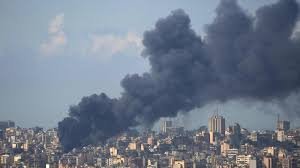
Israeli forces have launched their most intense wave of strikes on Lebanon since the conflict with Hezbollah escalated last month, even as the Iran-aligned group reportedly paused its attacks under a broader US-Iran ceasefire framework.
Multiple explosions rocked Beirut on Wednesday, with thick plumes of smoke rising across the city as Israel described the operation as its largest coordinated strike of the ongoing war. The Israeli military said it targeted more than 100 Hezbollah command centres and military installations across Beirut, the Bekaa Valley, and southern Lebanon.
According to Lebanon’s health ministry, at least 89 people were killed and around 700 injured nationwide, including several medics among the dead. Emergency conditions in Beirut worsened as civilians used motorcycles to transport the wounded to hospitals amid a shortage of ambulances, while medical facilities appealed urgently for blood donations and additional support.
Lebanese medical authorities and local responders described overwhelmed conditions, with doctors and hospitals calling for reinforcements to cope with the surge in casualties. Fires were also reported at multiple strike sites, including areas where vehicles were destroyed.
Israel maintained that its operations would continue despite ceasefire-related developments elsewhere, with officials stating that the truce did not extend to Lebanon. Israeli leadership indicated that strikes targeting Hezbollah would proceed, contradicting claims from Lebanese and regional actors that a wider ceasefire framework should apply.
In southern Lebanon, additional strikes and artillery shelling were reported, including attacks near civilian infrastructure such as hospitals. The southern city of Sidon was also hit, resulting in fatalities and injuries, while further strikes were reported in central Beirut.
Hezbollah sources indicated that the group had paused its offensive actions, although tensions remain high. Senior figures within the group described the Israeli strikes as violations of any ceasefire understanding and warned of potential repercussions if the attacks continue.
Lebanon’s government and political leadership have urged inclusion in any broader ceasefire arrangement, as humanitarian conditions deteriorate. Since the escalation began, large-scale displacement has affected over a million people, while thousands have been killed in ongoing hostilities.
Israeli authorities said evacuation warnings were issued for certain areas prior to some strikes, though no warning was reported for central Beirut, which was also targeted. Military statements emphasized continued operations and asserted that Hezbollah assets were being relocated into civilian-populated areas.
On the ground, the humanitarian situation remains severe, with displaced families sheltering in schools and public spaces across southern Lebanon. Many residents expressed uncertainty about returning home, citing ongoing insecurity and economic hardship.
Local officials have cautioned civilians against returning to affected areas until formal announcements are made, as emergency services continue to manage casualties and assess damage across multiple regions.