

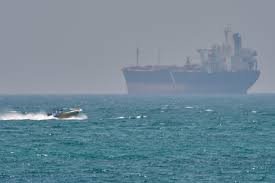
Concerns over the stability of the US–Iran ceasefire intensified on Monday after Washington said it had seized an Iranian cargo vessel that attempted to evade its maritime restrictions, prompting Tehran to threaten retaliation.
The US military said it fired on an Iranian-flagged ship travelling toward Bandar Abbas, claiming it had taken “full custody” of the vessel. President Donald Trump said on social media that US forces were examining its cargo. Iran’s military, however, said the ship had been en route from China and described the interception as “armed piracy,” warning of an imminent response.
The incident comes amid heightened maritime tensions in the region, with the United States maintaining a blockade on Iranian ports and Tehran intermittently restricting navigation through the Strait of Hormuz, a key global energy corridor responsible for roughly one-fifth of global oil shipments.
Oil prices rose and global markets fluctuated following the developments, reflecting concerns over potential disruptions to energy flows through the Gulf.
Iranian officials rejected renewed peace negotiations with the United States, citing ongoing sanctions, military pressure, and what they described as “excessive demands” from Washington. Iranian First Vice President Mohammadreza Aref warned that restricting Iran’s oil exports while expecting maritime security was unsustainable, stating that the region faces a choice between “a free oil market or significant costs for all parties.”
US President Donald Trump issued fresh warnings, saying Washington would destroy key infrastructure in Iran if Tehran rejected US conditions. Iranian officials have previously stated they would respond to any strikes on civilian infrastructure with retaliatory attacks on energy facilities in Gulf states.
Despite escalating tensions, preparations continued in Islamabad for a possible second round of US–Iran talks. Pakistani authorities have tightened security across the capital, with road closures, deployment of thousands of personnel, and restrictions around key diplomatic zones. Reports indicated that US military transport aircraft had arrived carrying security equipment ahead of the expected delegation.
However, uncertainty remains over the talks. While US officials indicated that a delegation would arrive in Islamabad, there is no confirmation that negotiations will proceed. Discrepancies have also emerged over leadership of the US team, with conflicting statements regarding Vice President JD Vance’s participation.
The broader conflict, now in its eighth week, has significantly disrupted global energy markets following escalating military exchanges between US-Israeli forces and Iran-linked targets across the region, including Lebanon. Thousands have reportedly been killed since the escalation began in late February, with missile and drone exchanges expanding across multiple fronts.
China expressed concern over the interception of the Iranian vessel, calling for restraint and urging all parties to uphold the ceasefire and ensure safe maritime passage through the Strait of Hormuz. Beijing warned against further escalation and called for conditions conducive to resuming negotiations.
European allies have also raised concerns that current diplomatic efforts risk producing only a temporary or superficial agreement, given unresolved disputes over Iran’s nuclear programme and maritime security.
For now, both diplomatic engagement and military escalation continue in parallel, leaving the ceasefire increasingly fragile and its future uncertain.