

The current crisis is no longer confined to breaking news or geography. What appears to be a regional confrontation is, in reality, a layered strategic contest-one that carries implications far beyond the Middle East.
At the center of this tension stands the uneasy equation between the United States and Iran. This is not a declared war, yet it is far removed from stability. It is a space defined by pressure without direct collision, where every move is measured and every signal carries weight.
Across key regional capitals-Doha, Cairo, Ankara, and Islamabad-efforts continue to preserve dialogue. These engagements are deliberate and quiet, aimed at preventing escalation rather than announcing breakthroughs.
In a world increasingly shaped by constant streams of information, short attention cycles, and emotional fatigue, even the possibility of dialogue feels fragile-yet necessary. A world worn down by uncertainty has begun to search again for something it has nearly stopped believing in: restraint.
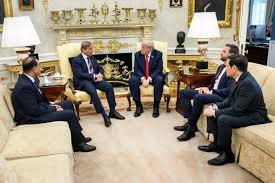
At the same time, Pakistan has stepped forward with a clear and measured signal of intent-expressing readiness to host dialogue between the United States and Iran, if both sides agree. This is not a symbolic gesture. It reflects an understanding that when global systems begin to strain, bridges must be maintained-even when they appear difficult to cross.
Meanwhile, the Pentagon maintains a visible posture of readiness. This parallel movement is not accidental. It reflects a strategic approach where negotiation and deterrence operate side by side.
One seeks to open space.
The other ensures that space is taken seriously.
The Middle East is no longer shaped by isolated tensions. It operates as a connected security environment:
Israel remains focused on immediate and long-term security concerns.
Saudi Arabia balances internal stability with regional exposure.
Turkey plays an active diplomatic and strategic role, balancing engagement across multiple fronts.
Non-state actors such as Hezbollah continue to influence the pace and direction of escalation.
In this structure, any development in one area can quickly affect another. Containment becomes difficult when pressure travels through multiple channels.
Both principal actors are operating within a time-sensitive but controlled environment.
Washington sustains pressure while avoiding steps that would trigger a wider conflict. Tehran signals readiness while keeping the threshold intact. This creates a situation where intent is communicated without irreversible action.
It is a phase where signals are tested, reactions are measured, and decisions are delayed-but not avoided.
This crisis is deeply tied to global stability. Strategic waterways such as the Strait of Hormuz and Bab el-Mandeb are central to the movement of energy, trade, and essential supplies.
Any disruption in these routes would not remain regional. It would affect energy markets, food supply chains, and economic stability across continents. The world is not a distant observer. It is structurally connected to the outcome.
The current environment is not defined by active war, but by limited room for error. A localized escalation, a misread signal, or an unintended strike could accelerate military responses, narrow diplomatic options, and expand the scope of confrontation.
Within this framework, Pakistan holds a position of measured relevance. Its value lies not in visibility, but in credibility across multiple fronts. Alongside states such as Qatar and Oman, Pakistan can contribute to maintaining communication channels that might otherwise close under pressure.
This role is not about leading the stage-it is about ensuring that dialogue remains possible when options begin to narrow.
There is increasing discussion about shifting power structures and emerging alignments involving actors like China and Russia. While these dynamics are evolving, the present moment reflects strain within the system rather than its replacement.
The balance is being tested, and the space for miscalculation is shrinking with each passing development.
Yet within this narrowing space, even the smallest opening for dialogue carries significance. In times where certainty is fading, the act of maintaining conversation becomes more than diplomacy-it becomes a quiet form of resistance against collapse.
Disclaimer: The views and opinions expressed in this article are solely those of the author and do not necessarily reflect the views, policies, or position of this website. The website does not endorse or oppose any opinion presented herein.