

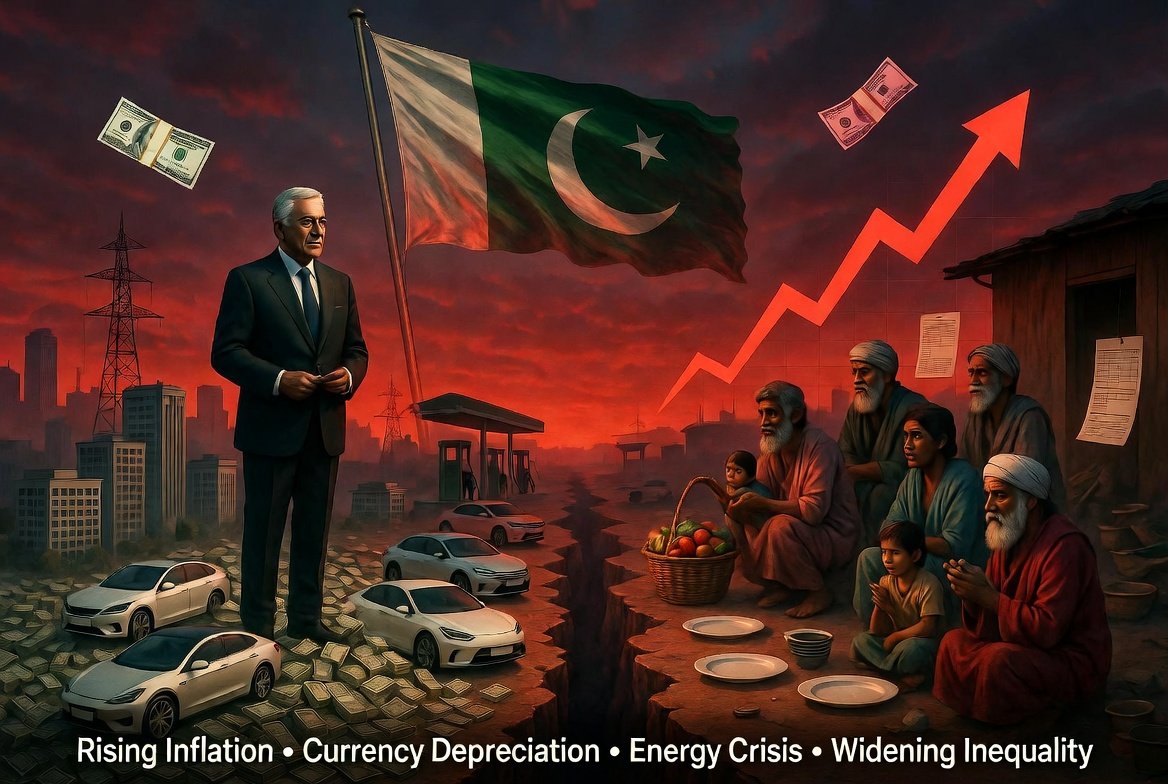
Pakistan is now struggling with several economic issues that have significantly impacted the lives of its citizens. At the top of the list is rising inflation, where the cost of basic commodities such as food, fuel, electricity, and transportation continues to increase, reducing the purchasing power of families. This situation is largely driven by currency depreciation, rising global oil prices, increased import costs, and higher energy tariffs, all of which force businesses to raise prices and contribute to overall economic instability.
Economic pressure has further intensified due to currency devaluation. The Pakistani Rupee continues to weaken against the US Dollar, making imports such as fuel, machinery, and raw materials more expensive. These increased costs are ultimately passed on to consumers, leading to higher inflation and making everyday living increasingly unaffordable.
The situation is further worsened by the ongoing energy crisis and rising utility costs. High prices of electricity, gas, and petroleum not only increase production costs for businesses but also raise household expenses, leaving families with less disposable income.
However, a deeper and more concerning issue arises how long will this continue? How long will the poor continue to become poorer while the rich grow even richer? Why are there no effective measures being taken to provide even minimal relief to the underprivileged? So far, it appears that the government has focused more on promises than practical solutions. There is a serious lack of targeted subsidies and welfare measures that could ease the burden on low-income groups. The poor also deserve dignity, stability, and the basic right to live a decent life, yet they continue to struggle without meaningful support.
Economic reforms and International Monetary Fund loan programs are intended to stabilize the economy. While measures such as increasing taxes, reducing subsidies, and maintaining fiscal discipline can improve government revenue and economic balance, they often place additional short-term pressure on the public by increasing the cost of living.
Heavy public debt and fiscal deficits further strain government budgets, limiting the ability to invest in public services and development. Combined with rising unemployment and poverty, this makes people especially low- and middle-income groups more economically vulnerable.
Trade deficits and declining foreign exchange reserves also add to the crisis, making it difficult to finance essential imports. Economic uncertainty discourages both local and foreign investment, slowing down business activity and economic growth.
Additionally, food security has become a major concern. The rising prices of essential items such as wheat, sugar, and edible oil have made basic nutrition less affordable, particularly for vulnerable populations. Government policies such as taxation and subsidy adjustments aim to address these challenges, but their impact remains limited for those who need relief the most.
Overall, Pakistan’s economic instability requires urgent and coordinated action. Efforts must focus on controlling inflation, stabilizing the currency, encouraging investment, and strengthening social protection systems. Without meaningful and inclusive policies, the gap between the rich and the poor will continue to widen. For true progress, economic stability must go hand in hand with social justice, ensuring that every citizen not just the privileged few has the opportunity to live with dignity and hope.
Disclaimer: The views and opinions expressed in this article are solely those of the author and do not necessarily reflect the views, policies, or position of this website. The website does not endorse or oppose any opinion presented herein.